
In brief
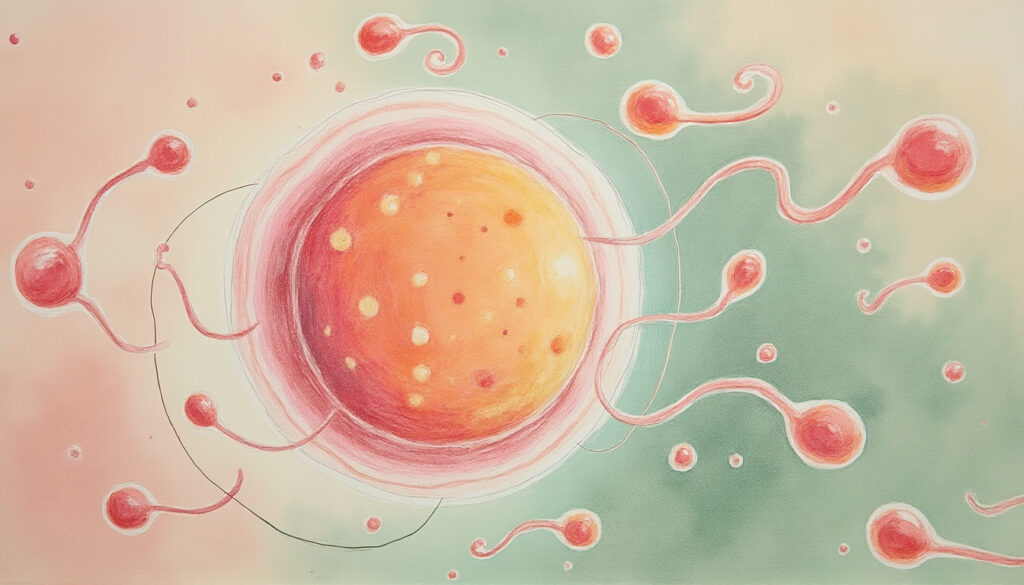
- Sperm is not just a “transport” of cells: it is a complex biological medium that protects, nourishes, and selects the male gametes until fertilization.
- The production of spermatozoa follows a continuous rhythm, with a maturation cycle of about 70 to 75 days, which makes the future father’s health choices visible over a few months.
- Sperm quality is mainly assessed by the number, mobility, and shape of spermatozoa, but also by DNA integrity, directly related to reproduction and heredity.
- Pre-ejaculatory fluid lubricates and protects, but does not make the withdrawal method reliable: a passage of residual spermatozoa can be enough for conception.
- Paternal contribution begins before pregnancy: sleep, tobacco, alcohol, heat, endocrine disruptors, physical activity, and diet influence fertility on a concrete timeframe.
Sperm, biology side: how male gametes are born and why temperature matters
In the reality of a baby project, many couples discover late that sperm production is neither instantaneous nor “automatic” in the sense that it would be independent of the body. The production of male gametes takes place in the testicles, more precisely in the seminiferous tubules. This location is not chosen at random: the temperature is maintained around 34 °C, lower than the usual body temperature. This detail explains the positioning of the testicles outside the abdominal cavity: at 37 °C, cellular maturation is disrupted and quality can decrease.
Spermatogenesis follows an orderly scenario. It starts at puberty and then continues continuously, day and night. A germ stem cell, the spermatogonium, multiplies then transforms into spermatocyte, spermatid, then mature spermatozoon. One point deserves to be understood because it directly touches on heredity: during meiosis, the cell “divides” its genetic heritage. The spermatozoon ends up with 23 chromosomes. During fertilization, it unites with the oocyte, also carrying 23 chromosomes, to form a zygote with 46 chromosomes. The paternal genetic contribution is therefore exactly half of the transmitted heritage.
The maturation time is a marker that reassures and gives leverage. Between the beginning of the process and the obtaining of spermatozoa ready to be emitted, it takes on average just over 70 days. This means that last-minute lifestyle changes do not always have time to be immediately reflected. Conversely, quitting smoking or improving sleep makes sense when planned over two to three months. This temporality makes male fertility more “modifiable” than one might imagine.
Another stage takes place after raw production. Spermatozoa migrate to the epididymis, where they gain their ability to move, notably thanks to the maturation of the flagellum. They then join the vas deferens and mix with secretions from the seminal vesicles and the prostate. This mixture results in sperm, the fluid emitted during ejaculation. Talking about sperm is therefore talking both about reproductive cells and an active “transport medium,” with nutrients (fructose, amino acids, citrate) that support the energy and survival of spermatozoa during their journey.
A concrete reference helps to situate oneself without obsession over the numbers. An ejaculation most often corresponds to 2 to 6 mL of sperm. The average concentration is often on the order of several tens of millions of sperm per milliliter, with large individual variations. When conception is delayed, the issue is not to “guess” daily. A well-done exam at the right time allows reliable benchmarks to be set.
The logical next step is to understand what sperm actually does once deposited in the female genital tract, because fertilization depends as much on the chemistry of the medium as on the race of the cells.
From deposition to fertilization: sperm as a protective medium, and the real journey to the oocyte
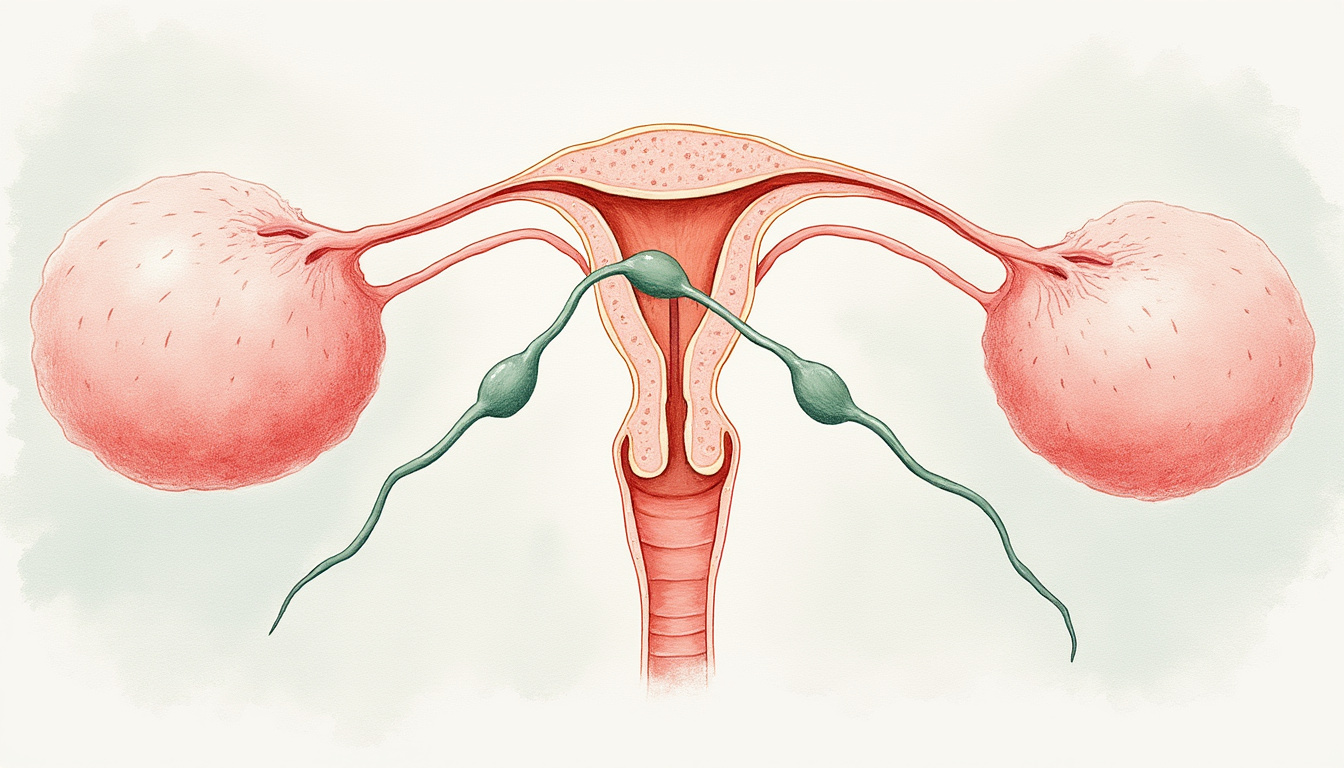
In the hours following intercourse, the “mechanical” vision of conception sometimes reassures, but often deceives. Conception is not a simple contact between two cells. Sperm provides a chemical solution that protects spermatozoa, adjusts their environment, and increases their chances of surviving in the vagina, whose acidity varies according to the phases of the cycle.
Spermatozoa are sensitive to acidity, which can reduce their mobility and viability. The vagina is naturally more or less acidic, and this acidity tends to increase after ovulation. Seminal fluid is therefore not a “detail.” It acts as a buffer, a temporary shield that allows cells to remain functional while crossing the cervix, then progressing to the uterus and fallopian tubes. This protection is not absolute, but it makes a real difference in the probability of fertilization.
The structure of the spermatozoon also explains why not all have the same chances. The head contains the acrosome, an area rich in enzymes capable of “piercing” the outer layer of the oocyte. The nucleus contains paternal genetic information. The midpiece concentrates a large portion of the mitochondria that provide the energy needed for movement. The flagellum ensures propulsion. When speaking of mobility or morphology, we talk about precise functions: a shape anomaly can hinder progression, a head anomaly can prevent proper interaction with the oocyte, a midpiece anomaly can reduce available energy.
The journey is selective. The majority of spermatozoa do not reach the meeting place with the oocyte. This is not a failure; it is biological selection. The cervix, cervical mucus, local immune response, quality of movement, ability to react to chemical signals are all “filters.” It is also why sperm quality is not summarized by a single number.
Pre-ejaculatory fluid deserves a clear explanation because it concerns concrete decisions. It is a viscous, transparent fluid produced during arousal by the Cowper’s glands. It lubricates and can reduce residual acidity of the urethra. Available data suggest that it does not contain a significant amount of sperm produced “at that moment.” The delicate point is elsewhere: after a recent ejaculation, sperm may remain in the urethra and be carried along. This is one of the reasons why the withdrawal method exposes to unintended pregnancy.
A point often misunderstood concerns male “timing.” There is no fertility cycle comparable to that of women. Production is continuous. Variations exist according to ejaculation frequency, fever, heat, stress, but there are no “fertile days” to target for men. In a pregnancy project, this reality can be reassuring: attention focuses on the female fertile window and overall male health rather than a calendar strategy on the paternal side.
To make these notions more concrete, a numbered and structured guideline helps couples speak the same language with a professional. The following table provides indicators frequently observed during an assessment, without turning results into automatic verdicts.
| Parameter observed | What it describes | Why it matters for conception | What can influence it daily |
|---|---|---|---|
| Ejaculate volume | Amount of emitted semen (often 2 to 6 mL) | Very low volume can reduce transport and protection | Hydration, frequency of intercourse, inflammation, certain medications |
| Concentration | Number of spermatozoa per mL | Low concentration decreases the likelihood that a spermatozoon reaches the oocyte | Tobacco, heat, recent fever, varicocele, endocrine disruptors |
| Mobility | Ability to swim effectively | Direct condition to pass cervix, uterus, and tubes | Oxidative stress, alcohol, overweight, sleep deficit, infections |
| Morphology | Proportion of “functional” shapes | Influences interaction with the oocyte and progression | Heat, toxins, nutritional deficiencies, testicular abnormalities |
| DNA integrity | Quality of genetic material | Linked to embryonic development and heredity | Tobacco, inflammation, age, oxidative stress, occupational exposure |
Understanding what weakens spermatozoa naturally leads to a third angle: what can impair male fertility, how to identify a situation that merits evaluation, and how to act without creating counterproductive pressure.
Sperm quality and male fertility: what changes with age, heat, toxins, and lifestyle rhythm
When a pregnancy delays, the temptation is to focus on the woman, because the female cycle makes concrete steps visible. The paternal contribution is sometimes relegated to a question of “presence of spermatozoa.” The male body, however, reacts finely to the environment. This is visible in male fertility, and can be modified with realistic actions.
The first often underestimated factor is heat. Testicles work better around 34 °C. Repeated exposures can increase local temperature and weaken production and mobility. Typical situations are easy to recognize: frequent very hot baths, repeated sauna, laptop on thighs, very tight clothes, long hours sitting without breaks, overheated vehicle cabin. None of these elements “condemn” a baby project. Their accumulation over several weeks, however, can weigh.
Tobacco is another major lever. It increases oxidative stress, a mechanism that can alter sperm membranes and damage DNA. Alcohol, especially when regular and high, also affects hormonal balance and cellular quality. Understanding spermatogenesis over 70 days becomes concrete here: stopping or sharply reducing gives time for a new cohort of spermatozoa to form in better conditions.
Diet influences fertility via several pathways. A diet very rich in saturated fats and ultra-processed products is associated with poorer quality, notably mobility. Conversely, polyunsaturated fatty acids, including omega-3s, support cell membrane fluidity. In a busy daily life, the realistic goal is not perfection. A simple change can already make a difference over a few months, such as replacing part of processed meals with meals centered on vegetables, legumes, fatty fish, omega-3 rich oils, nuts, while keeping room for pleasure.
Sleep and physical activity also matter. Chronic lack of sleep disrupts hormones involved in sperm production. Regular activity, without excess, supports metabolic health and vitamin D. Excesses also exist: overtraining, drastic restrictions, very rapid weight loss can create physiological stress that does not help reproduction.
Age deserves a clear nuance. Production is continuous throughout life, without a sudden stop comparable to menopause. After 50 years, a decline in number and alteration of some parameters is more frequently observed. This does not mean an inability to conceive, but it justifies earlier attention if the baby project is prolonged. The same principle applies to medical history, certain treatments, testicular surgery, or known varicocele.
Visible signs are not always sufficient. The color of sperm normally varies from pearly white to transparent. A pale yellow can occur after a period without ejaculation, due to oxidation of some proteins. A clearly yellow coloring, especially if accompanied by pain, burning, fever, unusual odor, or pelvic discomfort, suggests an infection. A consultation then allows an appropriate examination, often a bacteriological sample, without dramatizing but without delay.
Three concrete adjustments over 10 to 12 weeks can already support quality, without turning daily life into a protocol.
- Reduce prolonged heat sources by avoiding frequent very hot baths and favoring standing breaks if work requires a long sitting position.
- Quit tobacco and limit alcohol to an occasional and moderate consumption, keeping in mind the sperm renewal timeframe.
- Stabilize the wake-sleep rhythm with a more regular bedtime, especially during weeks when fatigue sets in.
When these adjustments are not enough, or when the waiting becomes emotionally heavy, a simple and well-interpreted assessment avoids months of guesswork. This leads to the fourth angle: understanding what concerns ejaculation disorders, volume problems, absence of spermatozoa, and especially when to consult.
Ejaculation, hypospermia, azoospermia: distinguishing situations and knowing when to request a spermogram
In a conception journey, technical words arise quickly and can worry. Clarifying them helps to take a breath. Ejaculation corresponds to the emission of semen through the urethra. It mobilizes a coordinated neurological and muscular mechanism. Difficulty ejaculating does not automatically indicate something about sperm production: sometimes production is present but expulsion or path is disturbed.
Anejaculation refers to the inability to ejaculate. Causes can be psychological, neurological, related to certain medications, diabetes, or surgery. This requires medical advice because management depends on the mechanism involved. There is also retrograde ejaculation, where sperm goes to the bladder instead of exiting. The couple may have the impression of “absent volume,” while production exists.
Hypospermia corresponds to a decreased semen volume. A low volume does not always prevent fertilization, but it can reduce the protective role and transport. Causes include a high frequency of ejaculations in a short period, dehydration, inflammation, partial obstruction, or anatomical peculiarity. The context often gives clues, but an exam remains the most effective way to decide.
Azoospermia is the absence of sperm in semen. This situation has varied causes. It can be obstructive, with production present but blocked passage, or non-obstructive, with insufficient production. The issue is not only diagnosis but rapid referral to a urologist-andrologist, as some situations have management options, including surgical sperm retrieval depending on the case.
A frequently asked question, sometimes asked with shame though very common, is: is it possible to be “out” of sperm? Apart from medical problems, no. Production is continuous. Frequency of intercourse influences concentration in the short term, but not to the point of permanently emptying the stock, as the system renews itself. Prolonged abstinence can increase volume and concentration, without guaranteeing better mobility. Very high frequency can transiently reduce concentration. In most baby projects, regular and pleasant sexual activity is sufficient, without rigid strategy.
When an assessment becomes useful, without waiting for emotional exhaustion to set in
Medical benchmarks vary according to age and couple’s history. A consultation can be considered after 12 months of regular intercourse without contraception if the woman is under 35, and after 6 months if she is over 35, or sooner in case of known history. On the male side, history of testicular surgery, persistent testicular pain, significant varicocele, repeated genital infections, or ejaculation disorders justify earlier evaluation.
Consultation box: concrete signs that justify medical advice
An appointment with a general practitioner, urologist-andrologist or midwife can be requested without delay if one of these signs appears.
- Persistent testicular pain, mass, increased volume of one testicle, or significant discomfort on one side only.
- Fever associated with pelvic pain, burning urination, or unusual discharge.
- Marked change in sperm color toward intense yellow with symptoms, or visible blood presence.
- Repeated absence of ejaculation, or sudden volume decrease over several weeks.
The spermogram remains the basic exam. It requires standardized conditions, often abstinence for a few days, and is interpreted with a professional. An isolated anomaly is not a sentence. Exams are often repeated to confirm, as fever, intense stress, or inflammatory episodes can temporarily influence results.
Once the assessment is done, the question is not only “how to achieve pregnancy,” but also “how to go through this period as a couple, without one person’s body becoming the sole examination field.” This naturally opens on the human dimension of paternal contribution.
Paternal contribution and couple dynamics: emotional support, shared decisions, and the father’s role from the preconception period
In reproduction journeys, mental load often shifts to the woman, because exams, cycles, symptoms, and sometimes treatments are visible. Paternal contribution is not limited to sperm, even if sperm is biologically central to conception. It includes a posture, a presence, decisions, and a way to carry the project as a pair.
When a couple is expecting a pregnancy, uncertainty takes up space. Some days optimism dominates. Others, the feeling of “doing everything right” without result tires. In this context, the father can act on two very concrete levels. The first is physical: overall health, reduction of toxins, consultations if needed, participation in assessments. The second is emotional: creating a space where one can talk without turning every intercourse into a performance.
A phrase often comes up in consultations, sometimes formulated in silence: “The body becomes a project.” When sexuality serves a calendar, it can lose spontaneity. The goal is not to eliminate all planning, but to keep breathing spaces. A practical reference is to dissociate, when possible, some intercourse from the “useful day,” so the couple does not live only waiting for a test. This approach is not universal, but it protects many couples from wear.
The father’s role is also played in understanding medical words. Knowing what a spermogram is, what concentration and mobility measure, understanding the 70-day maturation delay, allows avoiding diffuse guilt. The father does not have to become an expert, but benefits from being an actor. This changes how appointments are experienced. It also changes how results are integrated, especially when they are “borderline” and require a second check.
The question of heredity can raise concerns. Some men fear transmitting fragility, especially with family history. Reality is nuanced. The transmitted genetic heritage is half of the future child, and sperm DNA integrity matters. A lifestyle reducing oxidative stress is therefore a concrete action, without promising total control. When a couple has a particular family history, specialized advice, sometimes in genetics, helps to leave assumptions behind.
A last point, often underestimated, concerns support during fertility treatments, when they exist. Even when medical intervention concerns the woman’s body, the father’s presence can be extremely tangible: managing appointments, handling logistics, being present at ultrasounds when possible, supporting rest times, spotting signs of psychological exhaustion. Mental health in preconception is not a luxury. Persistent anxiety, severe sleep disorders, constant irritability, or social withdrawal deserve help, sometimes brief but targeted.
When biology is understood and the couple regains realistic leeway, the baby project ceases to be a series of tests and becomes a shared trajectory again. This solidity is a discreet factor, but it protects the bond when waiting extends.
Can pre-ejaculatory fluid cause pregnancy?
Yes, pregnancy is possible. Pre-ejaculatory fluid is mainly lubricant, but it can carry spermatozoa left in the urethra after a recent ejaculation. This is one of the reasons why the withdrawal method has a high failure rate in real life.
How long does it take to improve sperm quality after a lifestyle change?
Spermatogenesis lasts on average a little more than 70 days. A change such as quitting smoking, reducing alcohol, better sleep or less local heat can be reflected in a new cohort of spermatozoa in 10 to 12 weeks, sometimes longer depending on associated factors.
Does a man have “fertile days” like a woman?
No, there is no male cycle comparable to the ovarian cycle. The production of male gametes is continuous. Male fertility can vary with fever, heat, stress, certain treatments or lifestyle, but it does not follow a monthly window.
When should a spermogram be requested if pregnancy is delayed?
An assessment is often considered after 12 months of regular intercourse without contraception if the woman is under 35, after 6 months if she is over 35, and earlier in case of history or signs such as testicular pain, ejaculation disorders, repeated genital infections, or strong concern. The spermogram is interpreted with a professional, and a follow-up may be necessary.