
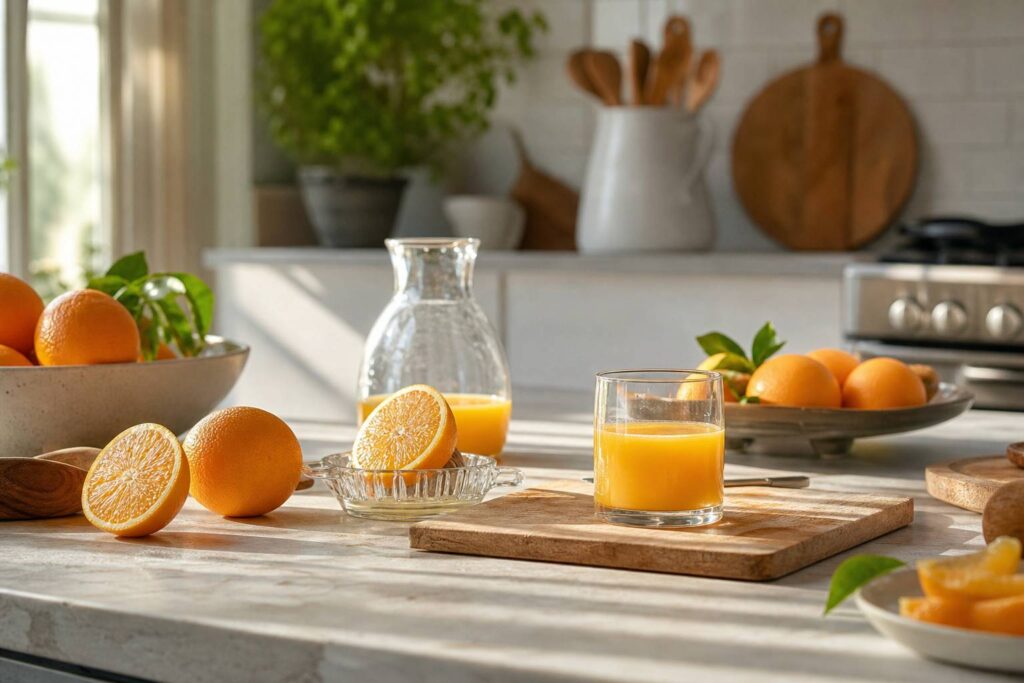
In brief
- A successful homemade orange juice starts with a well-chosen fresh orange, at the right temperature, to balance sweetness and acidity.
- Pulp is not a mere texture detail; it also changes the feeling of satiety and the speed at which sugars enter the bloodstream.
- Freshness is not a slogan. Once pressed, vitamins, especially vitamin C, significantly decrease within 24 to 48 hours depending on exposure to air and temperature.
- A natural preparation without added sugar can remain delicious by playing with orange varieties, temperature, and a hint of citrus.
- Cold pressing and gentle gestures limit oxidation. The goal is not perfection, but a stable, fragrant, pleasant-to-drink juice.
- For a healthy drink, frequency matters as much as quality. Homemade juice can have a similar impact on blood sugar as other juices if consumed daily and in large quantities.
Choosing the right fresh orange for a balanced homemade orange juice
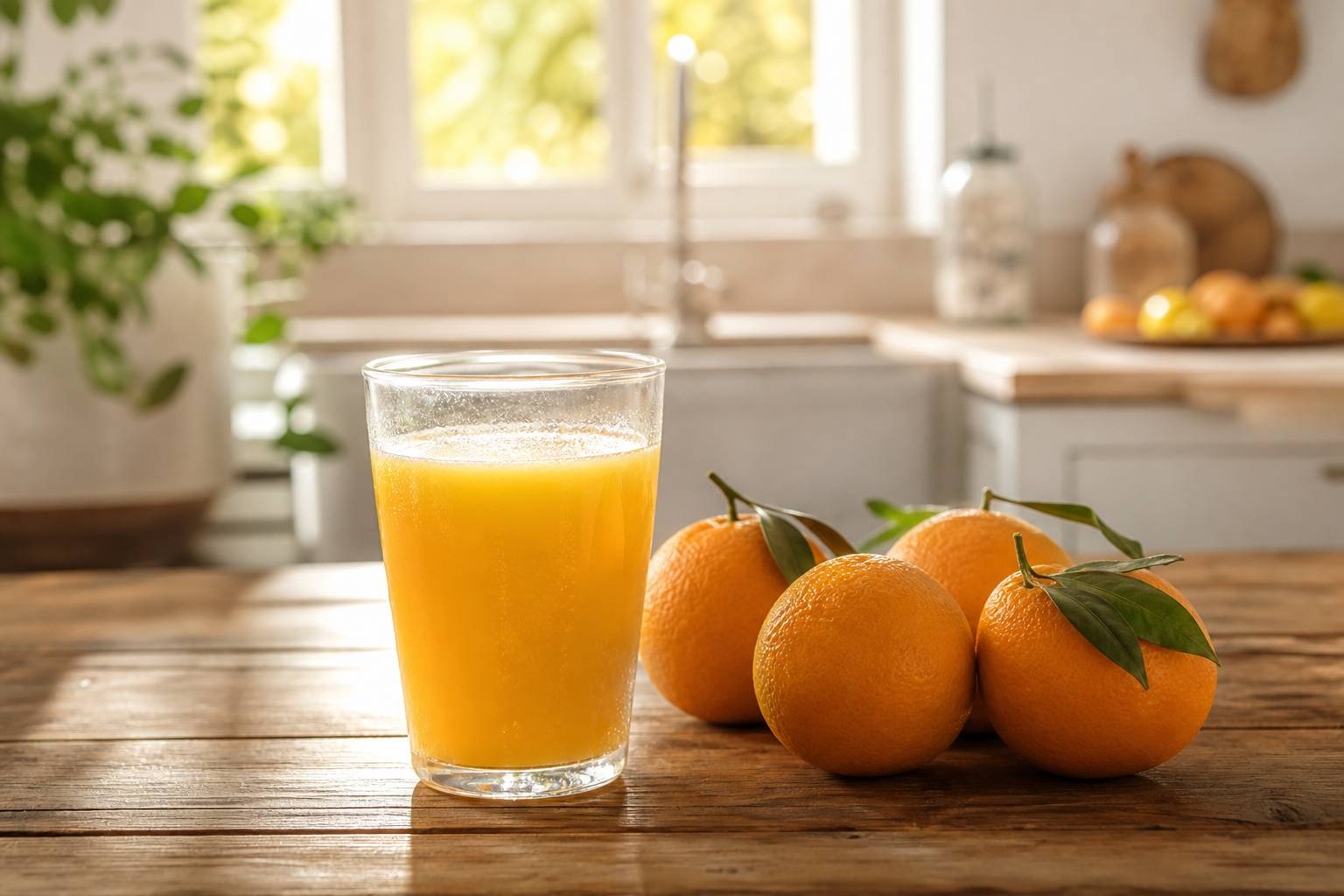
In a kitchen where time is limited, orange juice can become a small landmark. The gesture is simple, the sensation immediate. Quality is determined even before pressing, at the moment when the oranges are placed in the shopping basket.
A fresh orange is first recognized by weight. At the same size, a heavy orange often contains more juice. The skin can be more or less smooth depending on the variety, but this is not an absolute criterion. What matters more is elasticity under the fingers, without soft spots. A citrus scent already present through the peel indicates a zest rich in essential oils, thus a clearer aroma in the glass.
Varieties, season, and expected daily taste
For an orange juice recipe that pleases the whole family, the choice of variety saves time. Juicing oranges like Valencia or Salustiana often yield a softer and more abundant result. Blood oranges bring a fine bitterness and an eye-catching color, but they may surprise if a very round taste is expected.
The season also plays a role. In winter, many oranges are at their best sugar-acid balance. Out of season, the orange can remain pleasant, but the juice might lack depth. In such cases, a realistic solution is to mix two profiles: one very sweet orange with a more tangy one, instead of compensating with sugar.
Usually, two oranges are enough for a large glass, but this guideline varies with size and variety. With small oranges that have thick skin, three fruits may be necessary. This anticipation avoids the frustration of a half-full glass, especially when children are waiting for “their” juice.
Fruit temperature and perception of sweetness
Temperature modifies perception. Very cold juice seems less sweet, more “tight” in the mouth. Slightly cool juice, around 8 to 12°C (46 to 54°F), better highlights aromas without giving an impression of aggressive acidity. If the oranges come straight from the fridge, letting them sit at room temperature for ten minutes before pressing can improve the result.
When orange juice is offered to a child, the useful indicator is not only the taste. It’s also how this sugar enters the body. Whole fruit requires chewing, slows ingestion, and comes with fibers. Filtered juice, on the other hand, is quicker to drink and faster to absorb.
This nuance is not meant to induce guilt. It helps to choose. An occasional glass of homemade juice can be a simple pleasure. A daily habit, especially in large volumes, can create blood sugar spikes, in both adults and children. The rest will depend on technique, but also on the role given to this ritual.
Cold pressing technique and simple gestures to preserve freshness
Most parents know that moment when they look for a quick solution and when “homemade” must remain compatible with a busy morning. The right reflex is to target a stable and reproducible technique, not a performance.
Cold pressing is easy to understand. The less the juice heats up and is exposed to air, the more it retains a clean aromatic profile and bright color. Slow juicers achieve this very well, but a manual or electric citrus press also yields remarkable results if the technique is right.
manual pressing, electric, slow juicer
With a manual citrus press, the movement must be firm but without crushing the white pith. Too much pressure releases more bitter compounds. Cutting the orange widthwise (rather than lengthwise) often exposes the vesicles better and improves yield.
With an electric citrus press, the advantage is speed. The risk is letting it run too long. A few seconds per half orange is enough. When the pulp is already pale and dry, continuing to press increases bitterness without really gaining juice.
The slow juicer delivers a more homogeneous and often “rounder” juice. It remains relevant if several juices are prepared during the week. However, it requires longer cleaning. In a tight daily schedule, this detail weighs. A tool used once then avoided due to fatigue does not serve natural preparation over time.
Pulp or no pulp, a real nutritional decision
Pulp changes texture, but also the experience. With pulp, the juice is more filling. Without pulp, it drinks quickly, sometimes “without noticing.” Passing it through a fine sieve works if the texture bothers, but keeping at least some pulp can help slow ingestion, especially with children.
Sugar-free juice can remain sweet by working on orange variety and temperature. Adding sugar quickly turns the glass into a pleasure drink, which is not forbidden. The question then becomes frequency and quantity, not the morality of the action.
A simple yield guideline to avoid overpressing
Two medium oranges often yield 150 to 250 ml depending on season and variety. When the target glass is large, preparing four oranges for two people reduces the urge to “re-press” hastily. A calm kitchen is played out through these micro-adjustments.
The next step is storage. This is where the notion of freshness becomes concrete, with gestures that truly protect vitamins, and others that let them escape.
A visual demonstration often helps spot the right moment to stop pressing, when the peel begins to whiten. These few seconds make the difference in bitterness.
Vitamins, blood sugar, and the place of homemade orange juice in a healthy drink
Orange juice is one of those foods that seem simple but actually touch several dimensions: taste, energy, digestion, family routine. For parents, the implicit question is often the same: does this glass really help, or is it just liquid sugar? The answer lies in nuance.
The whole fruit remains a solid benchmark. It provides sugar, yes, but also fibers, chewing, and a longer eating time. The juice, even homemade, concentrates several oranges into an easy-to-drink volume. This is not a flaw. It’s a fact to integrate so that the healthy drink remains an aid, not a habit that disrupts appetite.
Why vitamins decrease after pressing
Vitamin C is sensitive to oxygen, light, and heat. As soon as the juice is extracted, oxidation begins. In home practice, the realistic marker is as follows: juice vitamins drop significantly within 24 to 48 hours, especially if the juice remains in an open carafe or is frequently taken out and put back in the refrigerator.
This mechanism explains why juice prepared “for the week” does not deliver the same richness. It will retain taste, sugar, some micronutrients, but it will no longer be that concentrated freshness. When vitamin C is the goal, it is better to press small amounts and drink quickly.
Morning juice, every morning, or occasionally
Drinking orange juice in the morning can help start the day, especially when appetite is fragile. For some children, it is also a gateway to fruits. The vigilance axis is daily frequency. Even high-quality homemade juice can impact blood sugar similarly to other juices if volumes build up and if pulp is absent.
A simple guideline is to consider juice as a “pleasure-nutrition” portion, not as a systematic fruit substitute. Alternating with an orange to bite, or offering juice at some breakfasts and water at others, protects the balance without rigidity.
Practical table for simple adjustment
| Choice | What it changes | When useful |
|---|---|---|
| Juice with pulp | Thicker texture, slower ingestion, stronger feeling of fullness. | Breakfast, snack after activity, children who drink very quickly. |
| Juice without pulp | Drinks quickly, sugar becomes available faster, “cleaner” taste. | When texture is an issue, or in small amounts for pleasure. |
| Cold pressing | Less heating, aromas often better preserved, sometimes reduced oxidation. | If juice is prepared regularly and consumed quickly. |
| Whole fruit | Fibers and chewing, more gradual sugar absorption. | When the goal is daily balance, especially in children. |
These guidelines do not serve to decide between “good” and “bad.” They allow adjustment according to family rhythm, morning appetite, and digestive sensitivity. The next part concerns a frequently underestimated point: storage, which directly conditions taste and food safety.
Seeing the color and foam evolution over hours helps understand what air does to juice. It’s not spectacular, but very telling when looking for a reliable routine.
Refrigerator storage and homemade juice tips to preserve taste and safety
Freshly pressed juice is a fresh product. It lives, it moves, it oxidizes. Proper storage protects both flavor and remaining micronutrients. It also protects peace of mind, especially when juice is offered to children.
The first parameter is air. The more space in the bottle, the more oxygen available, and the faster oxidation. A narrow container, filled to the top and sealed tightly, makes a real difference. The second parameter is temperature. The refrigerator must be stable, ideally around 4°C (39°F).
Realistic consumption window
Drinking within 24 hours offers the best compromise between taste, freshness, and vitamins. Up to 48 hours, the juice remains drinkable if well stored, but vitamin benefits decrease. Beyond that, the risk is not only vitamin C decrease but also aroma drift, changing acidity, and sometimes light fermentation, especially if juice has been left at room temperature.
A simple indicator is smell. Juice that begins to “sting” the nose, foams abnormally, or has a sparkling taste when it wasn’t before, is no longer suitable. For children, it’s better to avoid any grey area. Smaller volumes pressed more often are safer than a large carafe left sitting.
Concrete organization for a busy morning
Preparation can be simplified with a short routine. Rinsing the citrus press quickly after use limits pulp sticking and reduces cleaning time in the evening. Preparing the oranges the day before by taking them out of the vegetable drawer and placing them in a visible bowl increases the likelihood of making juice without feeling overwhelmed.
Homemade juice tips that work in real life are those that reduce small hassles. A measuring cup, a small glass bottle with a cap, and a fine sieve within reach are enough to stabilize the gesture.
A clear note when medical advice is needed
Orange juice remains acidic. For some babies and young children, acidity can worsen reflux, irritate an already fragile mouth, or trigger pain if canker sores are present. This is not frequent but observable.
A consultation with a doctor, pediatrician, or midwife is relevant if the child has repeated pain after citrus, frequent vomiting, persistent feeding refusal, weight loss, or ongoing diarrhea. In adults, regular heartburn or stomach pains after citrus also justify advice, especially if lasting more than two weeks despite stopping juice.
After storage comes a very useful final know-how. Adapt the recipe to age, tastes, and times of day without turning juice into a liquid dessert.
Homemade orange juice recipe without added sugar and family variants
Orange juice does not need to be complicated to be good. Consistency comes from a short, repeatable, and adjustable recipe. Indulgence comes from precise details, not systematic additions.
Simple, stable base, and really pleasant
The base is known but deserves to be framed. For a large glass, press two oranges. For two large glasses, aim for four oranges, leaving a margin depending on juiciness. If the juice seems too acidic, the first reflex is to add a sweeter orange next time, not sugar in the glass.
A successful orange juice recipe often rests on three parameters: a ripe juicing orange, pressing without excess, and rapid consumption. The rest is optional.
Short list of gestures that really change the result
- Roll the orange under your palm for 10 seconds before cutting, to soften membranes and increase yield.
- Cut widthwise to better expose vesicles and get more juice with less effort.
- Press in two steps, a firm press then a one-second pause, to let juice flow without tearing too much white pith.
- Keep some pulp if the family accepts it, for a more filling texture and a glass less “gulped down.”
- Serve in a glass rinsed with cold water in summer, for an immediate fresh sensation without ice diluting the juice.
These gestures have one thing in common. They make the juice better without adding sugar and without sophisticated equipment.
Variants: orangeade and mixed citrus, with guidelines
Orangeade can be enjoyed on hot days or when the child finds the juice too intense. A classic version mixes one glass of juice with several glasses of water. When sugar is added, it is useful to see it as homemade syrup, thus as a pleasure drink. Over a week, alternating no added sugar glasses and more indulgent ones can prevent the palate from getting used to very sweet drinks.
To vary without sugar, the orange-lemon combination works well, but lemon increases acidity. A small amount, a few drops, is enough to enhance the aroma. Grapefruit brings bitterness. It may please adults, less so children. It also interacts with certain medications. When on treatment, pharmaceutical advice is prudent.
When a family wants to go further, one option is to read two or three labels of commercial juices once, then return to pressed juice. Not to compare morally, but to note the difference between a reconstituted juice, often more uniform, and a living juice, which varies with the season. This variability is not a failure. It is the signature of a fresh product.
To extend the experience, some parents keep the zests to flavor yogurt or cake batter. The zest concentrates aromas but requires careful washing, especially if the peel is not intended to be eaten. A final detail counts a lot in real life: the feeling of success. A good homemade juice is one that is made again tomorrow without stress.
How long does homemade orange juice stay fresh in the refrigerator?
In a hermetically sealed container, filled to the max to limit air, juice stays pleasant to drink up to 48 hours. To best enjoy freshness and vitamins, especially vitamin C, consuming within 24 hours yields the best result. A change in smell, unusual foam, or sparkling taste are signs it’s better not to offer it, especially to a child.
Is homemade orange juice really a healthy drink for children?
It can be part of a pleasure-nutrition drink, especially if sugar-free and served in small amounts. Vigilance concerns frequency and pulp. Filtered juice is drunk quickly and delivers sugar rapidly. Keeping some pulp, limiting volumes, and alternating with whole fruit helps maintain balance without rigidity.
How to reduce bitterness in freshly pressed orange juice?
Bitterness often increases when the white pith is crushed too much or when the press runs too long. Cutting the orange widthwise, pressing with a firm but brief gesture, and stopping when pulp turns pale limits this taste. Choosing a juicing orange variety and avoiding overly cold fruit also improves results.
Does cold pressing really make a difference?
Yes, especially regarding aroma and oxidation. Cold pressing heats the juice little and can preserve a fresher sensation. A simple citrus press already gives very good results if the gesture limits heating and air exposure. The ideal tool remains the one used regularly, without cleaning becoming a barrier.