In brief
- Before 12 months, thermoregulation is immature, making baby clothes crucial to avoid overheating and chilling.
- The room should have an adequate temperature around 18 to 20 °C, measured with a thermometer placed away from the radiator and window.
- At night, the most reliable reference remains the warm nape (rather than hands or feet), to be checked without fully waking the child.
- A sleep sack of the right size, without a duvet or blanket, improves baby safety and stabilizes baby comfort.
- In warm periods, appropriate layers are often lighter than one might think, especially above 24–26 °C.
- In cold periods, warmth is first provided by the material (velvet, quilted, TOG) rather than overheating the room.
- The most effective baby tips and tricks involve simple gestures, repeated each evening, with clear markers and a margin according to temperament.
Understanding baby’s body temperature to adjust nightwear
At 3 a.m., what worries most is not the theory. It’s a clammy nape, a cold-to-the-touch pajama, or that persistent doubt that prevents falling back asleep. The best tips to dress baby well during night sleep start with a simple and very concrete idea. Before about 12 months, a baby adjusts internal temperature less well than an adult because thermoregulation mechanisms are still immature.
An infant’s body produces heat but loses it quickly. The body surface is proportionally larger, the skin thinner, and energy reserves managed day-to-day. A baby can therefore shift to discomfort faster, especially when the room fluctuates a lot between early evening and late night. This reality explains why baby clothing should not be chosen “by feel” but based on observable markers.
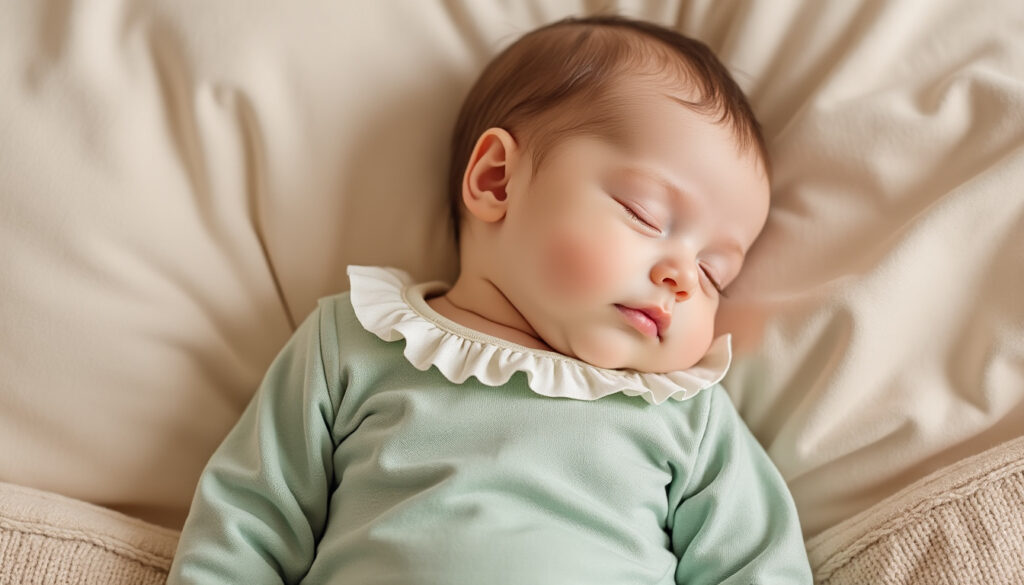
The most reliable reference at home remains the nape. A warm, clammy nape usually indicates excess heat. A cold nape, especially if the torso is cool, suggests too light clothing or a cooled room. Hands and feet often mislead parents because the extremities are cooler in many babies even when core temperature is correct.
Adequate room temperature and nocturnal variations
Most domestic prevention recommendations converge toward an adequate temperature between 18 and 20 °C for a baby’s room. The goal is not to fix a value to the tenth of a degree. The goal is to avoid extremes, especially overheated rooms that increase sweating and fragment night sleep.
A wall or dresser thermometer helps more than a sophisticated baby monitor if measurements are consistent. Location matters. Placed near a radiator, it overestimates. Attached to a window, it underestimates. A zone at adult height, away from heat sources, gives a stable idea. When the house cools down in the late night, the chosen outfit must cover this drop without stacking layers randomly.
When heat becomes a risk, and when cold really bothers
A baby who is too hot may sweat at the neck, have damp hair, very red cheeks, faster breathing, and appear restless during micro-awakenings. Conversely, a baby who is cold curls up, shows a cool torso, and may wake more often without obvious reason. Parental fatigue sometimes pushes to “add a layer” at the slightest fussiness. This reflex is understandable but can worsen discomfort if heat is the cause.
A good strategy is to change only one variable at a time. One evening adjust the sleep sack. The next day test a different material. This limits “experimental” nights and gives a clear reading of signs. The next section will translate these markers into concrete baby clothing choices by season.
Choosing baby clothes according to season and room temperature
The same pajama can be perfect at 20 °C and too warm at 24 °C. The right approach is to start from the actual room temperature, then layer appropriate layers. The goal remains the same in summer and winter. Baby comfort and baby safety go hand in hand when the outfit is simple, fitted, and breathable.
The material helps a lot. A cotton onesie limits moisture on the skin and tolerates long nights well. Linen, appreciated in hot periods, lets air circulate and dries quickly. Conversely, some synthetic materials can increase sweating, especially when the sleep sack is thick.
Concrete markers in warm periods, above 20 °C
Recent summers have made hot nights more frequent, with rooms struggling to drop below 24–26 °C. The risk is not to “do as usual,” but to keep identical layers while the room has gained 4 degrees. The outfit must then become lighter without improvising.
| Room Temperature | Recommended outfit for night sleep | Points of caution |
|---|---|---|
| 20–23 °C | Cotton onesie short sleeves + light pajamas + mid-season sleep sack | Monitor the nape if the air becomes heavy late at night |
| 24–25 °C | Short-sleeved onesie + light summer sleep sack | Avoid pajamas if baby sweats |
| 26 °C | Short-sleeved onesie alone, or very light sleep sack depending on model | Offer hydration according to age and feeding method |
| > 27–28 °C | Only diaper, cooled room as much as possible | Check more frequently, without prolonged awakenings |
When heat is marked, the room is also managed. Shutters closed during the day, curtains drawn, airing at least ten minutes at day’s end, airflow arranged away from the baby’s direct presence. A silent fan may help circulate air if placed at a distance and never pointed at the bed.
Concrete markers in cold periods, without overheating the room
When the room drops to around 16–17 °C, the temptation is to turn up the heating. Excessive setting dries the air, irritates the mucous membranes, and may cause awakenings. A more stable strategy is to play on layering, material, and the sleep sack’s thermal rating.
In winter, the most common setup remains “long-sleeved onesie + pajamas + sleep sack”. If the room is truly cool, socks can complement. For a toddler, a lightweight cotton hat may be considered in particular cases, especially the first weeks, provided it fits well and doesn’t slip on the face. As baby moves more, the risk of displacement increases, so caution is necessary.
TOG labels, usually from 0.5 to 3, indicate thickness. The higher the TOG, the warmer the sleep sack. A TOG 2 or 2.5 is common in winter. A TOG 0.5 to 1 suits better for summer. TOG does not replace the thermometer because a poorly insulated house may have very localized cold zones.
The next section covers a key point for baby safety. It is not about the pajama brand but how the child is positioned and the place of the sleep sack in the sleep environment.
A short video can help visualize outfit and environment adjustments when nights are restless.
Baby safety during night sleep: sleep sack, position, and clear crib
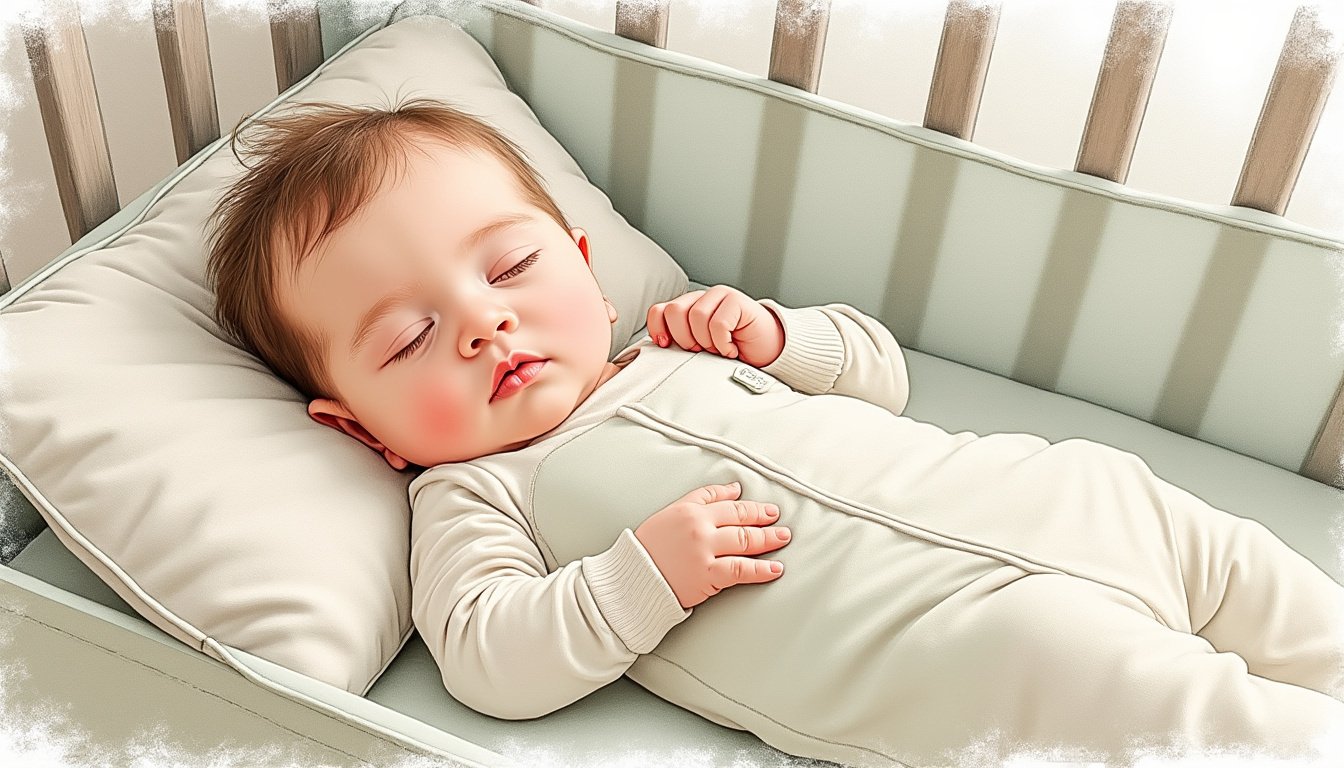
Baby clothes are never chosen alone. They are part of a complete scene. The mattress, position, fabrics around the face, the room’s thermal stability. Baby safety relies on a clear crib and sleeping on the back. This rule is simple and reduces the risk of accident related to sleeping.
Until about 2 years, the sleep environment remains minimalist. No duvet, no blanket, no pillow, no bulky stuffed toy, no crib bumper. The reasoning is very concrete. A baby can bury their face, get stuck, or find themselves in a position that obstructs breathing. An empty crib may look less pretty in a photo but aligns better with a toddler’s physiology.
Why the sleep sack replaces blankets
The sleep sack does two things at once. It maintains constant warmth without risk of uncovering, and prevents loose fabric from rising over the face. It also helps some babies limit sudden movements linked to the Moro reflex, especially up to 4–5 months. When this reflex triggers a startle, the stable enveloping sensation sometimes promotes faster resleeping.
The size must be adjusted. If the neckline is too wide, baby can slip inside. If too small, breathing and thoracic movements are hindered. Manufacturers generally provide a range in centimeters or months, but morphology varies. A long and thin baby may need a different size than a rounder baby of the same age.
Positioning baby, even with co-sleeping or attached crib
Many parents choose an attached crib or co-sleeping bed, especially the first weeks, to limit repeated getting up and secure nighttime care. When this option is chosen, it is prepared with the same safety criteria. Firm surface, fitted sheet tight, nothing falling into baby’s space. Concrete markers exist, notably on choosing an adapted co-sleeping bed, with useful cautions as installation changes over months.
Back sleeping remains the reference at bedtime, even if baby later rolls onto the side or stomach independently once able to turn over. This shift often occurs between 4 and 7 months, with wide variability. When baby rolls alone both ways, monitoring is experienced differently, but the basic rule at falling asleep does not change.
Air conditioning and dry air, simple caution
Air conditioning cools quickly and can create direct cold zones. The air can also become drier, sometimes irritating nose and throat. If an air conditioner exists, the safest approach is to never point the airflow towards the bed and aim for moderate cooling rather than a “cold blast.” A baby waking rubbing the nose, coughing more at night, or seeming bothered by persistent congestion deserves a discussion with a professional, especially if the temperature is very low compared to the rest of the house.
The next step is often what is most missing in online advice. Knowing what to put on is useful. Knowing how to check without waking, adjust without upsetting everything, and when to consult is what truly soothes parents.
To visualize a safe baby room, sleep markers, and use of a sleep sack, this video content serves as practical support.
Baby tips and tricks to check baby’s comfort without disturbing the night
A “correct” night does not mean a night without awakening. In infants, sleep cycles are shorter than adults, and micro-awakenings are frequent. What makes the difference is the ability to fall back asleep quickly, with a stable bodily sensation. Baby comfort often depends on discreet adjustment, not a complete outfit change.
The tactile check that works in 10 seconds
At night, a soft light is enough. One hand on the nape, under the collar, provides the main information. Warm and dry, the outfit is generally suitable. Hot and humid, better remove a layer or lighten the sleep sack. Cool, add a thin layer at the torso level, not on the face.
Associated signs help decide. A baby who sweats may have a damp back when picked up. A cold baby sometimes wakes crying as soon as put down, as if heat loss on contact with the sheet triggers discomfort. These signs are not diagnoses, just clues to guide baby dressing.
Composing appropriate layers without piling up
Layering does not mean multiplying. Two well-chosen layers are better than four thin layers that compress and hinder. The most practical choices, especially when changing a diaper at night, remain simple.
- Breathable base with a fitted cotton onesie, which wicks moisture and avoids folds.
- Thermal layer with light pajamas or velvet according to season, which warms the torso.
- Stabilizing layer with a properly sized sleep sack, which stabilizes everything without loose fabric.
- Micro-adjustment in case of cool room, with socks or warmer pajamas rather than stronger heating.
This breakdown also helps when skin reacts. Repeated sweating under an occlusive material can promote fold redness. If spots appear, the “heat + humidity” factor should be considered before changing all laundry. Complementary markers exist on different types of baby rashes, which helps distinguish simple irritation from signs requiring advice.
When an “unexplained” awakening is actually a thermal signal
Restlessness always occurring around 4–5 a.m. often points to gradual room cooling. The outdoor temperature drops, heating cuts off, baby’s body struggles to compensate. Adjusting the sleep sack or switching to slightly warmer pajamas may suffice without changing the entire ritual.
Conversely, a baby who falls asleep well then wakes 45 to 90 minutes later, red and clammy, may be overdressed when body heat rises during the cycle. In this case, lightening often helps more than rocking longer.
The next section will set a clear framework on situations where domestic adjustments suffice and those where medical or paramedical advice is preferable, without dramatizing.
When adjusting baby clothes is not enough: consultation markers and special situations
Many things are resolved at home with a thermometer, suitable sleep sack and breathable materials. Some situations require professional attention, not because they are serious, but because they persist. A consultation becomes useful when signs are repeated, combined, or alter feeding and general condition.
Observable signs that justify medical advice
A measured fever (according to age and local recommendations), unusual lethargy, difficulty breathing, continuous whining, or refusal to feed change the interpretation. Clothing should never mask a health problem. A baby who is too hot may sweat, but very hot skin combined with altered behavior requires temperature control and appropriate advice.
Dehydration is another caution in hot periods. Fewer wet diapers than usual, dry lips, deeply sunken fontanelle, or abnormal drowsiness invite prompt professional contact. Feeding mode matters. Breastfed babies often increase nursing frequency during heat. Bottle-fed babies may also demand often, sometimes in smaller quantities.
Skin, sweating, and discomfort in folds
Excess nighttime heat can promote irritation, especially on the neck, groin, behind knees. The most effective gesture is rarely a “strong” cream at first. Proper drying after bath, choosing a cotton onesie that doesn’t pinch, avoiding thick seams, and lightening one layer if the nape is damp often improves the situation in a few days.
If lesions ooze, the area becomes very red and painful, or the rash spreads quickly, advice is needed. There are also infant rashes unrelated to heat with their own progression, making a structured reading more useful than a haphazard diagnosis.
Parental context also matters, especially after childbirth
Night sleep arrangements often occur in a parental body still recovering. When the mother is postpartum, repeated night awakenings amplify fatigue, and mental load around baby dressing can become overwhelming. Clear information helps, but tangible support helps even more. To put these nights in the context of postpartum, content like postpartum return of menstruation reminds that the parental body also goes through phases, with normal variations and moments when asking for help is simply reasonable.
A phrase serves as a compass. When repeated adjustments neither improve baby comfort nor the quality of awakenings, and general condition changes, a consultation often provides a quicker answer than a week of trials. The end of the page offers answers to the most frequent questions, to stabilize daily gestures.
How to know if baby is too hot during night sleep?
The nape is the best reference at home. If it is very hot and humid, if the hair is wet, if the cheeks are very red and the baby seems restless at micro-awakenings, the outfit is often too covering or the room too hot. Removing a layer and choosing breathable materials (like a cotton onesie) often improves the situation within one to two nights.
What adequate temperature should be aimed for in baby’s room?
A often advised range is around 18 to 20 °C, with a thermometer placed away from heat sources and windows. The goal is to avoid extremes and too sudden variations. If the room regularly drops to 16–17 °C late at night, it is often more effective to adjust pajamas material and sleep sack TOG rather than overheating the room.
Should a blanket be added to the sleep sack?
No, the sleep sack replaces the blanket to limit risks linked to loose fabrics in the bed. A clear bed, without duvet or blanket, supports baby safety. If baby seems cold, adjustment is better done through appropriate layers (long-sleeved onesie, warmer pajamas, higher TOG sleep sack) than a blanket.
How to dress baby at night during a heatwave?
Above 24 °C, many babies are more comfortable with a short-sleeved onesie and a light summer sleep sack. Around 26 °C, a short-sleeved onesie may suffice. Beyond that, only a diaper may be the solution, with a cooled room (shutters closed during the day, airing in the evening, fan placed at a distance not pointed at the bed). Quick nape checks help adjust without waking the child.
When to seek medical advice rather than changing baby’s clothes?
Advice is indicated if general condition changes or signs combine. Measured fever, difficulty breathing, unusual drowsiness, refusal to feed, fewer wet diapers than usual, or very red and painful skin irritation justify contact with a professional. Baby clothes optimize comfort but should not delay evaluation when signs exceed thermal discomfort.