
In brief
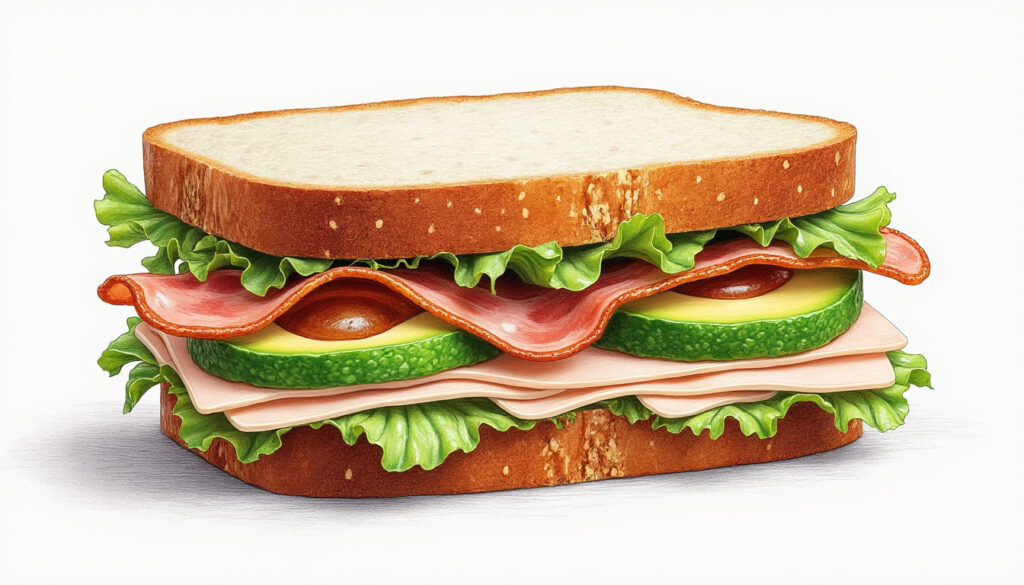
- A successful club sandwich relies on a simple trio that’s easy to secure even after a long day: wELL-toasted bread, hot filling (chicken, bacon), crisp freshness (lettuce, tomato).
- The quick recipe gains calmness when each layer has a clear role: a base that absorbs, a layer that holds, a layer that wakes up.
- Fresh ingredients make the difference in a fast lunch: firm tomato, well-drained lettuce, well-seasoned chicken.
- The cut into triangles is not a whim: it improves handling, stabilizes the layers, and makes serving cleaner.
- A simple preparation doesn’t prevent elegance: good toasting and balanced mayonnaise give clear homemade flavors without heaviness.
Quick homemade club sandwich recipe: the balance that reassures and satisfies
At certain times in life, meals are a matter of minutes. Fatigue makes decisions harder, yet appetite remains strong. A well-built homemade sandwich can then become a landmark: something reliable, hot and crunchy, that prepares quickly and truly nourishes.
The club sandwich has this rare quality: it gives the feeling of a full meal without spending an hour in the kitchen. Its layered structure offers a simple reading. The bread provides energy, the protein (chicken or turkey) supports satiety, and the tomato with lettuce brings freshness to the mouth. This combination avoids the “empty” feeling an hour later, often experienced after quick snacking.
The technical point that changes everything is toasting. Slightly warm sandwich bread soaks up sauce and collapses. Toasted bread, on the other hand, creates a thin barrier. The dry heat of the toaster dries the surface and makes the slices more resistant. Three slices are used in the classic version, which allows splitting the fillings and keeping a consistent chew.
The hot filling is prepared while the bread toasts. Bacon is seared in a pan over high heat or placed under the oven grill. Cooking must be strong, with fat that melts and a crispy texture. This step is not decorative. The crunch increases flavor perception and creates a contrast that erases the impression of a “sad sandwich.”
Chicken can be a slice of already cooked breast or better, pieces quickly grilled in a pan. Lightly browned chicken develops rounder aromas. A pinch of salt, a twist of pepper, sometimes a squeeze of lemon if the fridge offers it, suffice to give direction. Fresh ingredients require mostly attention. The tomato must be firm to avoid sogginess. The lettuce is washed and thoroughly dried; otherwise, water mixes with the mayonnaise and dilutes everything.
Mayonnaise is often the tipping point. Too little, the sandwich seems dry. Too much, it becomes heavy and slippery. A thin layer, spread to the edges, acts as “glue” and stabilizes the layers. This simple gesture makes the quick meal cleaner to eat, which matters when time is short.
Club sandwich ingredients: choose little, choose right
Easy cooking does not depend on a never-ending list. It depends on a small number of coherent elements. For a classic club sandwich, the base relies on sandwich bread, crispy bacon, chicken, tomato, lettuce, and mayonnaise. Cheese can be added, in thin slices, to round out the texture and bring creaminess.
The quality of bread is identified by its ability to toast without burning. Too sweet a bread colors fast and gives a caramelized note that can overwhelm the rest. A more neutral bread leaves space for the other ingredients. Tomatoes benefit from being cut into thin slices, then placed on a paper towel for thirty seconds. This short time removes excess juice without drying the flesh.
To keep homemade flavors, seasoning is more important than “additions.” Chicken seasoned at the right moment, during cooking, retains juices better. Slightly salted lettuce becomes more expressive. The difference is felt from the very first bite.
The next section enters step-by-step preparation, with a logical sequence that avoids unnecessary back-and-forth.
Homemade club sandwich in easy cooking: short steps, precise gestures, clean result
When hunger rises and the day has already demanded a lot, success depends on the order of actions. A club sandwich is built like a small chain. Heat first, freshness next, assembly last. This sequence limits moisture, keeps crunchiness, and avoids serving a lukewarm and soggy sandwich.
Bacon cooking comes first. On a hot pan, high heat, a few minutes suffice. Bacon must be crispy without being bitter. On a tray under the oven grill, it becomes uniform, practical if several people are eating at the same time. Once cooked, it rests on paper towels, which avoids excess grease in the bread.
Bread toasts meanwhile. Three slices per sandwich. Medium to strong toasting gives a dry surface. If the bread is still warm at assembly, mayonnaise spreads better, but tomato should not be placed directly on a hot slice. Heat would make the water come out and ruin the crunch. A short waiting minute is enough.
Chicken is prepared according to what’s available. Slices of already cooked breast speed up the simple preparation. Pieces grilled in the pan add a more flavorful note, especially if the meat is just browned. Too long cooking dries it out, then forces compensating with more sauce. The good marker is visual. A uniform color, a slightly colored surface, a still supple texture.
Assembly can follow a stable logic. A first slice of bread spread with mayonnaise, then lettuce, tomato, chicken. A second slice, mayonnaise on both sides if you want better cohesion, then bacon, cheese if chosen, and a little more salad. The last slice closes everything. This construction distributes textures and prevents tomato slipping.
A club sandwich is served immediately. Time here is the enemy of crunchiness. If waiting is inevitable, better to keep elements separate and assemble at the last moment. This practice is common in restaurants, for a simple reason. Bread absorbs moisture very quickly.
Reference table for a quick lunch without compromise
| Element | Sensory objective | Tangible reference | Common mistake |
|---|---|---|---|
| Toasted sandwich bread | Firmness and crunch | Medium to strong toasting, dry surface to the touch | Warm un-toasted bread, sandwich that collapses |
| Bacon | Crisp-salty contrast | Quick cooking, rest on paper towel | Soft bacon, grease that sogs the bread |
| Tomato | Freshness, acidity | Thin slices, drained for 30 seconds | Very juicy tomato placed on hot bread |
| Mayonnaise | Binder and roundness | Thin layer to the edges | Overdosing, heavy and slippery sandwich |
The next step concerns a detail that seems decorative but actually has a real function. The way of cutting and holding the triangles transforms the eating experience.
Cutting a club sandwich into triangles: handling, aesthetics, layers that stay in place
The club sandwich is bulky. Three slices of bread, several layers, sometimes a sauce. Cutting into triangles is no folklore. It meets very concrete constraints of handling and stability, especially when the sandwich is generous.
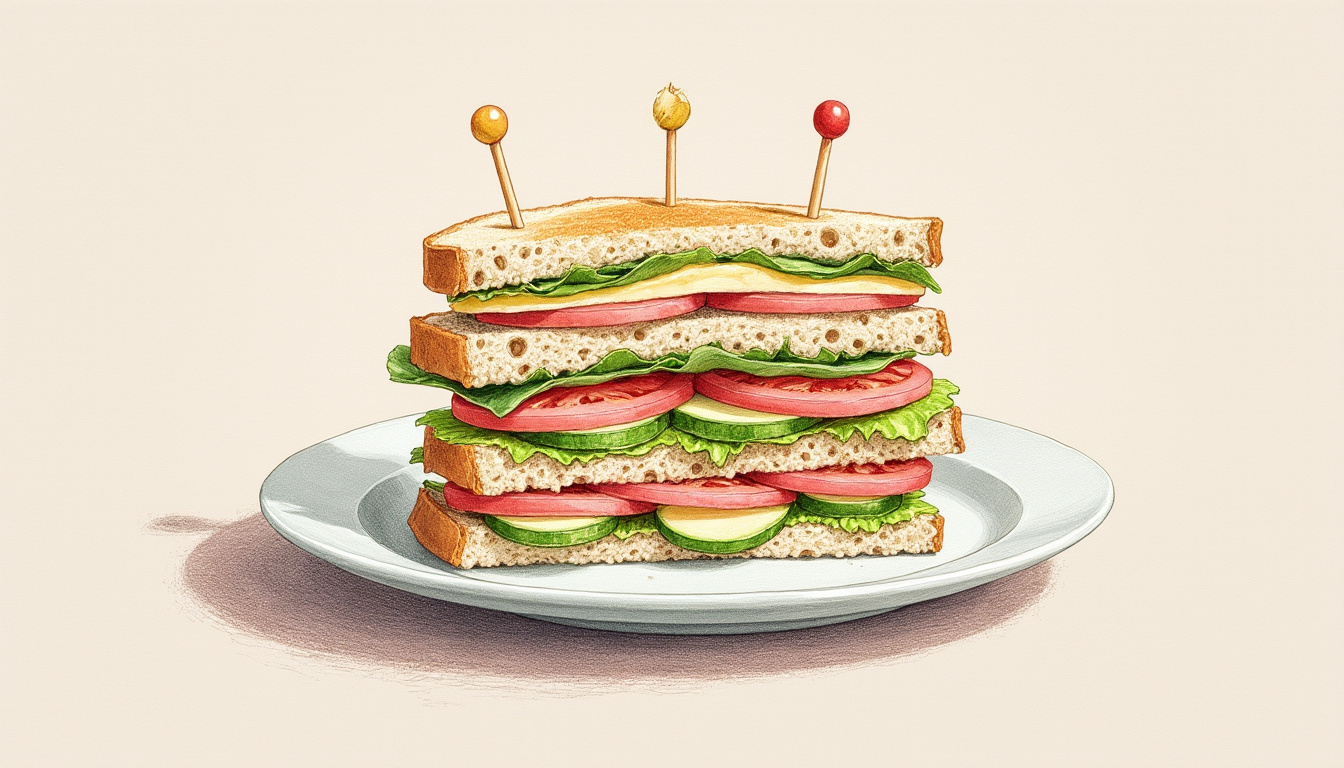
A triangle is easier to hold than a thick rectangle. The point guides the first bite. This limits pressure on the center, where the filling tends to slip. In a quick lunch context, this advantage is clear. Fewer crumbs, less sauce escaping, fewer “catch-up” gestures with a napkin.
The diagonal cut also has a mechanical interest. It goes through the layers by spreading tension. A straight cut tends to compress the filling across the entire width. A diagonal opens a larger surface and lets the layers breathe better. Chewing is more pleasant, the bread stays more consistent.
Presentation matters, even when eating quickly. Four aligned triangles create a readable plate. In private American clubs of the late 19th and early 20th centuries, the search for a clean and neat plate was a mark of care. This aesthetic has remained because it also serves practicality. A club sandwich is easily shared when already portioned.
The toothpick is not a gadget. Sticking a toothpick in the center of each triangle stabilizes the layers. The gesture prevents the sandwich from opening when lifted. It also limits crushing, especially if the bread has been toasted properly. A toothpick placed vertically, well in the middle, must go through all layers. If the bread cracks, it is often a sign of over-toasting or too much pressure when cutting.
Immediate service remains preferable. If the sandwich waits, the triangles loosen. A warm plate, near the stove or oven, accelerates this phenomenon. To keep a clean hold, better to prepare the side dish in advance, then cut at the last moment.
The next section provides historical and cultural insight. Understanding where this sandwich comes from often helps better respect its logic while adapting it to daily life.
Why do we say “club sandwich”: a social origin that shaped the recipe
The term “club sandwich” most likely comes from “club” in the social sense. At the end of the 19th century, certain private American clubs, places of meetings and refined dining, contributed to spreading codified dishes. A frequently cited origin refers to the Saratoga Club-House in New York State, where this sandwich was supposedly served around 1894 before becoming popular in other gentlemen’s clubs.
This birth in an upscale context explains several features. Layering is not just a hunger matter. It showcases ingredients. Each layer is visible, hinted at, distinguished. The clean cut, presence of toothpicks, alignment of triangles also come from this culture of presentation. A dish had to be elegant, even if simple to eat.
The club sandwich then traveled. Hotels, casinos, luxury trains. It became an international classic because it adapts to local cuisines. Chicken, turkey, ham. Bacon or other grilled cold cuts. Classic mayonnaise, more lemony sauce, slightly mustardy variant. The base remains the same. Toasted bread, a protein, a crunchy touch, a binding sauce.
More folkloric explanations sometimes circulate, like the idea of an acronym “Chicken & Lettuce Under Bacon.” They are attractive because they provide a mnemonic rule. They are not considered the most reliable by food historians. This does not take away practical interest. A well-thought club sandwich often respects this layer logic, even without an acronym.
In a family kitchen, the value of the club sandwich is also measured by its capacity to calm “nervous” hunger, the one that follows a busy day. The act of assembling, cutting, piercing gives a small structuring sequence. The brain likes these micro-rituals. They reduce the sensation of chaos, especially when eating between tasks.
To vary without losing simplicity, a few adjustments suffice. Whole wheat bread for more character. Romaine lettuce for a firmer crunch. Mild cheese to round off. The principle remains to keep a clear reading in the mouth, otherwise the sandwich becomes confusing and heavy.
The last part offers reasonable variations and service guidelines, to keep a gourmet sandwich compatible with everyday constraints.
Gourmet sandwich and quick meal: variations, sides, and reference points to stay light
A quick meal doesn’t have to be dull. A club sandwich can be personalized without changing its structure. The practical rule is to modify one element at a time. Changing bread and sauce simultaneously makes the result hard to adjust. Changing only the protein or only the sauce helps understand what pleases and what weighs down.
The protein can vary. Grilled chicken, roasted turkey, leftover chicken from the previous night’s dinner. A simple alternative is to use cold sliced chicken, then compensate with crispy bacon to keep the hot-cold contrast. Cheese can also move. A thin slice between bacon and chicken melts slightly with residual heat, without becoming stringy.
The sauce doesn’t have to be sophisticated. Classic mayonnaise works. Mayonnaise diluted with a spoonful of plain yogurt gives a lighter texture while preserving the binding effect. A touch of mustard adds relief. The goal is to keep a thin, uniform layer that stabilizes and seasons. Overdosing sauce makes the sandwich slippery, then forces squeezing harder, which crushes the layers.
Vegetables deserve particular attention. Fresh ingredients make the sandwich more lively, but moisture remains the enemy. Lettuce should be well drained. Tomato should be drained. A thin cheese slice or a layer of salad can serve as an interface between tomato and bread, protecting the toast.
For the side, the plate can remain simple. A lightly dressed green salad, a few chips or fries work, depending on appetite and timing. A lighter option is to serve the club sandwich with cucumber sticks and a squeeze of lemon, to balance the saltiness of the bacon. This kind of contrast helps finish the meal without feeling heavy.
A useful guideline concerns portion size. A club sandwich cut into four triangles is easy to share. Two triangles often suffice for an adult who wants a quick lunch without drowsiness afterward. Four triangles suit when appetite is marked or when the meal replaces dinner. The cut allows adjusting without feeling “stuck” with a single too-large portion.
This easy cooking keeps a precious advantage. It unfolds in short, repeatable gestures, reducing mental load. The brain recognizes a known sequence and executes it faster. Next time, the club sandwich prepares almost by itself, with the same reliability as a well-established ritual.
Can you prepare a club sandwich in advance without it getting soggy?
Yes, by separating the elements. The bread is toasted at the last moment, the tomato is drained, and the lettuce remains well dried in a container. Assembling just before serving preserves crunchiness and prevents the mayonnaise from moistening the bread.
Which bread to choose for a homemade sandwich that holds well?
A rather dense and not very sweet sandwich bread holds better in the toaster and remains stable under the weight of the layers. Medium to strong toasting creates a dry surface that limits sauce absorption.
How to get really crispy bacon without burning it?
A hot pan on high heat works well, with constant supervision and resting on paper towels. In the oven, the grill gives even cooking, practical for several portions, provided you turn halfway if necessary.
Why is cutting into triangles recommended for a club sandwich?
The triangle holds better, facilitates the first bite, and stabilizes the layers. The diagonal cut also allows placing a toothpick in the center of each piece, which limits opening and crushing of a very stuffed sandwich.