
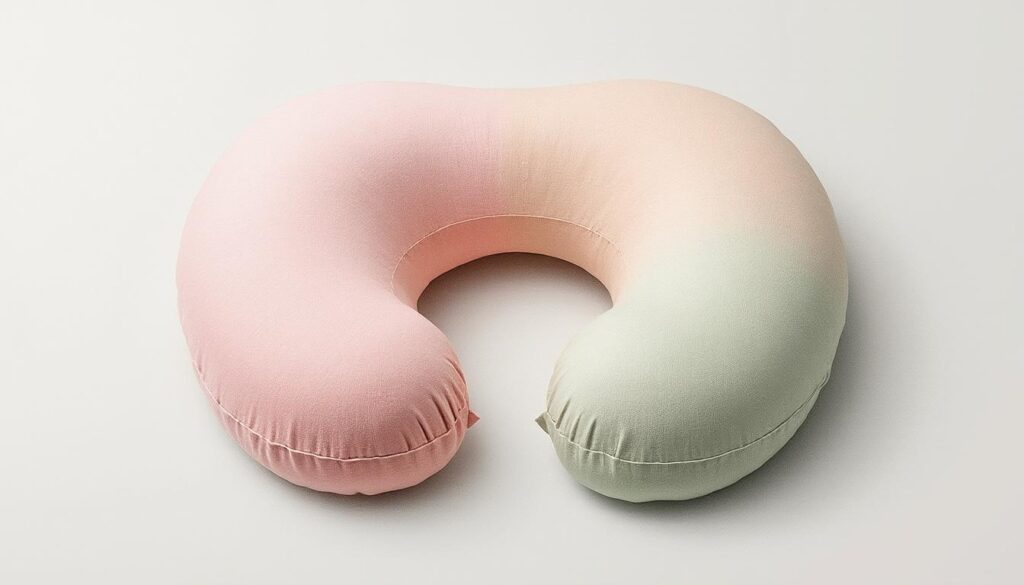
The pregnancy pillow is now an essential item favored by many pregnant women, concerned with preserving their comfort throughout the weeks. This accessory goes beyond a simple support: it acts on posture, sleep quality, and relief of joint tension. Combined with a better adaptation of the changing body, it tangibly supports the well-being of the expectant mother.
- The pregnancy pillow effectively supports the back and belly, reducing the common lower back pain at the end of pregnancy.
- Usable both at night and during the day, it allows adopting positions that promote relaxation and rest.
- It easily transforms into a nursing pillow, becoming a valuable support for the mother and her baby during feedings.
- Different models and materials are available, allowing each woman to adjust her choice according to her preferences and needs.
How the pregnancy pillow improves comfort and sleep in maternity
As the belly rounds, postural changes become more pronounced. This upheaval often leads to muscular imbalance and increased strain on the lower back muscles. The pregnancy pillow, with its enveloping shape, supports the belly while maintaining optimal alignment of the pelvis and spine. Relieving pressure on the inferior vena cava, through right or left side positioning, helps limit heavy sensations and frequent circulatory disorders.
Sleep often becomes fragmented due to discomfort and baby movements at night. Wrapping around the pillow, with its edge slipped between the legs, stabilizes posture and prevents involuntary pelvic rotations, which cause repeated awakenings. This support adapts to evolving needs: early in pregnancy, the pillow can be used to soothe occasional tension, then in the final months, it plays a central role in facilitating falling asleep and continuity of sleep.
The pillow is not a head pillow. Its shape, often in “U” or “C,” is designed for lateral support, while a separate pillow fits the cervical curve. Thus, the supports are distributed and avoid overload on a single area, whether around the shoulders, back or belly. This distinction helps understand how to better organize sleeping arrangements at the end of pregnancy.
Finally, neurologically, undisturbed sleep promotes balanced secretion of essential hormones, such as melatonin and progesterone, which contribute to proper immune and hormonal adaptation in the mother. Comfort consolidated by a well-adjusted pillow therefore acts on sleep but also on an overall balance beneficial to pregnancy.
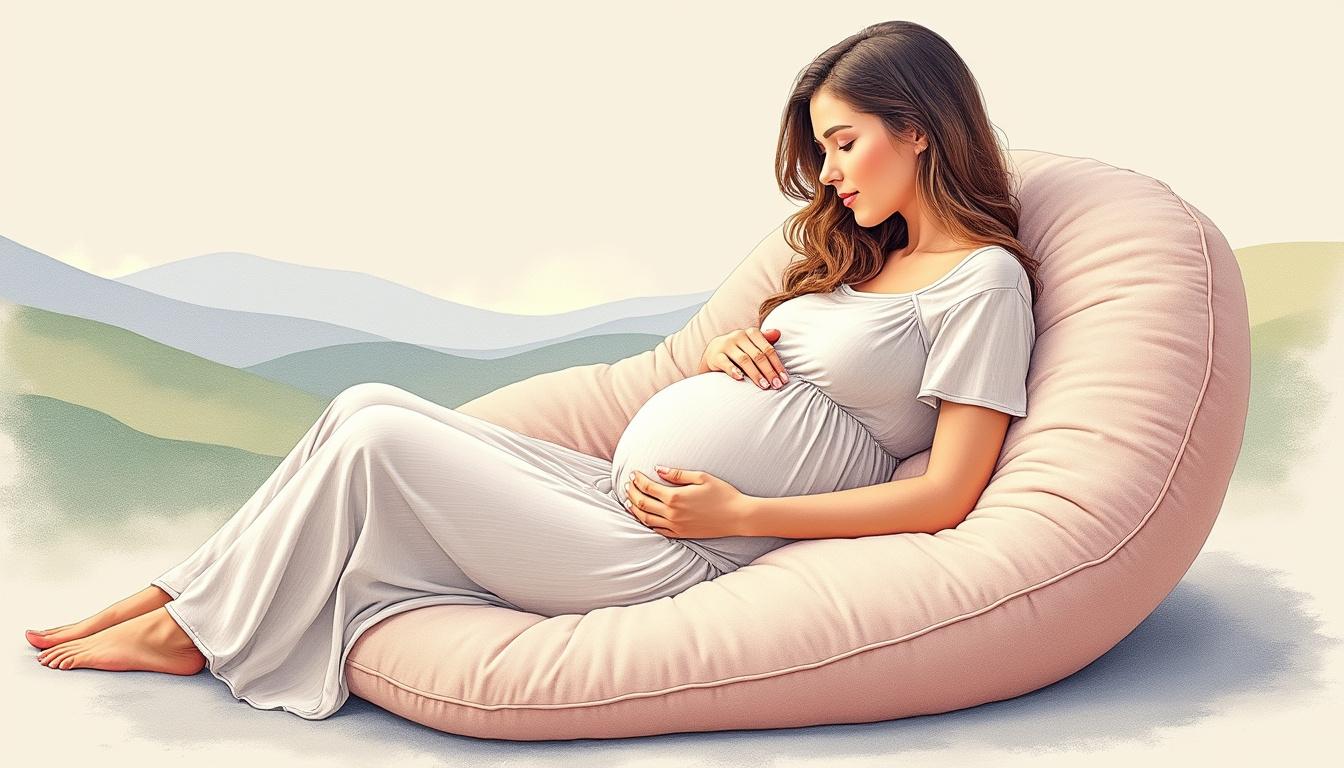
Different shapes and materials for personalized support adapted to expectant mothers
The market offers a wide variety of pillows designed to accompany pregnancy, maternity, and breastfeeding. Each model meets different requirements, depending on morphology, preferences, and stages of pregnancy. The most common shape is a “U” or “C” bolster that fits the body contours without compressing or constraining. Other more compact models facilitate occasional use during the day, for targeted support.
The materials used also affect the quality of support but also maintenance and environmental footprint. Synthetic microbeads offer great adaptability to the shape of the body, with a light weight that facilitates positioning. Conversely, some prefer natural fillings, such as kapok or spelt husks, which provide a firmer sensation and offer different thermal insulation.
The cover plays a significant role in the feel on contact and practicality. Organic cotton, soft and breathable, protects sensitive skin which is often more reactive in pregnant women, while allowing easy and frequent washing to prevent irritation. For others, a microfiber terry cloth cover adds a cozy effect appreciated in autumn and winter.
Each expectant mother is invited to test several configurations to identify which brings her the most relaxation. Moreover, the option to buy separate covers offers a practical and economical advantage, avoiding having to repurchase a complete pillow for hygiene or wear reasons. These details contribute to long-term well-being, where a poor choice could cause recurring pain or limited use.
Comparison of common materials
| Material | Advantages | Limitations | Usage Advice |
|---|---|---|---|
| Synthetic microbeads | Flexibility, lightness, good adaptability | May clump over time, less breathable | Provide a frequently washable cover |
| Kapok (vegetable fiber) | Natural, firm, thermal insulating | Less adjustable, larger volume | Preferable if skin sensitivities |
| Spelt or organic millet husks | Firm, ecological, pleasant sensation | Sometimes heavier, specific maintenance | Comfortable for seated use |
Multiple uses of the pillow before and after birth
The pregnancy pillow is not limited to the prenatal period alone. After delivery, it becomes a precious support both for breastfeeding positions and relaxation moments with baby. Proper positioning of the infant is critical to prevent cracked nipples, chest pain, and to secure the feeding exchange. The pillow helps elevate baby, depending on the mother’s morphology and the infant’s temperament.
The lateral support provided by the pillow also facilitates cuddling and encourages closeness, which contributes to attachment development. Moreover, the same pillow can be used to prop baby during early floor play moments or to secure a small space, thus extending the usage beyond the mother.
It is important to understand that the quality of the mother’s posture during breastfeeding or bottle-feeding affects her muscular comfort and prevention of neck tension. This is especially evident after long weeks of nursing. Supporting oneself on a pillow, rather than leaning forward or straining, provides back protection and essential energy saving.
Some families favor the use in a baby seat which some models accommodate, with modular structures: this mode of use secures baby while sparing the mother. Among these models, several offer easy maintenance and suitable filling for prolonged hygienic use.
Recommended positions with a pregnancy pillow to relieve back pain and promote well-being
Back pain and pelvic tension are common in late pregnancy, partly due to progressive ligament relaxation under the influence of hormones like relaxin. The pregnancy pillow helps maintain a stable side position which limits these strains. The so-called left lateral position is often advised because it promotes better venous circulation by avoiding compression of the superior vena cava.
Most often, the expectant mother wraps around the pillow, which passes between the legs, supporting the belly and back simultaneously. This overall support helps reduce muscular fatigue accumulated during the day and restore a state of relaxation. Some women find that in a supine position, placing the pillow under the legs quickly relieves abdominal heaviness and improves breathing.
Distinguishing pain from poor posture from pathological pain is fundamental. Persistent, intense pain, or pain associated with numbness or weakness in the limbs, should prompt a quick consultation with a healthcare professional. These signs are often linked to nerve compression or significant contractures that require prompt treatment.
Using the pillow is also recommended during rest sessions in the day. Sitting in an armchair with the pillow placed between the back and the seat back can prevent lower back tension. Encouraging regular support even outside of night contributes to better general condition and aids recovery.
- Adjusting the pillow’s position according to personal comfort is the key to success to gain real benefit.
- Avoid forcing one side only: alternate left and right positions to preserve circulatory balance.
- Consider combining the pillow with a cervical pillow for complete and harmonious support.
- Return to a midwife or physiotherapist in case of unusual or persistent pain.
How to choose your pregnancy pillow: technical and well-being criteria to consider
The choice of a pregnancy pillow must be based on several criteria to guarantee lasting comfort. Size and shape vary depending on the morphology of the pregnant woman and the available space in the bed, but also according to the intended use (night, daytime rest, breastfeeding). A pillow that is too large can be cumbersome, while one that is too small may not provide sufficient support to the belly and back.
Filling plays an important role: it must be firm enough not to collapse, but flexible enough to fit the body without creating painful pressure points. Synthetic microbeads are effective but can clump together, while natural fibers keep their volume longer without excessive deformation.
The choice of fabric for the cover depends on skin sensitivities. A pregnant woman prone to irritation might prefer organic cotton or natural linen. The option to remove the cover and wash it frequently improves hygiene and prolongs use.
Finally, the practical aspect should not be overlooked: a pillow easy to handle, move, and maintain encourages regular use, essential for observing a real impact on well-being. More than an accessory, the pregnancy pillow is chosen as a true partner for calmly navigating physical changes and daily needs.
For additional information on different intimate positions during pregnancy, parents can also consult this specialized resource detailing possible adaptations to preserve comfort and safety.
When to start using a pregnancy pillow?
The pillow becomes particularly useful from the second trimester, when the belly starts to grow and the first back tensions appear. However, it can be used earlier in case of pain.
Is the pregnancy pillow suitable for all women?
Every woman is unique; some pillows suit better depending on morphology and preferences. Consulting a midwife helps adapt the choice according to specific needs.
Can you use a pregnancy pillow after delivery?
Yes, it often transforms into a nursing pillow or support for relaxation moments with baby. Its use remains relevant for several months after birth.
Can a pregnancy pillow relieve other pains than back pain?
Indeed, it can help reduce pelvic tensions, facilitate blood circulation, and relieve pressure on the belly. This global support contributes to overall well-being improvement.
How to maintain a pregnancy pillow?
Most pillows come with removable machine-washable covers. Regular washing is recommended to prevent irritation and maintain a healthy environment.