

In brief
- Melasma corresponds to hyperpigmentation of the face, often visible on the cheeks, upper lip, forehead, and cheekbones.
- The most frequent trigger remains the duo UV + hormones during pregnancy, with a higher risk on darker skin types and in case of family predisposition.
- Prevention primarily relies on a broad-spectrum sunscreen applied in sufficient quantity, renewed regularly, and on shade-related measures (hat, timing).
- A gentle facial care routine, focused on hydration and pregnancy-compatible active ingredients, limits irritation that can worsen brown spots.
- After childbirth, fading is common within a few months, but persistence beyond 6 months or an atypical lesion warrants a dermatological opinion.
Melasma: understanding hyperpigmentation to better prevent it
Melasma, also called chloasma, appears as brown or grayish spots, often symmetrical. They settle on areas highly exposed to light, such as the cheeks, cheekbones, upper lip, and sometimes the forehead. The discomfort is mainly aesthetic, but the emotional impact can be real, because the face changes while pregnancy already brings many bodily adjustments.
Biologically, the skin produces melanin thanks to specialized cells called melanocytes. During pregnancy, hormonal fluctuations make these melanocytes more reactive. Light, especially UVA, acts as an amplifier. As a result, pigment production increases locally, forming this patchy hyperpigmentation.
This phenomenon often appears from the second trimester, frequently around the fourth month. Timing matters, as it helps understand why a perfect routine in winter isn’t enough if spring follows with UVA already present. Light is not just about mid-summer days. Even under cloudy skies, some UVA penetrates and stimulates pigmentation.
Risk factors combine. Darker skin types generally have a stronger tendency to pigment. Brown hair is also commonly associated with increased pigment sensitivity. Family predisposition counts as well, with a history of pigmented spots in the mother or sister. Then there is the overall hormonal history, as some women notice spots under estrogen-progestin contraception, especially if the formulation is strongly dosed in estrogens.
A distinction helps avoid confusion. When the same pattern of hyperpigmentation occurs outside pregnancy, including in men, the term used is rather melasma. The mechanism is similar, but the context differs, guiding the management approach. During pregnancy, the main goal is prevention and skin protection with safe measures, rather than seeking immediate “erasure.”
One point requires vigilance. If spots rapidly change in appearance, become very irregular, bleed, itch intensely, or are accompanied by persistent crusts, it’s no longer a simple cosmetic matter. A dermatologist’s examination can exclude other diagnoses. This guideline often reassures because it puts things in perspective without dramatizing.
When the skin understands light as a hormonal signal, prevention starts with understanding this UV-melanin dialogue.
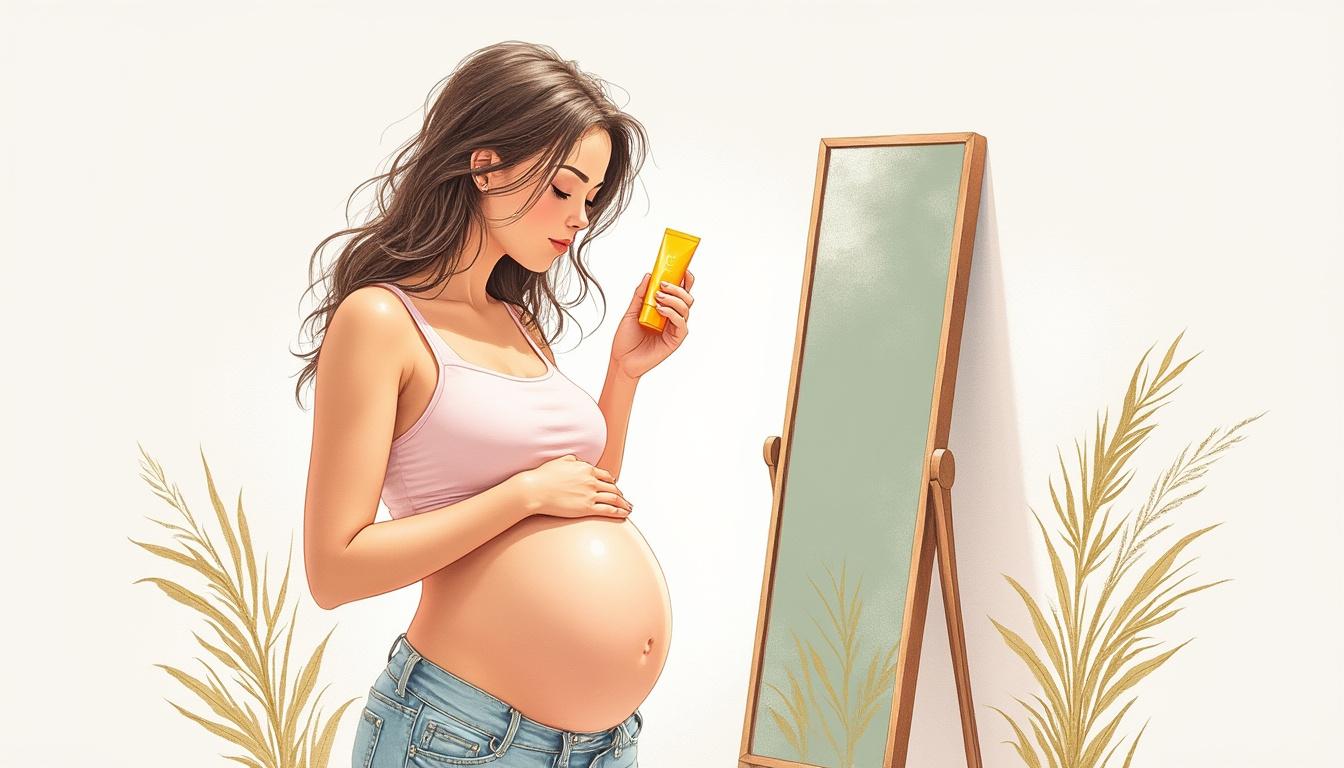
Sunscreen protection during pregnancy: the most reliable strategy against brown spots
Most of the time, when melasma appears, sun exposure has played a triggering role. Sometimes it is obvious, like a day outdoors. Sometimes it’s more insidious, like a “shaded” but bright terrace, or a daily car ride on the window side. The light that stimulates pigmentation is not always felt as aggression, especially with UVA which penetrate deeper and give less of a “hot flash” sensation.
Sunscreen is the central tool, provided it’s used methodically. An SPF 30 is a reasonable minimum, and SPF 50 offers appreciable safety margin when the skin pigments easily. Ideally, it’s a broad-spectrum formula (UVA/UVB), pleasant to wear, because a product disliked ends up at the bottom of a drawer. Quantity matters as much as the SPF, since applying too little strongly reduces real protection.
The most useful practical rule is reapplication. On a day outside, reapplying every two hours is a solid guideline, and it becomes non-negotiable after swimming, sweating, or wiping the face. On an “urban” day, adjustment can be made according to outings and season, but a single morning application rarely suffices if lunch is spent outdoors.
Exposure times also matter. Between 11 a.m. and 4 p.m., intensity is often stronger, increasing the risk of pigmentation fixing. Shifting a morning walk, choosing shaded paths, wearing a wide-brimmed hat, are simple acts that combined truly protect. Sunscreen sticks on small and very exposed areas, like the upper lip, nose, and eye contour, can complement a classic cream, especially if makeup makes reapplication difficult.
An often overlooked detail concerns reflected light. In the mountains, snow reflection increases exposure. At the beach, sand and water reflect some rays. Even by the pool, the face receives UV from several directions. This explains why some skins pigment despite an impression of caution.
For those who like concrete guidelines, here is a simple way to structure the day without rigidity. In the morning, apply protection. Before prolonged outing, second thin layer. Outdoors, regular renewal if the day requires it. Indoors, vigilance near very bright windows. This is not obsessive, it’s a logic of UV dose reduction, like adjusting cold exposure by adding a clothing layer.
To explore management options and nuances by skin type, reading solutions for melasma during pregnancy can help position oneself without getting lost in unrealistic promises.
Well-applied sunscreen reduces the risk of appearance and limits the depth of spots, often changing their evolution after birth.
Facial care and hydration: soothing the skin to limit worsening hyperpigmentation
Pregnant skin is not just “more pigmented.” It can be more reactive, drier, or conversely oilier, depending on the initial terrain and hormonal evolution. This instability explains why usual routines become irritating. Chronic irritation, even mild, maintains low-grade inflammation. And inflammation, in a predisposed skin, can worsen pigmentation. The goal is therefore not to multiply products but to stabilize the skin barrier.
Gentle cleansing is the foundation. A non-stripping makeup remover, a well-rinsed micellar water if used, or a cleansing milk often suit better than a very foaming gel. In the morning, a simple rinse with lukewarm water may suffice if the skin feels tight. In the evening, removing sunscreen and impurities is useful, but without rubbing. Facial skin does not need to be “squeaky” clean to actually be clean.
Hydration then plays a protective role. A cream containing humectants like glycerin or hyaluronic acid helps retain water, while lipids (ceramides, squalane, some well-tolerated butters) limit water loss. Thermal water may soothe a warming sensation but doesn’t replace a cream if skin lacks lipids. Comfort sensation is not a whim. It often indicates that the skin barrier is respected.
Aggressive exfoliations pose problems. Grains, brushes, acids that are too strong or used too often can cause micro-irritations and redness. The result can be paradoxical, with more radiant skin for two days, then brown spots seeming to “mark” more. During pregnancy, very gentle and spaced exfoliation, if well tolerated, can be considered. But as soon as the skin tingles or reddens durably, the signal is clear.
Lightening actives require particular caution. Some ingredients used in dermatology, such as retinoids, are not compatible with pregnancy. Others can be discussed case by case. A well-formulated vitamin C can support radiance and help fight oxidative stress linked to the sun, provided the skin tolerates it. Natural products can also provide comfort, but “natural” does not mean “harmless.” Essential oils, for example, are not all suitable, and some are photosensitizing, thus counterproductive.
Overall coherence matters more than sophistication. A short, repeated routine often yields better results than stacking products. Cleanse gently, hydrate, protect from the sun, then optionally add a well-tolerated active — that’s a simple scheme respecting skin physiology.
For those seeking guidance when classic care is unsuitable or the skin reacts, alternatives to melasma and its care can offer more adapted ideas, especially when skin sensitivity increases over the weeks.
A stable skin barrier makes the skin less reactive to light and reduces the inflammatory terrain that “anchors” hyperpigmentation.
Daily prevention: concrete measures, diet, and realistic guidelines
Prevention of melasma is played out in repeated details. The best sunscreen loses its value if applied once then forgotten all day. A hat is very effective, but only if it actually comes out with you. A gentle routine works, but not if a home peeling irritates everything Sunday evening. Coherence is not rigid. It builds around realistic guidelines, compatible with pregnancy fatigue, medical appointments, and sometimes already a child to manage.
A useful approach is to think in “layers of protection.” The first layer is topical photoprotection. The second is smart avoidance of UV peaks. The third is physical protection: textiles, glasses, hat brim. The fourth is irritant limitation. Each layer removes part of the risk, and additions make the difference.
Here is a short list of measures that easily integrate into a day and truly protect skin protection without demanding impossible logistics.
- Apply sunscreen in the morning after moisturizer, then let it absorb a few minutes before makeup if needed.
- Plan reapplication in mini format or stick, especially for upper lip and cheekbones if the sun is present.
- Avoid prolonged exposure between 11 a.m. and 4 p.m. when possible, by shifting an outing or choosing a shaded route.
- Replace abrasive exfoliations with gentle cleansing and regular hydration, especially if the skin heats or tightens.
Diet is often questioned. Scientific data doesn’t allow promising that a food will “prevent” spots. However, supporting skin from the inside remains coherent, because pregnancy mobilizes many resources. A diet rich in fruits and vegetables provides antioxidants, including vitamin C. Folate intake (vitamin B9) is already central in pregnancy monitoring, especially early on, and a varied diet can contribute to covering needs in addition to prescribed supplements. The logic is not to eat “to erase” spots but to reduce factors that weaken skin and its repair.
Visible light, that from screens, is sometimes cited in pigmentation discussions. In 2026, public recommendations remain focused on UV as the main factor in melasma and chloasma. For highly pigmented skins, choosing a tinted sunscreen can provide extra comfort, as iron oxides filter part of visible light. It’s not mandatory, rather an option to consider if spots settle despite a solid UV routine.
A table can help distinguish what is useful from what is often disappointing, especially when one looks quickly for a solution while the skin follows its hormonal rhythm.
| Common situation | What happens in the skin | Concrete and realistic response |
|---|---|---|
| Spots darken after a “short” outing | Melanocyte stimulation by UVA even without heat sensation | Increase sunscreen amount, add hat and targeted reapplication |
| Skin stings with a new serum | Weakened skin barrier, micro-inflammation favoring pigmentation | Stop irritating active, return to gentle cleansing + hydration for 7 to 10 days |
| Spots present at end of pregnancy despite precautions | Highly pigmented hormonal terrain, possible genetic predisposition | Maintain strict photoprotection, avoid aggressive procedures, plan dermatologist opinion after birth if persistent |
| Relapse during a subsequent pregnancy | Skin pigmented memory and even UV sensitivity | Start photoprotection early in pregnancy, before first marks appear |
Prevention works better when started early, before the first spot even, because established pigmentation then takes more time to fade.
After childbirth: evolution, possible treatments, and when to seek a dermatological opinion
After birth, many women see melasma fade spontaneously within a few months. Hormones gradually drop, and melanocyte activity calms. This improvement isn’t always linear. A summer following birth may maintain spots if sunscreen protection becomes harder between outings with baby, unpredictable naps, and fatigue.
Persistence up to six months postpartum can still be normal evolution. Beyond that, especially if hyperpigmentation remains marked, a dermatological opinion helps discuss options. Some management relies on depigmenting creams used over a limited period. A historically known protocol combines hydroquinone, topical corticosteroid, and retinoic acid, with a synergistic action on melanin production and skin renewal. This treatment is prescribed and monitored because it can irritate at the start, somewhat like peeling, and is not suitable during pregnancy.
Procedures like peeling or laser can sometimes be offered depending on melasma type, pigment depth, skin color, and history of post-inflammatory reactions. These techniques require fine evaluation because a skin that pigments easily can also develop secondary hyperpigmentation if the procedure is too aggressive. The goal of an experienced dermatologist is to choose the right intensity, timing, and to supervise photoprotection before and after.
The risk of recurrence in a subsequent pregnancy is real. This is often experienced as unfair, especially when the first spots took a long time to fade. Yet knowing the skin retains “pigment memory” helps anticipate differently. Applying sunscreen from the start of the next pregnancy, including in winter, sometimes clearly changes the final intensity of the marks.
A box of concrete guidelines can help decide when to consult, without anxious mirror monitoring. Skin varies, but certain signals justify an examination.
Consultation guidelines
An appointment with a dermatologist is indicated if spots appear for the first time and their appearance worries, if a pigmented patch has very irregular borders or changes rapidly, if a lesion bleeds or crusts, or if hyperpigmentation persists beyond six months postpartum despite regular sunscreen protection. A consultation also helps adapt facial care to skin type and avoid unsuitable treatments bought randomly.
The postpartum period adds one last parameter, rarely anticipated. Some women resume hormonal contraception and notice pigment reactivation. It’s not systematic, but if skin already reacted to estrogens, the subject deserves discussion with the physician or midwife to choose a coherent option with skin history.
To keep a global perspective on bodily and hormonal choices after pregnancy, some related topics help position oneself in the long reproductive health timeline, like guidelines about tubal ligation and weight, reminding that every decision is part of a personal, medical, and emotional balance.
After childbirth, the right pace is one that protects the skin without exhausting the mother, because a sustainable routine is better than a perfect protocol abandoned in two weeks.
Can melasma appear after childbirth?
Yes. Hormonal disturbances do not stop on the day of birth. Spots can appear or darken in the following weeks, especially if the skin is exposed to UV. Photoprotection remains relevant postpartum, including during daily walks with baby.
Which sunscreen to choose to limit brown spots during pregnancy?
A broad-spectrum UVA/UVB sunscreen with SPF at least 30, often 50 if the skin pigments easily, is a good guideline. The best formula remains the one applied in sufficient quantity and renewed. Tinted versions may suit skin prone to hyperpigmentation, especially with regular exposure.
Are natural products enough to prevent melasma?
They can help improve comfort and skin tolerance, but do not replace real UV protection. Some so-called natural substances, like essential oils, can irritate or be photosensitizing. A cautious choice is to keep a short, well-tolerated routine and place sunscreen at the center of prevention.
When to consult if spots persist?
If spots remain very marked beyond six months after childbirth, or if their aspect is atypical (rapid evolution, crusts, bleeding, intense itching), dermatological consultation is indicated. The doctor will verify diagnosis and propose a treatment adapted to skin type and pigment depth.