In brief
- Jokes and riddles are liked by children because they play with language, logic, and the element of surprise, three very active levers between ages 5 and 12.
- A question-answer format helps younger children follow along, while slightly longer stories support the attention of older ones.
- Laughter is not just entertainment: it reduces tension, revives listening, and strengthens emotional safety when the setting remains respectful.
- Adapting humor to age avoids jokes that are too abstract, awkward innuendos, and mockery that leaves marks.
- A small play ritual (in the car, at the table, before bedtime) makes children more comfortable telling their own stories, with simple speaking cues.
At certain times of the day, children’s energy levels rise a notch, while adults’ levels fall. Journeys, queues, bath time, or bedtime create a perfect setting for a short joke or a simple riddle, because the mind needs a little shift. The brain of a child between 5 and 12 years old likes spotting a clue, anticipating an ending, then being surprised. This prediction mechanism is a powerful driver of laughter, and it can be exercised like a muscle, gently, without pressure.
Funny jokes and riddles for children aged 5 to 12: why they work so well
Jokes and riddles that are funny work because they activate several skills at once. The first is language comprehension. Between 5 and 7 years old, children consolidate simple wordplays and very accessible double meanings. Around 8-10 years, the brain becomes more comfortable with implicit meaning, homophones, and false leads. Between 10 and 12 years, the child starts to enjoy the structure of a short story, the punchline, and the little absurd logic that makes you smile.
On the neurodevelopmental level, laughter often appears at the moment when an expectation is broken safely. The error detection system lights up, then the emotion transforms into relaxation. This shift is precious when the day has been busy. A child who is restless before sleeping does not always “seek” to provoke. They discharge, regulate themselves, and a verbal game can help them calm down, especially if the tone remains gentle and the pace calm.
Content choice matters. A riddle that is too abstract can frustrate a first grader, while a fifth grader will find it “too easy.” The same sentence can trigger a big burst of laughter in a child very sensitive to the absurd and leave another child indifferent, because language and logic profiles vary greatly. A useful marker is to observe whether the child understands the game rule in less than 10 seconds. Beyond that, simplify the wording or offer a clue.
Relational quality is the second lever. Telling jokes is not a performance. It is an exchange. When the adult laughs with the child, not at the child, the implicit message is strong. The world is a place where you can try, make mistakes, try again. And that, for confidence, is concrete.
To go further into small family rituals and topics that often amuse children, some families also enjoy playful traditions around waiting for a baby, like those mentioned in this take on the Chinese calendar and the baby’s sex, to be used as a conversational pretext, not as scientific truth.
The next section offers ready-to-tell formats, with special attention to rhythm and age, so that humor remains a true shared moment of entertainment.
The best short jokes and funny riddles to tell: ready for school, the car, the snack
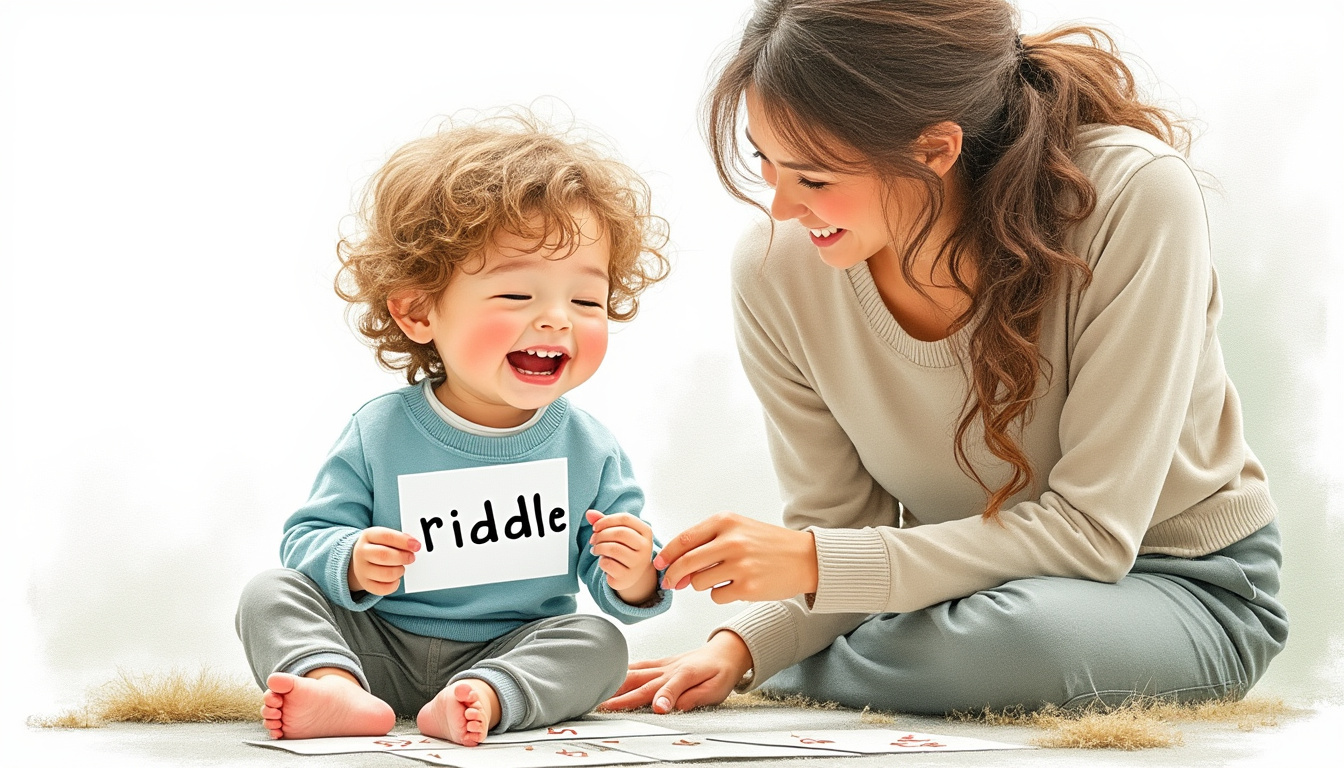
A short joke succeeds when it fits in one or two sentences and the punchline arrives quickly. It is the ideal format for the car, the way to school, or recess, because the child can memorize it effortlessly. Riddles add a micro-delay. They create a little suspense, then an “oh yes” effect that triggers a smile.
A simple marker helps a lot: an effective riddle leaves only one plausible interpretation, then shifts to a wordplay. When the child offers a “logical” but different answer, the most interesting part begins. The adult can respond with a clue, rather than a blunt “no.” This way of accompanying supports cognitive flexibility, useful well beyond laughter.
Question-answer riddles: the classic that makes you laugh without tiring
These formats are often the most energy-efficient for parents. They are short, easy to restart, and adapt to several ages by modulating vocabulary. Children aged 5-6 often laugh at the sound. Those 8-10 spot the wordplay mechanism faster.
- Why does a cat like to be photographed? Because you say “smile.”
- What is the fastest cake? The éclair.
- Why are math notebooks sad? Because they have too many problems.
- What falls without falling? The night.
- What animal is the lightest? The clam, because it’s “not heavy.”
If the child does not laugh, it is not a failure. The brain may be focused on decoding. Leaving a one-second silence after the punchline helps a lot. This pause gives time to integrate the shift, especially for children who process information more slowly.
“Absurd” jokes: when the mental image does all the work
Absurd jokes work well when the child already has good imagery skills. They trigger a sincere laugh because they create an impossible yet very visual scene. They are also useful when fatigue makes logic less accessible.
What has two humps and is found at the North Pole? A really lost camel.
What is green and jumps from tree to tree? A squirrel in a tracksuit.
What is yellow and spins very fast? A banana in a washing machine.
For younger children, the words “tracksuit” or “washing machine” can be a hook. For older ones, it’s the incongruity that hits the mark. In continuity, the next section helps choose according to age and spot when a joke becomes too biting to stay on the funny side.
Adapting humor to age: first grade, second-third grade, fourth-fifth grade, middle school
Between 5 and 12 years, the most striking difference is not just vocabulary. It is the ability to keep a rule in mind, accept being “trapped” by a punchline, and understand that a double meaning is not a lie. A first grader may take some jokes literally. A fifth grader may, on the contrary, appreciate the way the author twists an obvious fact.
A simple rule protects the fun: the younger the child, the shorter and more anchored in known objects the joke should be. The older the child, the longer the story can be, provided the thread remains clear. Toto jokes are often liked because they talk about school, a familiar universe, with a small controlled transgression. They create a space where the child feels “complicit,” without attacking anyone in particular.
Quick orientation table by age and cognitive “load”
| Age | Recommended format | What usually makes them laugh | Signs it is too difficult |
|---|---|---|---|
| 5-6 years | Very short riddles, visual jokes | Sounds, animals, simple absurd actions | Eyes wandering, random answers, restlessness |
| 7-8 years | Question-answer, easy word jokes | Homophones, small logical surprises | Repeated question “what does that mean?” without interest |
| 9-10 years | Short stories with punchlines | Inversion, misunderstanding, light irony | Tells the end first, gets angry at being “caught” |
| 11-12 years | Longer stories, tricky riddles | Controlled absurdity, narrative construction | Rolls eyes, “that’s lame”, or mocks younger kids |
Toto jokes: good training ground for the punchline
When the teacher asks Toto to conjugate “to walk”, Toto answers “I run” to go faster. This mechanic amuses because it twists the instruction while staying on topic. The child understands a rule can be bent without violence, just by parallel logic. It is a social skill under development.
When Toto announces a 20 by adding several grades, the laugh comes from the trick and assumed bad faith. Older children see it as a way to “save face,” very human. Younger ones may see it as a simple mistake. Both readings coexist, and that is precisely what makes the joke durable.
The next part focuses on dynamics in group settings. Because telling a joke is also learning to wait your turn, modulate your voice, and sense when the moment is right.
Telling jokes as a social game: trust, language, and simple rules to avoid slip-ups
A child telling a joke practices speaking in front of a small audience. They learn to capture attention, manage a micro-suspense, then welcome the reaction. This can boost confidence, especially for shy children. For those who take up a lot of space, it becomes a ground for learning balance. Humor then is a social regulation tool, not a stage to shine at all costs.
The concrete gesture that changes everything is to establish a very simple turn-taking rule, especially with siblings or in groups. One child tells a joke, another responds, then the turn passes. This structure prevents piling up jokes shouted over each other, which ends in agitation. It protects everyone’s enjoyment and safety.
A mini-ritual “joke of the day” that works even when parents are tired
The ritual can be set at a fixed moment, for example during toothbrushing or sitting at the table. The brain likes landmarks. When the child knows the moment is coming, they prepare their joke, which mobilizes working memory and language organization.
- A child chooses a riddle or a very short joke.
- An adult or another child reformulates if the sentence is confusing, without correcting the tone.
- A one-second silence is left after the punchline to give the brain time to “make the connection.”
- The same joke can be told two or three times in the week, because repetition reassures and consolidates learning.
When humor stings: how to keep a respectful framework without breaking the momentum
Children test things out. They repeat phrases heard at school, on a video, or in the playground. Some jokes target a peer, a body, an origin, a learning difficulty. There, the adult can set a clear limit without humiliating. Saying “we keep jokes that make everyone laugh” is more useful than giving a long lecture. The limit becomes a concrete social marker.
A child who insists on making fun at someone else’s expense might be seeking attention or struggling to find their place. The most effective approach remains offering an immediate alternative. An “absurd” joke or wordplay about an animal redirects energy without entering a power struggle.
Consulting a professional makes sense if the mockery becomes repetitive, targeted, and is accompanied by other signs such as frequent tantrums, isolation, self-deprecating comments about oneself or others. A discussion with a pediatrician, nurse, or school psychologist can help understand what is happening, without dramatizing.
The next step offers a broader selection, with varied formats, to feed family entertainment without getting exhausted inventing.
Selection of funny jokes and riddles: from very short to short stories, to vary the surprise effect
Varying formats prevents weariness. One week, children prefer minute riddles. Another, it’s short stories with a punchline. The brain seeks both familiarity and surprise. Reusing a “working” joke is not a lack of imagination. It is a way to secure the setting, then test a novelty alongside.
Very easy little jokes, perfect to restart a journey
Two potatoes cross the street. One gets run over and the other says “Oh mashed.” The mechanism is immediate and works even for the youngest, because the association is known.
Two tomatoes cross the street. One gets run over and the other says “You come ketchup.” Children often laugh at the transformation of a food into an action, because the image is clear.
Two snails meet a slug. “Look, a nudist.” Here, the effect works mostly from 7-8 years old, when the child understands the reference to the “shell” as clothing.
“Mild trap” riddles for older children
A rooster lays an egg on a roof. Which side does the egg fall? Nowhere, a rooster doesn’t lay eggs. Children aged 9-12 like this type of trap because it forces them to return to basic knowledge rather than calculate.
On a branch, 10 birds. A hunter shoots a bird. How many are left? Often none, because the others fly away. The point is to open an exchange. Some children discuss “but what if the hit bird stays,” and the game becomes a mini-investigation, which feeds logical thinking.
Twisted acronym games: to keep for primary school, while staying simple
Some children like twisting acronyms because they feel like entering the “grown-up” world. It can be fun provided examples are chosen without innuendo. PSG can become “Grandpa saves Ginette,” for example. The fun comes from the contrast between the seriousness of the acronym and the absurd story attached to it.
To maintain a family setting, it is better to avoid acronyms referring to toilets or sexuality when the child is young, even if the schoolyard loves them. The goal is not censorship. The goal is not to install humor that excites the nervous system at the moment the child then needs to settle down.
When you look for other ideas for conversational games in the family, some parenting culture content circulates widely and can serve as a starting point for light exchanges, like a popular reading about prediction traditions, to turn into a pretext for riddles rather than certainty.
At this stage, you have short formats, age markers, and a relational framework. The FAQ below answers the practical questions that come up most often when children want to tell jokes repeatedly, or when humor overflows a bit.
My child repeats the same joke twenty times, should I stop them?
Repeating is common between ages 4 and 8 because the child consolidates the structure and savors anticipating the punchline. You can set a gentle limit by suggesting alternation, for example two repetitions then a novelty, or by asking the child to tell the joke in a whisper, then very slowly, to vary without stopping momentum.
How to help a shy child tell riddles at school?
The most effective is micro-format training. Choose a short riddle, then train the rhythm in three parts: question, pause, answer. The pause is the difficult point for a shy child because it gives the impression of being judged. By repeating the pause at home, the child learns that silence is part of the game and does not announce failure.
Which jokes to avoid to keep family humor?
Avoid jokes targeting a person, a body, an origin, a disability, or based on humiliation. “Potty” jokes can make people laugh, but they often excite more than they soothe, especially before bedtime. Prefer word games, animals, visual absurdity, and punchlines based on light misunderstandings.
My child gets upset when no one laughs, how to react?
Many children confuse laughter and public love. You can validate the intention without lying, saying the idea is good but the punchline was hard to understand, then reformulating together. If the child often gets upset, it is sometimes a sign of fatigue, school frustration, or greater sensitivity to others’ gaze, and it is worth discussing calmly outside of joke time.