
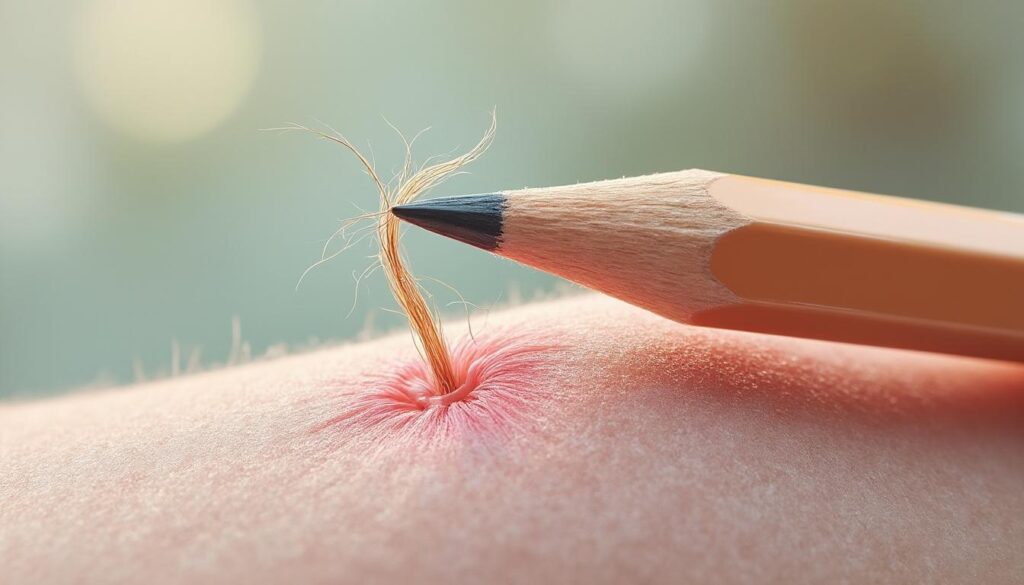
In brief:
- Ingrown hair results from abnormal growth of a hair under the skin causing inflammation and sometimes skin infection.
- The most affected areas include the legs, armpits, pubic area, and beard, especially after hair removal or shaving.
- Certain factors, such as hair type or hair removal methods, increase the risk of ingrown hairs.
- Prevention relies on gentle care, including exfoliation to maintain healthy skin texture.
- A dermatological treatment may be necessary in case of infection, particularly to avoid cyst formation.
Ingrown hair: growth under the skin with sometimes delicate consequences
Ingrown hair is characterized by an abnormal hair growth, where instead of naturally emerging from the hair follicle to pass through the skin surface, it develops inside the skin. This phenomenon, often subtle, involves sometimes complex mechanisms, combining hair morphology, skin quality, and the methods of hair removal.
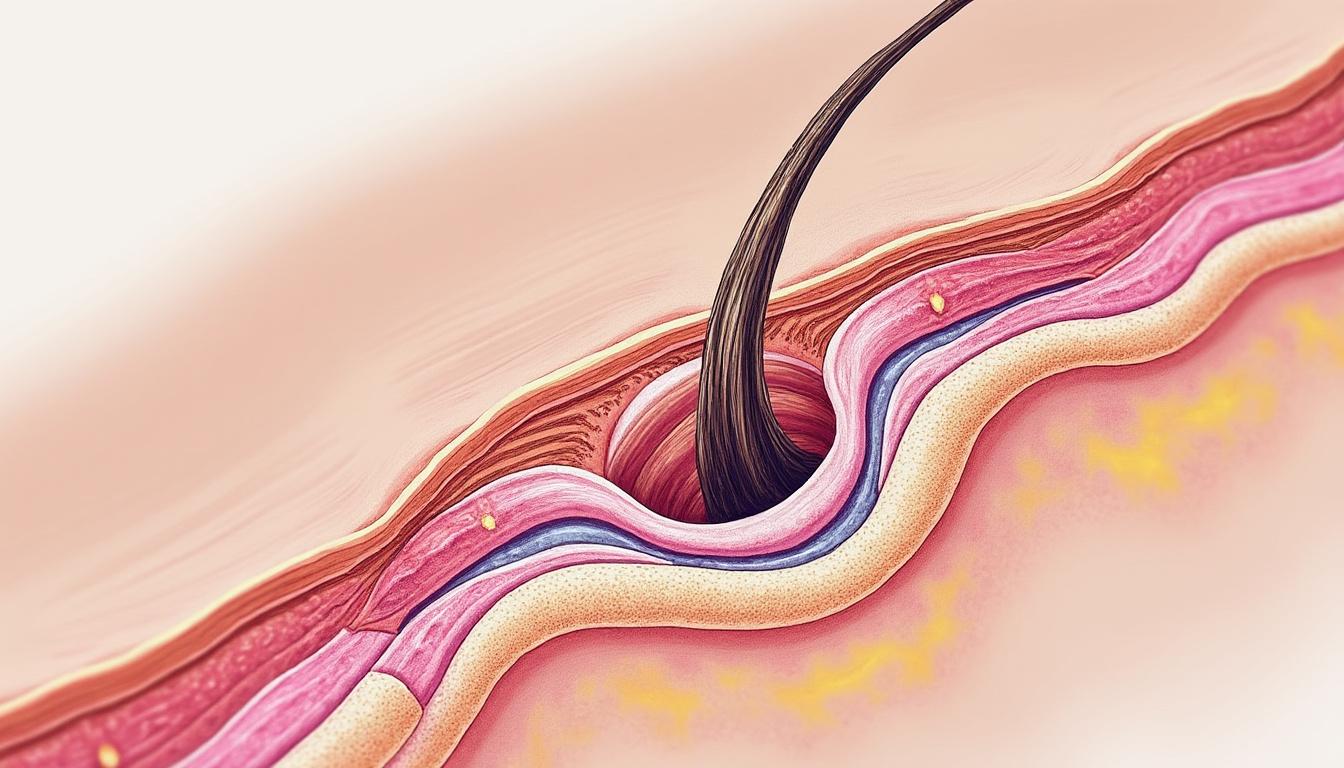
Normally, each hair is born in a hair follicle, a small pocket located in the dermis. The hair lengthens, passes through the epidermis, and is exposed to open air. When hair growth is obstructed, for example by a thickening or blockage of this canal, it can turn back and curl under the skin, leading to what is called an ingrown hair.
This situation can lead to local inflammation, because the body considers this hair a foreign body. An immune response is triggered, manifested by redness, a sensation of heat, and itching around the follicle. In the presence of a skin infection, this phenomenon can worsen by forming a painful cyst or abscess. The inflammation related to an ingrown hair is thus a warning signal that skin care must be attentive.
Ingrown hairs can occur wherever hair grows, but they are particularly common in areas exposed to intense friction or frequently shaved. The arm contour, bikini area, legs, and the face in men are typical regions where the phenomenon appears. It is also observed that people with dense hair or curly hair are more prone to this type of imperfection.
The discomfort associated with ingrown hair is not only aesthetic. The condition can cause significant discomfort, ranging from simple itching to intense pain, especially when inflammation or skin infection sets in. This situation requires particular attention to avoid the spread of infection and reduce the risk of scarring.
Factors favoring the formation of ingrown hairs: understand to better act
The appearance of ingrown hairs is not random, but the result of a set of circumstances and intrinsic or extrinsic factors that every parent or individual can learn to identify. Through hair removal, shaving, or certain characteristics of skin and hair, the likelihood of this issue emerging is sensitive to the vigilance one gives to these elements.
Influence of hair removal and shaving methods
Shaving, whether male for the beard or female for legs and armpits, is a major cause of ingrown hairs. When the blade does not cut the hair cleanly but breaks or tears its tip, the hair can enter laterally into the skin. Additionally, shaving against the grain increases this risk because it encourages the hair to curve before even exiting the skin.
The use of wax or tweezers also has a notable impact. These methods pull the hair out at the root, but if the regrowth is fine and curly, or if the skin dries out, hair exit is slowed. The hair attempting to regrow is then likely to embed under the epidermis, creating painful inflammation.
The role of hair texture and density
Hair type greatly influences susceptibility to ingrown hairs. Thick, curly, or kinky hairs naturally curve and are more prone to turn back without crossing the skin. In contrast, fine and straight hairs come out more easily without causing discomfort.
Skin characteristics affecting hair growth
Thick, dry skin, or skin covered with dead cells creates a barrier that the hair struggles to cross. The accumulation of these dead cells, combined with uneven skin texture, promotes the formation of plugs blocking the hair follicle. Rigorous hygiene with an appropriate exfoliating care helps to regulate this superficial layer and remove impurities likely to block hairs at their exit.
Specific areas to monitor
Wet areas subject to friction, such as the bikini line, represent a particularly favorable ground for ingrown hairs. The combination of heat, humidity, and friction with clothing creates an environment conducive to inflammation and infections. Specialized follow-up is advised if symptoms persist, especially since cyst development may require dermatological treatment.
Taming the ingrown hair: preventing and gently supporting regrowth
Faced with ingrown hairs, an imperative emerges: to prevent the situation gently and respectfully toward the body. Rather than seeking invasive or harsh solutions, it is advised to adopt regular and caring practices to support hair growth and skin care.
Practice regular gentle exfoliation
Exfoliation, by removing accumulated dead cells on the skin surface, facilitates the natural exit of hairs. It also reduces follicle blockage and softens skin texture, thus limiting inflammation appearance. Scrubbing two to three times a week with a fine-textured product is sufficient to respect the skin’s balance without causing irritation.
Favor respectful hair removal
Depilatory creams, instead of shaving or waxing, are an interesting alternative. Their chemical action dissolves the hair on the surface without touching the follicle, limiting the risk of irritation and ingrown hair. For sensitive areas, it is however important to choose hypoallergenic formulations to preserve skin integrity.
Appropriate dermatological care
In more severe or recurrent cases, a dermatological opinion can guide toward targeted treatments. These may include soothing or antimicrobial topical solutions to fight inflammation and prevent skin infection. In case of cyst or abscess, a medicated treatment, sometimes including antibiotics, will be prescribed under medical supervision.
Acting with caution: when and how to treat an ingrown hair
Caring for an ingrown hair requires a delicate approach to avoid worsening inflammation or leaving unwanted marks. The key lies in knowing the correct actions and respecting the necessary skin healing times.
Errors to avoid
Using needles, tweezers, or non-sterile scrapers to extract an ingrown hair is strongly discouraged. These practices increase the risk of skin infection, promote scar formation, and can worsen the inflammatory picture. The body benefits from being handled gently.
Gentle techniques to encourage hair exit
Using light exfoliation is the first step to free the hair. If unsuccessful, a dermatological consultation will allow a secure extraction, performed by a professional using sterile equipment. This approach limits risks of superinfection and skin sequelae.
Monitor progress and consult if needed
In the presence of a red, painful, and evolving cyst, or recurrent ingrown hairs in the same area, it is essential to make an appointment with a healthcare professional. Certain skin pathologies, such as Verneuil’s disease, may be associated and require specific care. Rigorous medical follow-up ensures proper and safe management.
| Situation | Recommended action | Precaution |
|---|---|---|
| Simple ingrown hair, without inflammation | Gentle exfoliation, regular hydration | Avoid aggressive handling |
| Ingrown hair with red bump | Apply soothing cream, avoid scratching | Consult if pain or persistence |
| Associated inflammatory cyst | Dermatological consultation, possible antibiotic treatment | Do not attempt self-extraction |
Adjust your daily routine: tips to limit the appearance of ingrown hairs
Beyond localized treatment, attention to lifestyle habits improves skin quality and reduces the recurring risk of ingrown hairs. This approach fits into a holistic dynamic, where respect for the body and skin promotes lasting balance.
- Maintain regular but gentle hygiene to avoid damaging the skin barrier.
- Prefer loose clothing made of natural materials to limit friction, particularly around the bikini line or legs.
- Avoid dry shaving and prefer using suitable gels or foams for gentle shaving.
- Promote daily hydration to keep skin supple and facilitate healthy hair growth.
- Adapt hair removal methods based on skin reactions, favoring non-aggressive solutions.
By applying these care tips and observing your skin attentively, it is possible to effectively prevent discomfort related to ingrown hairs, ensuring smooth and soothed skin texture.
How to differentiate an ingrown hair from a typical pimple?
An ingrown hair is often located around a hair follicle with sometimes a visible black dot in the center, and is accompanied by characteristic redness. Unlike a traditional pimple, it is related to hair growing under the skin.
Can ingrown hairs be prevented in babies and children?
In younger children, the appearance of ingrown hairs is very rare, but to limit risks, it is advised to maintain good skin hygiene and avoid aggressive hair removal methods from a young age.
What dermatological treatments exist for recurrent ingrown hairs?
Treatments include exfoliating creams, antiseptic lotions, and in some cases, topical antibiotics. The dermatologist assesses the skin condition and adapts treatment accordingly.
When should you consult a dermatologist for an ingrown hair?
It is recommended to consult when inflammation persists, a painful cyst appears, or in cases of multiple ingrown hairs in the same area.
Can regular exfoliation irritate the skin?
When done gently and with suitable products, exfoliation does not irritate the skin. On the contrary, it preserves skin balance by facilitating hair exit.