
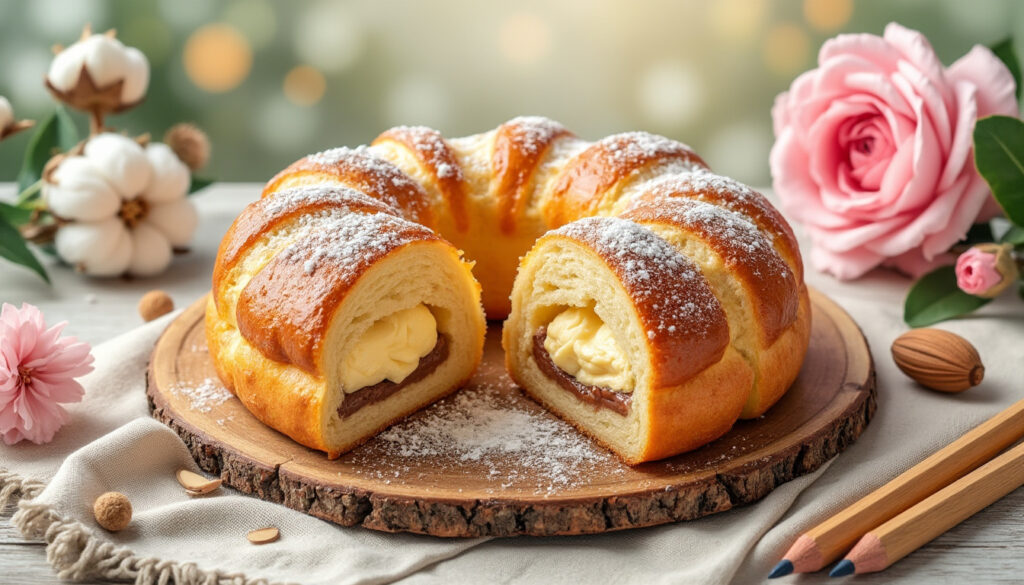
In brief
- A homemade recipe for galette des rois designed to be consistent, stable during baking, and simple to execute, even when fatigue sets in.
- A balanced frangipane, where the creamy texture comes from very soft and well-worked butter, and where the almonds provide structure and flavor.
- The right technique to avoid leaks is a clear margin of 2 cm without filling and a solid sealing of the edges.
- A two-step egg wash, with a brief chilling period, for a golden surface without dripping.
- A small vent in the center to let out steam, then a controlled oven baking at 180°C for 30 minutes.
- A traditional dessert for Epiphany that is shared without pressure, keeping pleasure and safety at the heart of sharing.
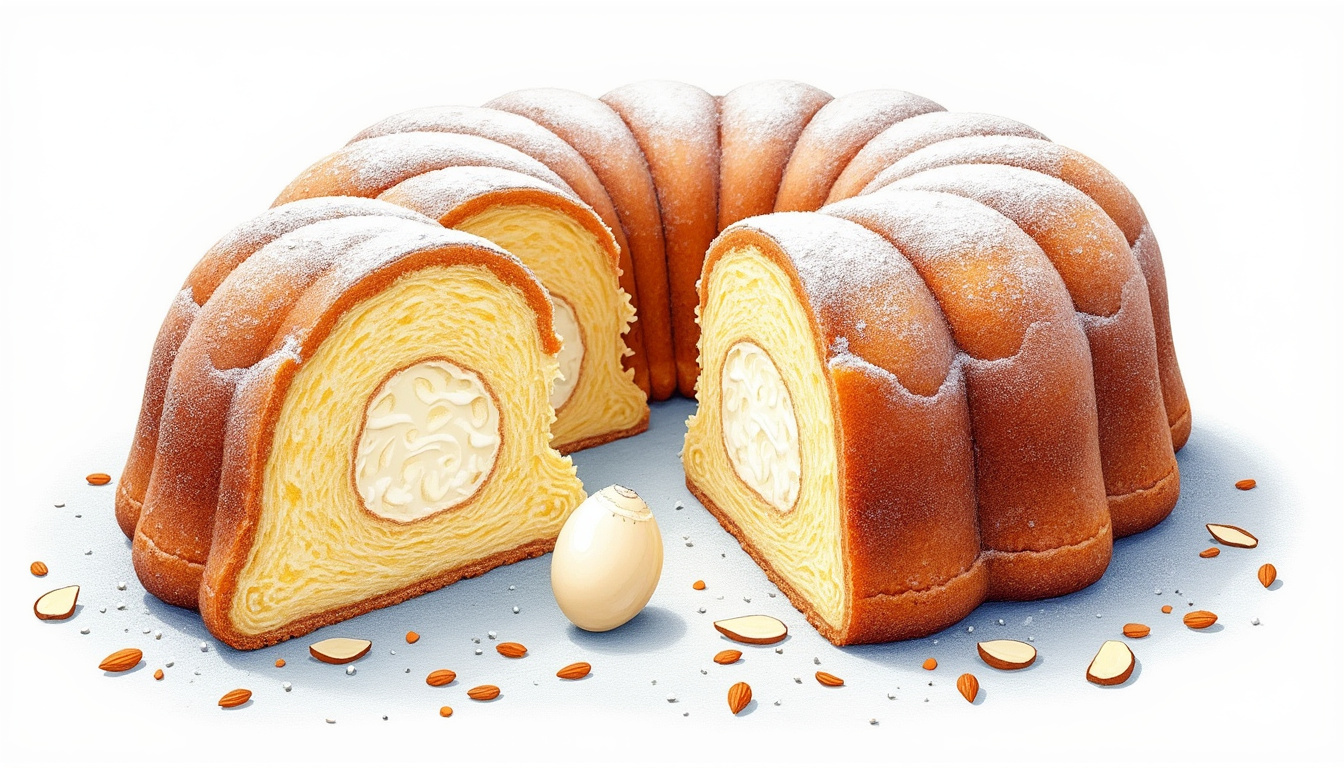
Homemade galette des rois recipe with frangipane: setting a simple framework that reassures
In many households, the Epiphany arrives when the days are short and energy isn’t always on hand. A traditional dessert that is made without stress is already a form of care. The galette des rois often fits this bill, provided you understand two or three very concrete mechanisms that make the difference between a galette that leaks and one that holds together.
The key to success lies in a simple idea. The puff pastry reacts to heat by expanding its layers of butter and dough. If the inside is too runny, the steam pressure pushes the filling toward the edges seeking an exit. A frangipane that is too soft, a poorly sealed edge, and leakage occurs. Nothing dramatic, but it undercuts the “bakery” feel that many hope to recreate at home.
The frangipane is not just an almond flavor. It is a structure. When the butter is very soft and well worked with the sugar, it traps air. During the oven baking, this air expands and gives a lighter texture, while the ground almonds absorb some of the moisture and stabilize the whole. It’s not a question of talent but of materials and precise techniques.
In a family kitchen, precision doesn’t need to be rigid. A scale helps, but the most reliable gauge remains consistency. Ready frangipane is creamy, smooth, and slowly falls from a spatula in a thick ribbon. If it flows like a dessert cream, it’s too soft. If it is compact like cookie dough, it will spread poorly and puff unevenly.
The question of the fève also deserves a word, because it touches on suspense, ritual, and safety. A fève placed in the center is more likely to be found on the first cut. Positioning it slightly to the side keeps the surprise. For young children, vigilance is necessary at the table, as the risk of choking is real. The ritual can stay joyful while keeping a clear rule calmly announced when serving.
A useful guideline to avoid many disappointments is to treat the galette as a construction with two constraints: the crispness of the puff pastry and the stability of the frangipane. The next section covers the filling preparation with concrete steps that make the texture predictable.
Almond frangipane: texture, taste, and baking stability
The frangipane might seem like a simple mixture. In practice, it’s a cream that must remain stable when heated, without separating, boiling, or soaking the puff pastry. This stability depends greatly on the work of butter and sugar, and on the choice of almond powder.
The starting step is done in a bowl. The butter should be very soft, to the point that it can be easily crushed. Cold butter will produce a lumpy cream. The sugar is then mixed into the butter until a distinctly creamy consistency is reached. This beating changes the final texture. It incorporates air and makes the frangipane more homogeneous and therefore more even when cut.
Once the butter-sugar base is ready, the almond powder is gradually integrated. Very fine powder gives a smoother cream; slightly grainier powder brings pleasant texture to the mouth. Both work. The real point of caution is elsewhere. If the powder is damp or has been stored too long, it weighs down the cream and may create a pasty sensation. Fresh, well-kept powder supports the gourmet aspect without making the filling heavy.
The flavor can be modulated without complicating things. Some families add a splash of rum, others prefer a very subtle orange blossom water. When a very young child shares the galette, the alcohol-free version avoids having to explain. The almond taste alone is enough to give a clear signature, especially if the butter is of good quality.
The frangipane is then spread at the center of the first dough disk. The safety margin around is a game-changer. Leaving 2 cm empty on the edge allows sealing and limits the risk of leakage. Frangipane spread to the edge behaves like jam under heat, seeking an escape as pressure rises.
The placement of the fève happens at this stage. To keep the suspense, it is placed on the side, never in the center. If the galette is for children, a simple option is to announce that the fève will be given to an adult or placed in a clearly identified slice. The tradition can stay intact while protecting the little ones.
A successful frangipane is recognized by its hold before baking and by its uniform appearance after baking, without liquid patches or soggy edges. After the cream, the next section details assembly and techniques that make the galette neat, without stress at baking time.
A clean assembly requires few tools but a clear sequence. This is often missing when cooking with a child in arms or after a busy day.
Puff pastry: assembly, sealing, and leak management without rigidity
The puff pastry is spectacular when it rises well, but it dislikes improvisation on the edges. The key is contact between the two disks. If air is trapped in the sealing area, the steam creates pockets and pushes outward. A well-made seal is a clean edge, slightly moistened if needed, then firmly pressed with fingertips.
The bottom disk is laid on a baking sheet. The frangipane is placed in the center, spread regularly, respecting the margin. The top disk goes on next. A good habit is to push air out from the center toward the edges with the palm, without crushing the filling. This prevents bubbles that inflate chaotically.
The edge is sealed by pressure. A fork can mark the edge, but marking only matters if the seal is already solid. If the edge sticks poorly, decoration won’t fix it. Too warm dough becomes sticky and hard to handle. A few minutes in the fridge before sealing can make the gesture more comfortable, especially in a warm kitchen.
When a leak happens despite everything, it doesn’t mean the recipe is “failed.” It often signals one of these points. The frangipane was too close to the edge. The dough was stretched, thus weakened. The seal was done with floury fingers, which prevents adhesion. Understanding the cause helps adjust next time, without self-judgment.
Sharing also counts in cutting method. A galette cuts better after a short rest, around ten minutes out of the oven. The frangipane stabilizes, the puff pastry keeps its crispness, and slices separate more cleanly. This detail changes the mood at the table. Less crumbs everywhere, more pleasure.
A gentle organization can help busy days. Prepare the frangipane in advance, keep dough disks chilled, then assemble just before egg wash. The gesture becomes smoother. The homemade recipe then finds its place. A gourmet moment that doesn’t drain all available energy.
When the dough stays cold and the 2 cm margin is respected, the galette behaves much more predictably in the oven. The next section focuses on egg wash, decoration, and baking, where color and crispness are determined.
Egg wash, decoration, and oven baking: achieving a golden and crispy galette
The egg wash is not just about aesthetics. It affects surface texture and how heat distributes at the start of oven baking. A beaten egg yolk with a tablespoon of water creates a thinner, more uniform film. Too thick, it drips on the edges and “sticks” the puff pastry, slowing the rise.
The first coat is applied with a brush, covering the surface without pressing. The galette then chills for ten minutes. This cold period has two concrete effects. It firms up the dough butter, promoting a cleaner rise. It also stabilizes the egg wash so it doesn’t slide when the second coat is applied.
The second egg wash is applied the same way. The motion is quick and precise. A subtle detail often changes the result. A tiny hole in the center, made with a knife tip, serves as a vent. Steam can escape without excessively lifting the top. The galette puffs, yes, but it doesn’t deform enough to crack.
Decoration is done with the back of the blade, never the sharp edge. Swirls, diamonds, a light grid. The dough is marked, not cut. If the blade cuts, steam escapes through the marks and the galette may dry out. A successful decoration is visible after baking without having carved the dough.
Baking is done at 180°C for 30 minutes. The temperature must be real, not theoretical. Many home ovens have a deviation of 10 to 20 degrees. A galette that colors too quickly on top can be covered with parchment paper at the end of baking, letting the center finish cooking without burning the top. The almond aroma becomes rounder, and the surface takes an amber hue.
The serving moment deserves a simple guideline. Waiting ten minutes before cutting allows the frangipane to set. The puff pastry remains crisp, and pieces separate more cleanly. This resting time also calms the table, especially when children are waiting. A hot galette cut too quickly crumbles and compacts.
For even color and a puff that rises, a two-step egg wash with chilling is one of the most reliable techniques.
The next section offers practical guidelines in table form to adjust according to the oven, dough thickness, and desired egg wash level, without turning the pastry making into a test.
Practical guidelines for a consistent galette des rois: table, steps, and points of caution
When a recipe is remade each year, variations rarely come from goodwill. They stem from softer or harder butter, a hotter tray, a fan or static oven, thicker dough. Having benchmarks on these parameters makes the galette des rois more consistent, which soothes many people, especially when dessert comes after an already busy day.
The table below serves as a reading grid. It doesn’t seek perfection, it helps understanding. A crust that’s too dark isn’t a disaster. A frangipane that leaked isn’t a failure. Each visible sign tells a simple mechanism and a correction possible next time.
| What is observed | Most frequent cause | Concrete adjustment |
|---|---|---|
| Frangipane leaks on one side | Filling too close to the edge or insufficient sealing | Respect 2 cm without cream, seal by pressing firmly, push air from center outward |
| Top bulges into a dome and cracks | Trapped steam, no vent | Make a small central hole with knife tip before baking |
| Surface is marbled, egg wash uneven | Egg wash too thick or applied to warm dough | Egg yolk + water, thin layer, double egg wash with 10 min chilling between coats |
| Puff pastry underdeveloped | Dough too warm or edges crushed | Work fast, keep puff pastry cold, mark decoration with back of blade |
| Center slightly moist, bottom dough less crisp | Underbaked or tray not hot enough | Bake 30 min at 180°C, use preheated tray if possible, let rest 10 min before slicing |
A short list to keep gestures fluid, even when the house is busy
A list helps when concentration is fragmented. It avoids mental back-and-forth and reduces forgetfulness. The following points are purposely few, but each includes a specific gesture.
- Beat very soft butter with sugar until smooth cream before adding almonds, to stabilize the frangipane.
- Spread the filling leaving a 2 cm border, this empty space is a safety zone for sealing.
- Place the fève on the side to preserve the suspense at cutting and avoid finding it on the first knife stroke.
- Egg wash twice with 10 minutes chilling between coats, then make a small vent in the center before baking.
- Respect 180°C for 30 minutes, then wait 10 minutes before cutting for clean slices.
A useful note on safety around the fève and young children
The galette is a moment of sharing. Safety can remain simple and calm. A fève is a small hard object, thus a potential choking hazard for the very young. A clear family rule is often enough, without weighing down the mood.
Promptly consulting a health professional is advised if a child has a persistent cough, breathing difficulty, lip color change, or marked discomfort after having food in their mouth. When in doubt, evaluation comes before waiting.
The galette des rois is not only technique. It is a family ritual. The following offers precise answers to recurring questions, so the gesture stays simple and the pleasure keeps its place.
How to prevent frangipane from causing the puff pastry to leak?
Leaks usually come from filling too close to the edge or a too light seal. Spread frangipane leaving a clear 2 cm margin all around, then push air from the center outward before firmly pressing the edges. Well-chilled dough seals better and deforms less during baking.
Why apply egg wash twice with a chilling step in between?
The first application creates a uniform base. The 10 minutes in the fridge firms the dough and stabilizes the egg layer, limiting drips and promoting a cleaner puff pastry. The second egg wash improves color and shine without thickening the surface.
What is the purpose of the small hole in the center of the galette?
This small vent lets some of the steam produced by frangipane and dough escape. Internal pressure decreases, limiting doming and top cracks. The gesture is subtle but ensures more even baking.
Can the galette des rois be prepared ahead to save time?
Frangipane can be prepared ahead and kept refrigerated, then the galette assembled just before egg wash. If the galette is already assembled, refrigeration helps keep dough cold, improving puff pastry in the oven. Baking is ideally done the same day to preserve crispness.
What is the good baking temperature and time for a golden galette without burning?
A simple guideline is 180°C for 30 minutes, watching the color in the last minutes. If the top darkens too quickly, a sheet of parchment placed gently at the end protects the surface while allowing the center to finish cooking.