
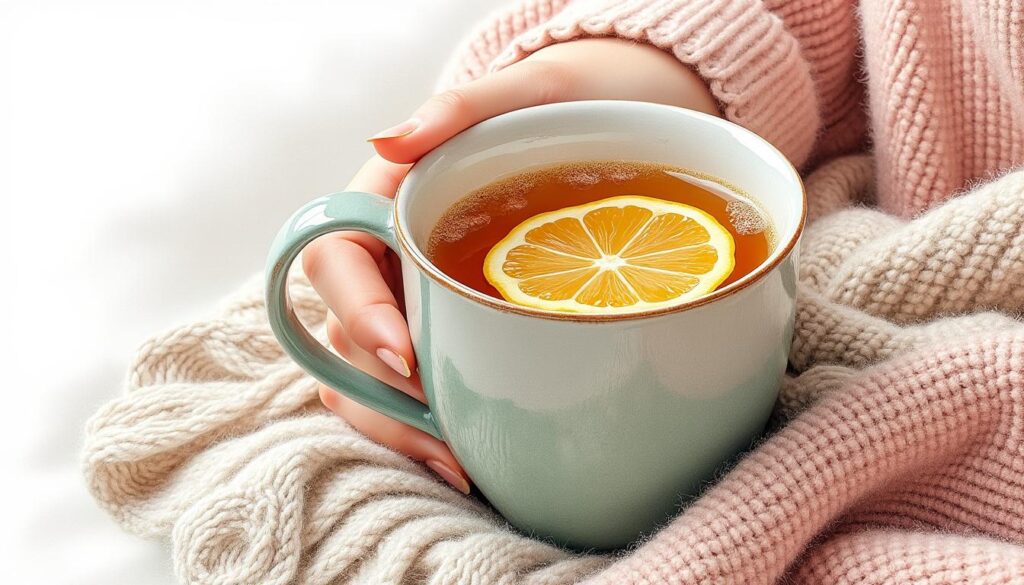
In brief
- Honey grog combines a hot liquid, honey, and often lemon for throat relief and a feeling of well-being when the nose is runny or a cough sets in.
- Its strength lies as much in the heat as in the ingredients. Heat hydrates, thins secretions, relaxes, and often prepares for a better night.
- The family version remains alcohol-free. Rum, even heated, has no place with children.
- Honey soothes and coats, but it remains forbidden before 12 months due to the risk of infant botulism.
- A grog can be part of an evening routine like a hot herbal tea or an infusion, without promising to “cure,” aiming for comfort.
- If respiratory distress, high fever or significant pain appear, the drink does not replace medical advice.
Honey grog: understanding this comforting drink and its soothing virtues
When the throat itches and the body craves warmth, some drinks do more than warm the hands. Honey grog is part of these simple gestures that reassure because they are concrete, measurable, and immediately perceptible.
The principle is straightforward. A hot liquid, often water or a very light tea, to which honey and sometimes lemon are added. The result is not just a sweet flavor. The heat brings local vasodilation and muscle relaxation, which reduces the sensation of “tightness” in the pharynx.
Honey itself has a surface action. Its viscous texture forms a film that soothes irritation and reduces friction during swallowing. This mechanism explains the throat relief often described after a few sips. It’s not a vague promise. It’s an interaction between inflamed mucosa and protective substance.
Lemon adds acidity and aromatic compounds that give an impression of “clearing.” It also contributes to vitamin C intake, without turning the drink into a treatment. Part of the comfort comes from the fresh taste, which alters the perception of pain, a bit like a menthol candy can create a sensation of airflow.
Grog also has a precise history, far from modern trends. In the 18th century, in the British navy, Admiral Edward Vernon, nicknamed “Old Grog” because of a grogram cloak, imposed around 1740 the dilution of the rum ration in hot water. The goal was clear: reduce drunkenness, limit conflicts on board, maintain acceptable discipline while keeping the morale.
Sailors quickly added lemon or lime, initially for practical reasons. Scurvy, linked to a vitamin C deficiency, decimated crews during long voyages. This historical detail helps understand the evolution. The drink, initially a “shipboard tool,” became on land a preparation more focused on comfort and a natural family remedy, with honey taking center stage.
This “ritual” dimension matters, especially during periods of fatigue. The nervous system also regulates itself through repetitive and predictable signals. A hot cup, the same citrus smell, the same sweetness on the tongue, can send the brain a message to slow down. The soothing virtues then play out as much in the body as in the environment created around.
The logical next step is to choose a reliable recipe and safety markers, especially when there are children at home.
To extend this moment of warmth, a gentle and controlled preparation often makes the difference between a pleasant drink and a truly helpful drink.

Honey grog recipe: precise gestures, temperature, and alcohol-free variations
A successful honey grog depends on few ingredients, but very concrete details. The temperature, the moment honey is added, and the amount of lemon change the experience. For parents, these markers prevent fumbling when the night is already weighing down.
The simplest recipe remains the most consistent. Heat the water, squeeze the lemon, add the honey, stir. This simplicity does not exclude precision, especially regarding heat. Boiling water poured directly on honey makes a drink too hot, and the irritated mucosa doesn’t need thermal stress.
A reliable method, close to a hot herbal tea
The logic resembles that of a hot herbal tea or an evening infusion. The water is brought to a simmer, then left one to two minutes off the heat. Honey dissolves better when the drink is hot, but not boiling.
-
Bring 200 to 250 ml of water to a simmer in a saucepan or kettle, then let rest 1 to 2 minutes.
-
Squeeze half a lemon, or adjust according to tolerance if the throat is very irritated.
-
Add 1 to 2 teaspoons of honey, then stir until completely dissolved.
-
Taste before serving. The drink should be hot and comfortable, without burning the tongue.
This format can be adapted to a “tea version” with a very light tea or chamomile, keeping a short steep to avoid bitterness. The goal is comfort, not stimulation that delays falling asleep.
Spices and roots: when they help, when they irritate
Fresh ginger, cinnamon, or clove are often offered in an anti-cold approach. Their interest is twofold. They provide aromatic compounds and a warming sensation that may reduce the perception of internal cold, and they may have a slight anti-inflammatory effect.
The limit is simple. On an already inflamed mucosa, an overdosed spice increases tingling. A useful guideline is to briefly infuse a thin slice of ginger or a pinch of cinnamon, then remove. The taste should remain smooth, not aggressive.
Rum: reserved for adults, excluded for children
Rum is traditional, but it does not become “harmless” because it was heated. For an adult, it can contribute to relaxation, but it also disrupts sleep architecture, with sometimes faster falling asleep and more frequent awakenings afterward.
For children, the message is clear. No alcohol, even “cooked”. The developing nervous system is more sensitive, and the safety margin is not the same as for adults.
Once the recipe is stabilized, the next question often becomes the real benefits, without confusing comfort and treatment.
Soothing virtues of honey grog: mechanisms on the throat, cough, and well-being
Honey grog is often described as a natural remedy. This expression deserves to be translated into observable mechanisms. The comfort felt is not by chance but an addition of modest, coherent effects, and sometimes very useful when symptoms remain mild.
Heat acts first on hydration. When the throat is dry, swallowing irritates more. A hot drink moisturizes, stimulates salivation, and decreases friction. It also promotes the thinning of secretions, which can make blowing the nose more effective and throat clearing less frequent.
Honey plays a particular role in irritation cough. A dry cough is often a reflex triggered by a “tickle” of receptors located in the pharynx. By coating, honey modifies the sensory signal and can reduce the frequency of fits. The sensation of a comforting drink also comes from this reduction of local hyperreactivity.
Lemon adds an aromatic dimension and a gustatory stimulation. In many cases, the “it clears” effect is mainly a modulation of perception. The citrus smell sharpens attention, and acidity triggers a salivation reflex. A better lubricated throat hurts less.
Well-being goes beyond the ENT sphere. A hot cup taken calmly engages the parasympathetic system, which slows down and helps recovery. Breathing becomes deeper, shoulders drop, the voice settles. These are micro-signals, but they count, especially when fatigue makes everything more intense.
Reference table: ingredients, expected effects, and limits
| Component | Desired effect | Concrete marker | Limits and caution |
|---|---|---|---|
| Hot water | Hydration, relaxation, thinning of secretions | Hot but not boiling drink, taken slowly | Avoid if risk of burns, adapt in case of reflux |
| Honey | Coat the mucosa, reduce irritation, cough comfort | 1 to 2 teaspoons depending on taste | Forbidden before 12 months; caution if diabetes or active cavities |
| Lemon | Gustatory stimulation, salivation, sensation of clearing | A few ml to half a lemon | May sting if throat is very inflamed, watch reflux |
| Ginger / cinnamon / clove | Heat sensation, aromas, mild anti-inflammatory effect | Short infusion, minimal dosage | Can irritate, not recommended if mucosa very sensitive |
| Rum (adult) | Tradition, feeling of relaxation | Optional, small amount | Never for children; may disrupt sleep |
Signs beyond simple discomfort
Honey grog can accompany a simple cold. It must not delay medical advice if certain signals appear. High fever that persists, visible respiratory distress, intense ear pain, difficulty swallowing saliva, or significant alteration of general state justify contact with a professional.
In infants, caution is even clearer. Rapid breathing, chest retractions, unusual lip coloration, or decreased food intake require evaluation without waiting for “it to pass.”
When these markers are integrated, grog finds its proper place. A comfort aid, a recovery support, and a gesture that calms the end-of-day atmosphere.
The next step is to integrate it into a family routine, taking into account the needs of adults, children, and postpartum particularities.
Family honey grog: safety, children, and postpartum markers
In a home where sleep is already fragile, a cough that wakes everyone can quickly exhaust. Honey grog has its place in this context, provided simple safety rules are followed, especially when a baby or young child is concerned.
The most known point, and often recalled too quickly, deserves a clear explanation. Honey is contraindicated before 12 months. It is not a question of allergy, but of the risk of infant botulism. Clostridium botulinum spores can be present in honey. In adults, the mature intestine manages them. In infants, digestive immaturity makes the situation different.
When a child is over one year old, honey can be used, but the drink must remain lukewarm. Mouth burns happen quickly, and a burned mucosa then becomes more painful than one irritated by a cold. A simple test is to check the temperature on the inside of the wrist, like for a baby bottle.
Adjust the drink according to age and symptoms
In children, the mildest version resembles a lightly concentrated hot herbal tea, with a small amount of honey if age allows. Lemon is not mandatory. On an already inflamed throat, acidity sometimes increases discomfort, and a mix of lukewarm water + honey is enough for comfort.
In adults, lemon and ginger can be interesting if the nose is congested and the sensation of internal cold dominates. Hydration remains the priority. A grog does not compensate for a too dry, heated day, or irritating air.
When emotional fatigue amplifies symptoms
Postpartum, or simply a period of broken nights, modifies bodily experience. Throat pain seems more intense, noise tolerance decreases, the feeling of being “at the end” arrives sooner. It’s not a lack of resilience. It’s the effect of sleep debt on emotional regulation circuits.
In this context, preparing a warm drink can become a landmark. The sequence matters. Heat the water, smell the citrus, stir the honey, sit for two minutes. The nervous system perceives predictability. It relaxes a bit.
This place given to ritual must not make one forget psychic warning signs. Overflowing anxiety, daily crying beyond two weeks after delivery, loss of interest, dark thoughts or a sense of danger require professional support. A drink cannot carry that, even if it comforts.
Consultation box
A consultation is indicated if one of these signs is present: difficulty breathing, chest pain, persistent high fever, inability to drink enough, unusual drowsiness, signs of dehydration, or in children a marked decrease in urine and intake. For infants, a quick evaluation is preferable as soon as breathing seems “strained” or feeding decreases.
When it is known who honey grog is for, and who it is not for, it becomes a very appropriate comfort tool, which fits into an overall hygiene of recovery.
One often underestimated point remains. The quality of ingredients and the purchase gesture influence taste as much as tolerance, and thus the desire to start again when the body needs it.
Does honey grog really cure a cold?
It can improve comfort. Heat hydrates, honey coats the throat and can calm an irritation cough, lemon provides a sensation of clearing. A cold is most often viral and heals over time. If symptoms worsen, if fever persists or breathing becomes difficult, medical advice is more appropriate than home self-care.
From what age can a child drink honey grog?
Honey is contraindicated before 12 months. After one year, a lukewarm, alcohol-free version with little lemon if the throat is sensitive can be offered occasionally. The temperature must be tested to avoid any burns. For a child who coughs a lot at night, it is also useful to check hydration, room humidity, and absence of respiratory discomfort.
Is “cooked” rum acceptable in a family grog?
No for children. Alcohol has no place with them, even heated. For adults, it remains optional and can disrupt sleep despite a feeling of relaxation. An alcohol-free version often gives a better result on nocturnal recovery.
What is the difference between grog, infusion, and hot herbal tea?
Hot herbal tea and infusion mainly refer to an extraction of plants in hot water, with or without honey. Grog corresponds to a hot drink historically linked to rum, which in practice has become a comfort preparation combining hot water, honey, lemon, and sometimes spices. In fact, the alcohol-free version closely resembles honey and lemon herbal tea, designed for throat relief and well-being.