
Trompe-l’œil recipes intrigue as much as they amuse. They skillfully play with presentation to surprise the eye even before the palate is engaged. This type of creative cuisine offers an extraordinary experience, blending visual illusion and often unexpected flavors. When it comes to cooking for the whole family, integrating these culinary tricks can bring an essential playful touch to encourage food discovery, especially among children who sometimes resist vegetables or certain dishes. Here is a comprehensive overview of these ingenious and easy-to-make ideas, with precise advice so that the surprise unfolds fully at the table.
Key points to remember :
- Trompe-l’œil cuisine is based on a discrepancy between the appearance of a dish and its actual composition.
- Observe how texture, colors, and shape play a central role in sensory perception.
- Adapt these recipes to combine gustatory pleasures and stimulate appetite in young children.
- Use these techniques as a tool to help pass less appreciated foods.
- Trompe-l’œil recipes can help defuse anxiety related to eating by adding a touch of surprise and play.
The fundamentals of trompe-l’œil dishes: understanding the magic of culinary presentation
Trompe-l’œil cuisine is not just about making things look nice. It mobilizes precise know-how about presentation, texture, and flavor to induce a different perception. A dish presented as a dessert can be savory, and vice versa. This sometimes playful discrepancy relies on our brain’s ability to associate what it sees with what it expects to taste. If these expectations are disrupted, attention is captured, and tasting becomes a rich experience that stimulates curiosity.
The power of the illusion mainly rests on three elements. The first is shape. For example, imagining reproducing the silhouette of a candy apple using a cherry tomato coated with salted caramel immediately gives the impression of a candy. Next, colors play a key role: they provide an essential visual cue, and then texture, that is to say touch and consistency, completes this sensory picture. A fake fry made of hot, crispy, golden puff pastry, accompanied by a fruity coulis resembling ketchup, almost makes one forget the reality while tasting.
From a perspective of developing eating habits in children, these tricks can prove valuable. Some children slow down their acceptance of green vegetables because of their bitter taste or the monotony of presentation. Offering a sweet puff pastry filled with apple compote that looks like a fish puff pastry accompanied by its little peas made of sugar paste can greatly facilitate the discovery of new flavors. This change in appearance engages visual attention as a gateway to gustatory acceptance. By adding a playful touch to food, we create a more favorable ground for sensory curiosity.
However, it is necessary to remain attentive to your child’s reactions: if the surprise arouses too much distrust, it is important to accompany this moment with simple explanations that set a reassuring framework. For example, saying that you are going to taste a somewhat special dish, and that they will be able to discover a new taste, prepares the mind for difference. The rules of the game are clear and prevent food tension, which can cause rejection or anxiety.
Sweet recipes transformed into savory dishes: a reversed sensory approach
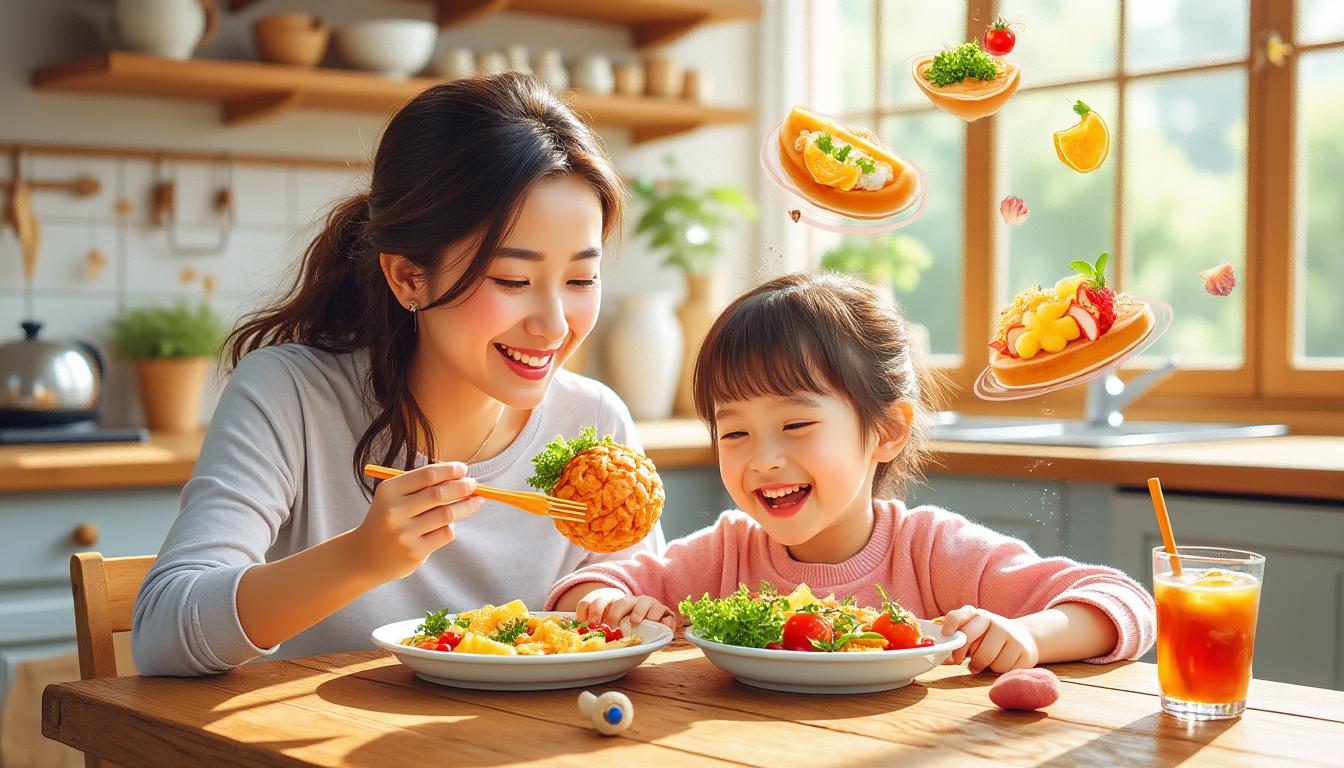
The transposition of sweet recipes into savory flavors is a strategy that surprises and captivates. The strength of this technique is to change the expected perception without distorting the gustatory pleasure. A chocolate éclair covered with pineapple and blackcurrant coulis perfectly imitating ketchup and mustard invites a double reading of the dish. The contrast between the soft texture and the tangy flavors engages the brain to reconsider its initial interpretation.
The mechanism behind this culinary success partly lies in the fact that neural circuits linked to taste and sight do not activate simultaneously but in sequences. If your eyes prepare for a traditional cake, the aromatic reality will create a pleasant surprise effect. This notably mobilizes chemical taste receptors not calibrated for this specific situation, generating a sensory awakening that enhances the memorization of the new culinary experience.
In the preparation, favoring ingredients with similar textures avoids breaking the illusion at first contact. For example, a sweet donut can perfectly replace a hamburger bun if the dough is firm enough, and sliced strawberries aptly play the role of tomatoes. Substituting the steak with Nutella capitalizes on density and rich taste to make this simulacrum convincing and tasty at the same time.
These recipes offer a dual advantage in family settings. They help work on the appetite of children often reluctant to savory dishes by playing with ingredients they spontaneously associate with a snack. The gradual introduction of savory aromas in a sweet setting favors acceptance and dietary diversification without imposing a suddenly foreign taste.
Adults also find in them a pleasure that is not only gustatory but also intellectual. Preparing a savory “religieuse” (cream puff dessert) with peas in the form of a pastry dessert is a technical challenge that calls upon creativity. It requires finely mastering textures while maintaining the balance of flavors. This approach also participates in the deconstruction of rigid culinary codes, valuing creativity in everyday cooking.
Techniques and tips for succeeding with trompe-l’œil dishes in creative cooking
To create effective trompe-l’œil dishes, a few tricks greatly simplify the work. The key lies in the choice of ingredients and mastering cooking times to ensure the texture remains in line with the desired visual illusion. For example, using firm grated mango as grated carrot allows getting the color and shape without the bitterness, while bringing a pleasant fruity sweetness.
For children, attention paid to food decoration is decisive. The realism of fake fries made of puff pastry relies on uniform coloring, and for the ketchup, choosing a lightly sweetened red fruit jam with an intense color ensures an appetizing hue without excess sugar.
Manipulating textures also requires thinking about the overall coherence of the dish. A dessert placed next to an exotic fruit salad imitating carrots should not confuse the child. The presence of a linking element, such as a sauce or mild vinaigrette, helps amalgamate the different textures and flavors, facilitating sensory comprehension of the meal.
Visual mastery involves precise gestures. Shaping dough into thin strips to reproduce fries, or using small cutters to make the “peas” from sugar paste, demands delicacy that combines patience and rigor. These techniques also develop fine motor skills and foster dialogue among family members when parents and children engage together in making the dish.
The playful dimension of these recipes is a wonderful opportunity to share a convivial moment. The creative process then becomes a platform for exchange, culinary experimentation, and above all, common sensory discovery. This invites going beyond the usual “obligatory” meals to open up to cooking that also speaks to the eye and the imagination.
How to integrate trompe-l’œil dishes into family life without pressure
Respecting the family rhythm is essential when introducing a quirky and creative cuisine. It finds its place without having to become a constraint. The goal is to establish these dishes as an occasional surprise that amuses and intrigues rather than a culinary performance to be reproduced systematically.
Start with a simple recipe, such as candy apples revisited as cherry tomatoes coated with salted caramel, to approach this method gradually. This way, you test the children’s reactions and adjust according to their appetite and curiosity. Very young children may feel a little unsettled if the surprise exceeds their sensory adaptation capacity.
Let us remember that eating behaviors are also influenced by complex emotional and sensory factors. A surprising presentation without connection to preferred tastes may trigger rejection. Bringing familiar flavors in a new package is a way to ease the transition.
In practice, you can alternate trompe-l’œil dishes with classic meals, varying textures, colors, and shapes to maintain children’s attention on food diversity. This alternation prevents cognitive and sensory overload that easily leads to negative reactions.
Finally, stay alert to signs not to ignore. A persistent systematic refusal, a marked loss of appetite, a change in behavior, or signs of digestive stress require consulting a professional. Nutrition is the primary vector for development and a reliable health indicator.
| Type of trompe-l’œil recipe | Classic example | Main ingredients | Sensorial goal |
|---|---|---|---|
| Savory disguised as sweet | Pistachio religieuse | Peas, choux pastry, pistachio | Surprise the sight to spark curiosity |
| Sweet disguised as savory | Sweet hamburger (Nutella, strawberries) | Donut, Nutella, strawberries, kiwi | Play with gustatory expectations |
| Fake vegetables | Grated carrots as exotic fruits | Grated mango or papaya | Facilitate food discovery |
| Fake fries | Fries made of puff pastry and jam | Puff pastry, red fruit jam | Combine crispiness and pleasant sweetness |
Bringing surprise to the table: simple ideas to impress young and old
The success of a trompe-l’œil dish also relies on staging that softens the surprise. The tableware can play a notable role: sometimes matte white or colored plates, dim lighting, and carefully folded napkins help set the mood. The surprise becomes an invitation to attention and sensory discovery.
An accessible idea to realize is to offer Belgian moules-frites as sweet macarons. The shape and color create a striking effect. For the little ones, “fried eggs” hiding apricots, cottage cheese, and a two-tone shortbread are a good example of a rich yet mild double that suits delicate palates. These alternatives certainly assume simple know-how but the positive surprise they trigger makes accepting less familiar textures easier.
Organizing a small family cooking workshop around these recipes develops not only fine motor skills but also imagination. Giving children roles, inviting them to shape the “fries” or choose the flavors composing the playful “ketchup” creates active engagement even before the dish is served. This passage through play is a precious lever to de-dramatize possible food apprehensions.
More than that, this type of trompe-l’œil cuisine enables a dialogue about food and appearances. It offers the opportunity to explain that what we see is not always what we think, helping children develop early critical thinking about sensations. The meal thus becomes a subtle learning and a family time rich in interactions.
The diversity and richness of trompe-l’œil recipes encourage playing with the codes to better adapt cooking to its guests.
How to start with trompe-l’œil recipes in family cooking?
It is recommended to start with a simple and very visual recipe, such as candy apples in a savory version, to gauge children’s reactions to the surprise without overly disturbing their gustatory habits.
Are trompe-l’œil recipes suitable for picky eaters?
Yes, they can be very useful to stimulate curiosity and help accept new or less appreciated foods, notably by playing on presentation and progressively introducing flavors.
What precautions to take to avoid the surprise causing anxiety?
It is helpful to prepare children with an explanation adapted to their age, highlighting the playful aspect and ensuring a reassuring framework. Do not force tasting if rejection is strong.
Can these recipes be integrated into daily life?
This cuisine should be integrated as an occasional surprise, alternated with classic meals. It aims to enrich convivial moments without putting pressure on the regularity of experiences.
What signs indicate the need to consult a professional in case of feeding difficulties?
Persistent food refusal, weight loss, significant behavior change, or signs of digestive stress justify a consultation with a specialized professional, pediatrician or dietitian.