In short:
- Modeling clay, a favored tool for children’s sensory and motor development.
- 20 simple creations that stimulate creativity while strengthening the parent-child bond.
- Elementary shapes – balls, rolls, plates – used to make often recurring models, easy to reproduce and suitable from 2 years old.
- Playful learning around modeling clay also promotes the recognition of colors, shapes, and names related to everyday objects.
- Modeling clay activities encourage patience, concentration, and emotional expression.
How modeling clay promotes creativity and development in children
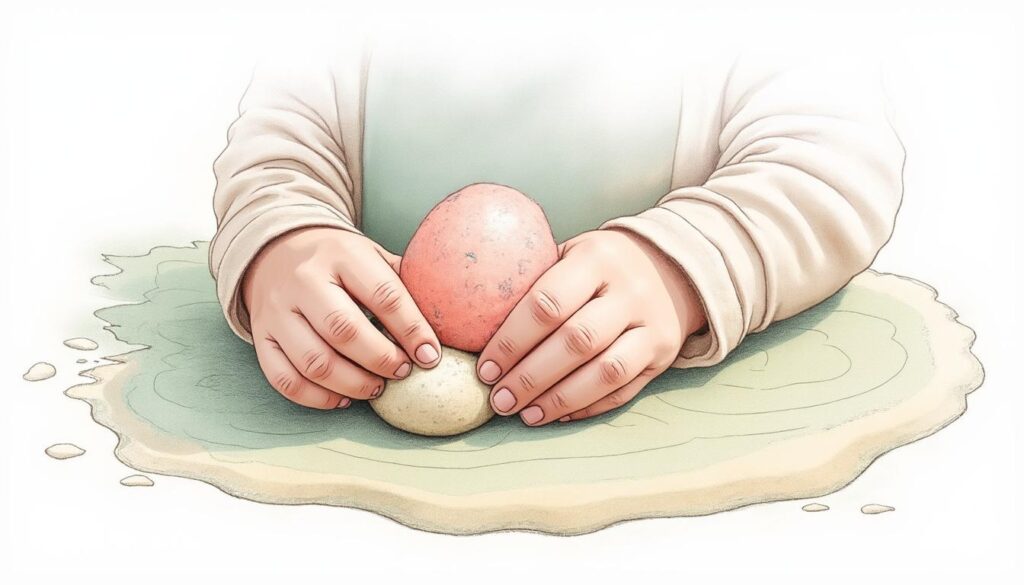
Modeling clay is a material that is both malleable and tactile, naturally inviting children to explore, manipulate, and create. From a very young age, this practice stimulates fine motor skills through kneading, shaping, or cutting small forms. These actions, essential for brain development, help improve eye-hand coordination and dexterity. Beyond these physical benefits, modeling clay is a unique medium for expression that awakens the imagination.
The choice of colors, the shape given to the clay, or the combination of various elements encourage creative thinking. As the clay changes according to desires, the child learns to anticipate, to visualize a project, then to realize it with their hands. This iterative process is fundamental for building self-confidence.
In the early years, when languages are not yet well developed, modeling becomes a sensory and expressive language. It gives rise to silent but rich stories, where emotions are revealed through colorful shapes. For example, a simple snowman composed of three white balls can become the subject of a seasonal story, stimulating memory and narration.
Simple shapes for progressive learning
It is essential to favor simple shapes at the beginning: balls, rolls, flat plates. These elementary models serve as a base for all kinds of creations, facilitating understanding and the pleasure of shaping. Thus, snails are built by combining a roll for the body and another rolled into a spiral for the shell, a playful activity that leads to recognizing curves and observing the natural world.
Parents can accompany this moment by describing the shapes, naming the colors, and telling stories around the creations. For example, when making a rainbow, each colored roll represents a different shade. This simple gesture encourages repetition and playful learning, helping to retain the names of the colors and the order of the shades in the light spectrum.
An effective tool for the parent-child bond
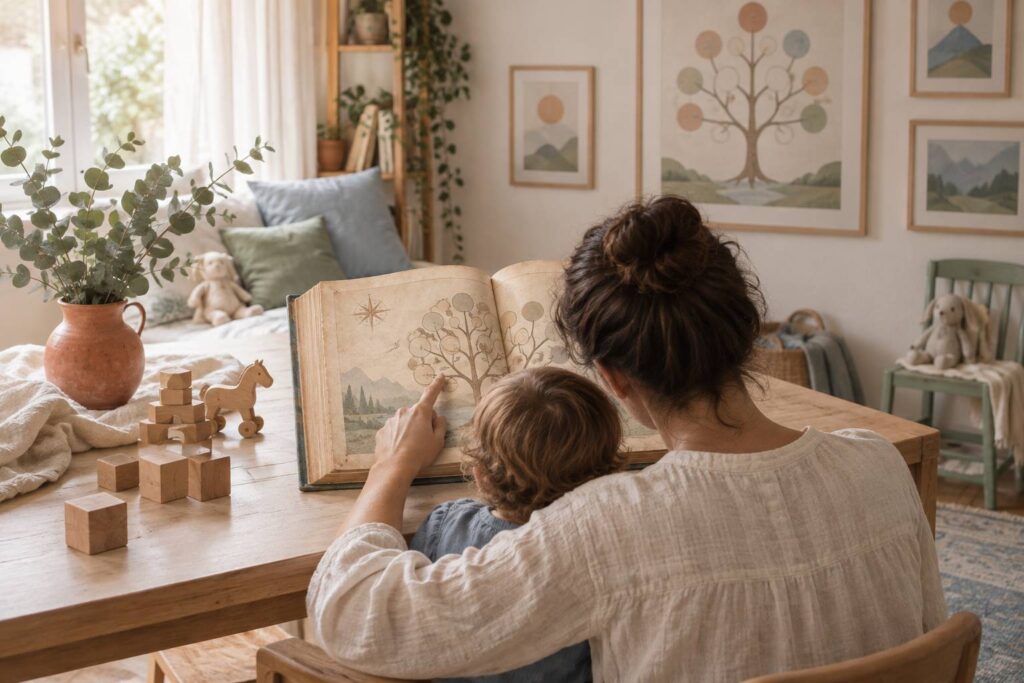
Participating in a modeling clay activity with a child goes beyond simple educational function. This privileged time of exchange creates a gentle, attentive, and joyful presence that nurtures the emotional bond. Placing your hand on the child’s to model a house or a rocket together, modulating the tone to encourage or explain, offers a relationship rooted in kindness and complicity.
The shared pleasure of manual play also builds patience: clay often requires small adjustments, erasing to better continue, all within a reassuring atmosphere. When a model is successful, comes the moment of pride. Positive words are then encouraged, creativity is valued without judgment, which is a source of lasting motivation.
20 simple modeling clay creation ideas for every stage of learning
Here is a selection designed to support the child in their progression, from the first gestures to somewhat more elaborate models.
| Creation | Shapes used | Educational benefits |
|---|---|---|
| Rainbow | Colored rolls in a semicircle | Learning colors, eye-hand coordination |
| Snowman | Three white balls, small accessories | Introduction to composition and proportions |
| Colored snails | Spiral roll and elongated body | Understanding natural shapes, dexterity |
| Funny fruits | Balls, plates, decorative elements | Creativity, object-to-reality association |
| Hamburger | Balls, squares, colored plates | Assembly concept, sequencing |
| 3D house | Cube, triangle, squares | Perception of volumes and perspective |
| Rocket | Ovoid shape, triangles, circles | Learning geometric shapes |
| Cake with decorations | Cylinder, circles, small balls | Dexterity, precision, patience |
| Various vegetables | Balls, rolls, rectangles, triangles | Vocabulary revision, recognition of varied forms |
| Computer | Cube, rectangles, small balls | Stimulates concentration and technology |
These examples can easily be adapted, as they invite imagination – a small triangle becomes a roof or a puzzle piece, a roll turns into a mustache or a tree branch. Each activity can be modified according to desires, to integrate more realism or, conversely, to approach the lightest fantasy.
A palette of models to cover different passions
Whether it is nature with flowers and vegetables, cooking with pizza and hamburger, or technology with a computer, modeling clay opens infinite horizons. A car or a rocket enriches the universe of little explorers, while funny monsters encourage the expression of emotions less easy to articulate. This narrative potential is often underestimated in manual play, while it constitutes a real support for emotional development.
How to organize a pleasant and stimulating modeling clay session
For these activities to be harmonious, it is important to take care of the environment. A bright, tidy space, where every tool and color has its place, creates a reassuring setting. The parent or accompanying adult must ensure to adopt a calm, encouraging posture respectful of the child’s pace.
The duration of the session must remain suitable for the age, favoring quality over quantity. For a 2 or 3-year-old child, a few minutes are often enough, while older children will be able to stay focused longer.
During the handling, it is appropriate to intervene at the right moment: accompany without taking over, suggest ideas without forcing. Ask simple questions – “Which color do you choose for the flower?” or “How would you like the house to be?” – encourages verbalization and, gradually, the building of a rich vocabulary around the activity.
The pleasure of modeling as a family
Modeling clay is also an invitation to sharing. Seating the child at eye level, sitting beside them, and playing together invites a moment of mutual listening. This moment of complicity promotes stress reduction, confidence, and even memorization of learning. Working together also allows the adult to better understand the emotional codes written in the child’s gestures.
- Regular occasions, but without constraint
- Alternation between guided and free moments
- Gentle and encouraging verbal support
- Free choice of colors and shapes
- Valuing production rather than fixed results
From sensory awakening to artistic expression: a rich and progressive discovery
Contact with modeling clay offers a complete sensory experience. The texture, warm and soft, the suppleness, but also the subtle scent capture the attention of toddlers. What might seem trivial at first glance is actually a fundamental issue in their discovery of the outside world.
By allowing the child to multiply trials, to crush, roll, cut or assemble, they refine their tactile but also visual perception. Measuring the difference between various shapes or colors is a key step for cognitive structuring. For example, differentiating a circle from a triangle becomes more concrete and accessible thanks to handling.
On the emotional level, modeling clay also proves to be a soothing medium of expression. It can channel emotional overload and provide an outlet through transformation into small works of art. The joy of seeing a creation take shape encourages repetition and experimental curiosity, two foundations of the child’s natural development.
Integrating creative hobbies into the family routine
Modeling clay activities benefit from being part of a coherent approach aligned with the family’s rhythm. Offering moments regularly dedicated to modeling makes this practice more natural. It is an invitation to slow down, calmly set things down, and immerse oneself in a privileged time of discovery.
By fitting into this continuity, modeling becomes more than simple amusement: it plays a role in the emotional balance of the child and parents. Through the creativity that emerges, emotions take shape, are named, and flow more freely.
The cognitive and emotional benefits of manual modeling clay play
Through this creative hobby, the child develops not only dexterity but also problem-solving skills. Imagining a rocket, assembling the parts of a computer, or inventing a whimsically looking monster are challenges that encourage reflection and adaptation.
At the same time, manual play is a precious source of calm. Attention paid to form and repetitive gestures provides a form of active meditation, beneficial to emotional regulation. Thus, modeling clay also becomes a possible tool to help children reduce their anxiety or overcome frustration.
Summary of main positive effects
| Effect | Description |
|---|---|
| Fine motor skills | Strengthening finger muscles, precision of movements |
| Creativity | Development of imagination and personal innovation |
| Language | Enrichment of vocabulary through description and naming |
| Emotional expression | Channeling emotions through free and symbolic play |
| Patience and concentration | Learning the time necessary to complete a work |
From what age can modeling clay be offered to children?
It is recommended to wait until the child no longer systematically puts objects in their mouth, generally around 2 years old, before starting to offer modeling clay. This precaution ensures safety during play.
How to encourage creativity without imposing overly complex models?
The ideal is to offer simple shapes and share the pleasure of the moment, without aiming for perfection. Encouraging the child with open questions and valuing each creation strengthens their confidence and motivation.
Can you make your own homemade modeling clay?
Yes, there are several recipes based on common ingredients like flour, water, and salt. This option allows customizing colors and textures while ensuring a healthy composition suitable for the child.
What are the emotional benefits of modeling clay?
Modeling clay promotes emotional expression, stress management, and inner calm. Modeling offers a symbolic activity that helps the child explore and channel what they feel.
How to organize a modeling clay workshop at home?
Provide a bright space, suitable tools, a duration adapted to the child’s age, and above all a relaxed and caring atmosphere. Let the child be free to choose while gently guiding without imposing.