In brief
- Toasting without alcohol allows children to participate in the family ritual without exposure to ethanol, while still keeping festive flavors.
- The key for parents lies in three concrete parameters, easy to adjust on Christmas Eve, the total sugar, caffeine, and serving temperature.
- Festive cocktails work better when they are visual, a floating element, a glass rim, an edible garnish, a bold color.
- Hot Christmas drinks reassure and soothe, especially at the end of the day, when excitement and fatigue overlap in the child.
- Fruity drinks bring acidity and freshness that balance rich dishes, with simple Christmas recipes to adapt according to age.
- A reference table helps to choose between juices, infusions, dairy, and sparkling drinks, avoiding common mistakes with the youngest children.
Non-alcoholic Christmas drinks for children, creating a festive ritual without overexcitement
On Christmas Eve, the child is not just looking for a sweet taste. They are looking for a sign of belonging to the group, the same gesture as adults, the same glass raised, the same light reflecting on a festive drink. When this ritual exists, the child feels included, and tensions around “who is allowed what” decrease significantly.
This inclusion requires a clear framework, especially for the younger ones. The child’s nervous system, still maturing, regulates the rollercoaster of excitement less well. A very sweet, very cold drink, drunk quickly, on an evening already rich in stimuli, can increase agitation and make falling asleep more difficult. The problem is not the party. The problem is the sum of little accelerators.
A simple guideline helps a lot in the family: aim for a Christmas drink served in a small amount, in an appropriate glass, and alternate with water. This is not an “anti-pleasure” strategy. It is a way to protect the overall experience so that the next day is not a battlefield.
The trio that changes everything: sugar, temperature, rhythm
Sugar acts quickly on available energy, but the effect on behavior varies according to temperament and fatigue. A rested child tolerates a rich drink better than a child already on the verge of overflowing in the late afternoon. When blood sugar rises and falls, some become more irritable, others more excited.
Temperature also plays a role. Cold drinks are often drunk faster, and the cold “wakes up” the mouth. A hot drink, on the other hand, naturally slows down the pace. It imposes micro-pauses, breaths, “wait, it’s hot.” This slowing down is valuable during overstimulation periods.
Rhythm, finally, is determined by the way of serving. A small shared carafe, mini-sized glasses, a thinner straw, all create a tempo. The evening remains festive, but the child’s body does not receive a “shot” of sugar and bubbles within minutes.
When to avoid certain options and when to seek medical advice
Non-alcoholic aperitifs based on “kids” energy drinks or highly caffeinated sodas have no place at a children’s table. Caffeine can increase agitation and delay sleep, even if the child “does not show it” at the time.
For the youngest, caution is also required with honey in hot drinks. Before 12 months, the risk of infant botulism justifies strict avoidance. Very strong spices can irritate a sensitive child, especially if reflux or a fragile throat are already present.
A consultation with a pediatrician or health professional becomes relevant if a child shows repeated vomiting after a drink, hives, lip swelling, respiratory discomfort, or unusual drowsiness after ingestion. These signs are rare but must be taken seriously, without waiting “to see”.
The logical next step, once the framework is set, is to choose Christmas recipes that make eyes shine without overloading the body.
A time for recipe research can also be done as a family, without turning the kitchen into a marathon.
Non-alcoholic cocktails and colorful cocktails, 8 visual ideas that really say “Christmas Eve”
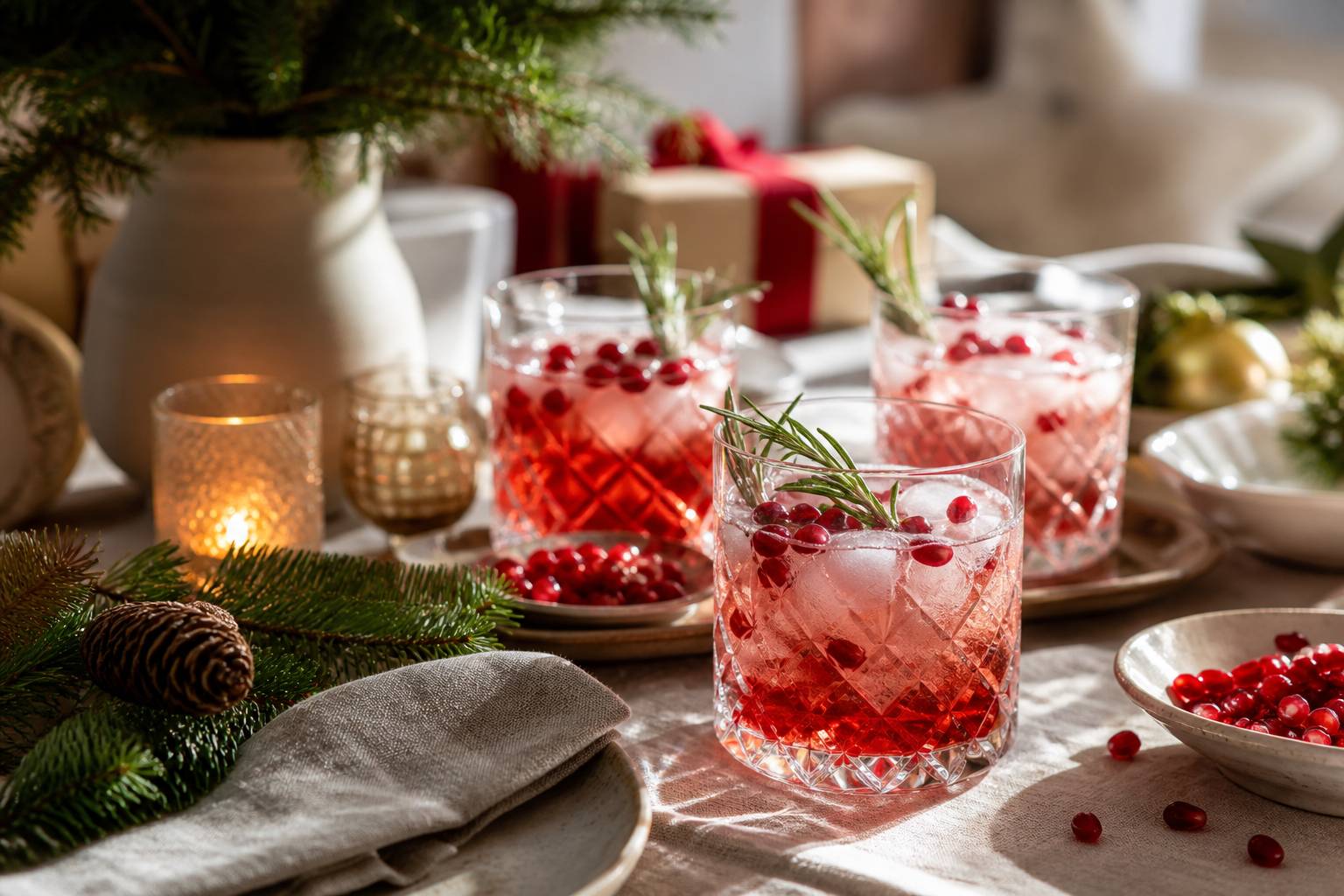
Children respond to visuals even before taste. It’s a sensory reality. The perception of colors, contrasts, and shapes feeds anticipation, then pleasure. For successful non-alcoholic cocktails, the garnish and the glass count almost as much as the recipe itself.
During year-end festivities, the advantage is that a detail is enough to “make Christmas”. A sprig of rosemary evokes the fir tree. Cranberries remind of red baubles. A candy cane becomes a festive straw. The result gives festive cocktails without technical complexity.
Rudolph, Grinch, and sparkling flutes, playing with color without excess
The cocktail inspired by Rudolph works very well for children who like acidity. The mix can be made with orange juice, cranberry juice, a splash of lemon, and a touch of mild ginger soda or lemonade. The decoration—cranberries, cherries, rosemary—turns a simple glass into a Christmas scene. The cherry remains optional, especially if the child is sensitive to overly sweet flavors.
The “Grinch” glass is the typical example of visual pleasure. A lemonade, a drizzle of mint syrup, possibly a micro-dose of food coloring, then a rim of colored sugar. To limit sugar intake, the sugar on the rim can be applied only on a small area, which keeps the “wow” effect without making it a habit.
Sparkling flutes rely on a very simple principle: apple juice + sparkling water, then a few colorful candies at the bottom of the glass. The candies are not there to be multiplied. Two or three pieces are enough to create movement and surprise, especially if the child watches the bubbles cling to them.
Shirley Temple Christmas version and rosemary lemonade, balance between fruit and freshness
The Shirley Temple remains a classic, grenadine, lemonade or mild ginger ale, then a cherry. The “Christmas” touch can come from a candy cane stirrer. The glass gains presence, and the child can stir slowly, which slows down consumption.
Christmas lemonade made with lime and grenadine works particularly well during the aperitif. Festive dishes are often rich. A fruity drink with well-dosed acidity cleanses the palate. Rosemary, added in a small sprig, perfumes without overpowering.
A concrete gesture helps manage bubbles: let sparkling water rest 2 to 3 minutes before serving to a child prone to burping or abdominal pain. The bubbles will be a little less aggressive, and the sparkling effect will remain.
“Bubbling reindeer” and edible decoration, making the child an actor
A marshmallow turned into a reindeer, a few cloves for eyes, a cranberry or a red candy for the nose, rosemary for antlers. This reindeer then “bobs” on a strawberry soda or lemonade. The child does not only receive a drink. They receive a mini construction to look at, then to munch.
This assembly dimension often regulates impatience. Hands are busy, attention is focused, and the child drinks more slowly. For the youngest, cloves must be replaced by icing dots to avoid any risk of ingesting a hard element.
After the visual recipes, hot drinks bring another benefit: they support the return to calm when the evening drags on.
A Christmas movie, a blanket, and a hot drink sometimes hold a child better than any speech.
Gourmet Christmas drinks, 4 hot options that soothe and reassure
Hot drinks are often underestimated at parties with children. They do not just serve to warm up. They structure a pause time. The body slows down, breathing lengthens, and the child settles into a gentler routine, which makes the rest of the evening easier.
The choice of ingredients can also reduce some discomforts. A very rich milk can bother a sensitive child, chocolate too concentrated can cause stomach aches, a spice too intense can sting. Adjusting does not take anything away from pleasure. It makes the drink more tolerable, especially when the meal has already been hearty.
“Snowman” hot chocolate and blue white chocolate, the theater of the glass
Homemade hot chocolate remains a safe bet. The difference is in texture. Milk heated without boiling, sifted cocoa, a little sugar, and a touch of vanilla give a rounder drink than instant powder. A snowman made of marshmallow, decorated with chocolate icing, with a small candy for the nose and two pretzel sticks as “arms,” turns this chocolate into an edible scene.
White chocolate tinted blue, “Frozen” style, can be served hot or cold. Coloring remains optional. A simple tip is enough to get an icy blue without going fluorescent. For a child sensitive to sugar, reducing white chocolate and completing with milk keeps the flavor without saturating.
Elves’ chocolate and hot spiced apple juice, aromas that sign Christmas
In some families, the mischievous elf is part of the December décor. An “elves’” drink can become a little evening ritual: hot chocolate, a mini dose of whipped cream, some sugar cane shards. It’s not the quantity that makes the party, it’s the detail that marks.
Hot spiced apple juice is an interesting alternative when the child doesn’t like cocoa. A saucepan, good quality apple juice, cinnamon, a pinch of nutmeg, possibly an orange slice. The spices diffuse without making the drink heavy. For the younger ones, a short infusion and filtration avoid leaving particles.
Christmas coconut milk, non-alcoholic eggnog, and decaffeinated tea, adapting according to age
Coconut milk flavored like “Christmas strawberry milk” plays on indulgence without cocoa. A coconut base, a light red fruit syrup, and a pinch of cinnamon make a gentle drink. Coconut being rich, a small size is often better tolerated than a large mug.
Non-alcoholic eggnog, inspired by North American traditions, can be made with milk, egg yolks, sugar, and spices. Hygiene is central. Eggs must be very fresh, the preparation gently heated to thicken, without sudden cooking. For children, a version without raw egg is preferable to reduce microbiological risk.
Christmas tea flavored with orange and spices can be wonderful, provided a decaffeinated version is chosen for children, especially in the evening. Theine is a form of caffeine. It can delay falling asleep, even when the child appears “calm.” A decaffeinated infusion served warm keeps the Christmas aroma and protects the night.
After the hot drinks, a very concrete reference helps organize the whole table, knowing what to offer according to age, and how to dose without creating frustration.
Children’s drinks, reference table by age and ideas for non-alcoholic aperitifs
When several children are at the table, the question quickly comes up: who drinks what, at what time, and in what quantity. Age references are not rigid rules. They provide a framework to avoid common mistakes: too much sugar too late, hidden caffeine, excessive bubbles, or ingredients unsuitable for toddlers.
The most useful point is often alternation. A festive drink, then water. This preserves pleasure without adding continuous sugar load. The next day, mood and digestion usually benefit.
| Child’s age | Suitable Christmas drink options | To limit in the evening | Concrete gesture that helps |
|---|---|---|---|
| Under 12 months | Water, usual milk, lightly flavored water with an orange wedge removed before serving | Honey, sparkling drinks, large quantities of juice | Offer in a small cup and fractionate, a few sips are enough to “participate.” |
| 1 to 3 years | Very lightly spiced warm apple juice, warm vanilla milk, water + fruits | Sodas, strong bubbles, very concentrated syrups | Serve warm or at room temperature to avoid too rapid intake. |
| 4 to 6 years | Lightened Shirley Temple, lime lemonade + grenadine, homemade hot chocolate in small portion | Large amounts of sugar at the end of the meal | Decorate the glass rather than adding sugar, rosemary, fruits, paper straw. |
| 7 to 12 years | Rudolph mocktail, “Grinch” in a low-sugar version, decaffeinated Christmas tea | Caffeinated drinks, industrial “iced teas” | Prepare a carafe and let the child dose it, this slows down and promotes responsibility. |
Three organizational ideas that avoid conflicts at the table
A sober drink bar, set on a buffet corner, reduces repeated requests. Two bases, one fruity and one hot, plus a decorated water option, are enough. Children see there is a choice, without being overwhelmed by ten bottles.
Serving in “mini glasses” is often better accepted than a ban. The gesture is identical to adults’, the volume is adapted. Children have their toast moment, then move on.
A simple family rule works well: one festive drink, then a glass of water, without making it a subject for negotiation. This also protects the teeth, especially after chocolates and cookies.
List of 5 Christmas recipes ready in 5 minutes, no complicated cooking
- Sparkling apple with apple juice and rested sparkling water, rosemary and cranberry decoration.
- Christmas tree lemonade lime, grenadine, still or mild sparkling water, rosemary sprig.
- Rudolph express orange, cranberry, lemon, lemonade, red fruits garnish.
- Cloud hot chocolate homemade cocoa, marshmallows, mini chocolate icing decoration.
- Decaffeinated Christmas tea orange, cinnamon, served warm in a small cup.
One often neglected dimension remains: visual supports and water, which can become festive without sugar, and which are very useful during a long meal.
Festive drinks without continuous sugar, decorated water, labels, and reassuring staging
When a child has already had their indulgent drink, the goal becomes to avoid the “round” of sugary glasses. Water can then take a festive place without being felt as punishment. The secret is staging: a Christmas straw, a label, a pretty ice cube, a different glass.
Some parents use water bottles decorated with “melting snowman” labels. The child sees a character, not a rule. The sticker is then removed, and the bottle becomes ordinary again. This strategy is very effective on children who drink little water when excited.
The “melting snowman,” turning water into an observation game
Still water in a transparent bottle, an illustrated label, and a few ice cubes are enough. The visual creates a story. The child can watch the ice cubes, see them melt, shake lightly. Time passes, and the child hydrates without asking for another sugary drink.
To add a sugar-free sensory touch, a squeeze of orange zest over the glass perfumes without sweetening the drink. A slice can decorate, but it should be removed if the child tends to chew it for a long time.
Santa’s drink and the codes of the party, managing requests without tension
Some children associate Christmas with very specific codes: the “Santa’s glass,” the red colors, the striped straw. A cola-type soda can be offered in small quantity to the oldest, in a glass decorated with a paper belt, with ice cubes. This option deserves true moderation because of caffeine and sugar.
To keep the idea without the stimulating effect, an alternative is a mixture of very diluted apple juice with sparkling water, in the same decorated glass. The child gets the symbol. The body, however, receives something lighter.
When the evening gets out of hand, concrete references to return to calm
If the child becomes overexcited, the drink can help to calm down, but the context matters most. Softer lighting, a quiet corner, a warm drink, and a repetitive activity like flipping through a Christmas book or doing a simple puzzle reduce sensory load.
A child complaining of stomach ache after bubbles does not need a speech. A glass of water with small sips, a comfortable sitting position, and a break away from the table often suffice. If the pain is intense, persistent, associated with repeated vomiting, fever, or blood in stool, medical advice is indicated.
These children’s drinks and colorful cocktails have one thing in common: they work when parents choose a simple framework, then let the child savor without pressure to “do well.”
From what age can a child drink sparkling non-alcoholic cocktails?
In most families, highly sparkling drinks are better tolerated from 4-5 years old, in small quantities. Before this age, bubbles can increase burping and abdominal pain. Sparkling water left to rest for a few minutes and served very gradually remains more comfortable.
How to limit sugar without the child feeling deprived during the holidays?
The most effective lever is visual rather than taste-based. Decorating the glass, adding an edible garnish, offering a festive straw, and serving in mini-size helps maintain the ritual. A mocktail lightened with syrup, alternated with a glass of water, avoids continuous sugar while preserving the celebration.
Is Christmas tea suitable for children on Christmas Eve?
Yes, if the version is decaffeinated. Theine acts like caffeine and can delay falling asleep, even in a child who appears calm. A decaffeinated infusion with orange and spices, served warm, provides the aroma of Christmas without a noticeable stimulating effect.
Which glass decorations should be avoided for the youngest children?
In young children, avoid hard or detachable elements such as cloves, small sugar pearls, or picks. Prefer large and soft decorations, marshmallows, thick orange slices under supervision, or icing designs. Safety depends on the size of the elements and the child’s ability not to put everything in their mouth.