In brief
- The Youpala is often seen as a practical tool to offer the baby a sense of mobility, but it does not replace spontaneous floor learning.
- The main point of tension in the debate remains home safety, as the walker increases speed of movement and access to dangerous areas.
- In terms of development, the youpala can alter supports and posture, with a risk of confusing certain motor cues if used frequently or for prolonged periods.
- A useful analysis distinguishes occasional, supervised use in a safe environment from daily use which becomes a “solution” to parental exhaustion.
- Prevention relies on two concrete axes: securing the space (stairs, kitchen, hot surfaces) and prioritizing motor alternatives on the floor.
In many households, fatigue comes in waves, and anything promising ten minutes of respite becomes immense in value. The Youpala often appears in this context, between birth gifts, second-hand purchases, and reassuring videos showing a baby “moving around.” The professional eye then focuses on two lines at once, immediate safety and medium-term development.
Youpala: why this practical tool appeals so much to parents seeking mobility
The youpala, also called a walker, responds to a very concrete expectation. When a baby begins to straighten up, around 6 to 9 months on average, curiosity explodes. Hands are freed, legs push, gaze wants to go further. During this period, parents sometimes observe longer and more demanding wake times, with an almost constant need for interaction.
The youpala gives an impression of a simple answer. The baby is “standing,” seems active, and mobility appears encouraged. In daily life where one juggles meal prep, siblings, laundry, and postpartum recovery, this accessory seems like a compromise. It also allows, in some households, to bypass fear of cold floors, dust, or pets.
What the baby actually experiences in a youpala
A baby placed in a walker does not learn to walk in the neuro-motor sense of the term. It explores a form of assisted movement, with a center of gravity altered by the seat and a rolling base. The brain records sensations, but they are not the same as those of floor learning where the child manages stability, weight shifts, and fine ankle adjustments.
Supports also change. Many babies push on tiptoes because the seat bottom and tray height encourage this pattern. For a child who already tends to stand on tiptoes, this can reinforce the habit. For a baby who spontaneously alternates heel-toe on the floor, the youpala can create less varied repetition.
When the practical tool becomes a “regulation tool” for the days
The debate becomes tense when the youpala is no longer occasional use but a cornerstone of family organization. A 7 or 8-month-old baby needs to move, yes, but especially to move in varied positions. Staying long in a device that restricts certain movements can reduce opportunities for motor experimentation on the floor.
There is a simple marker, often more telling than a rigid rule. The more an accessory replaces floor time, the more it becomes likely to interfere with development. A youpala used a few minutes here and there doesn’t have the same impact as a youpala used every day to “hold until dinner.” This distinction avoids guilt and brings back concrete actions.
The next section will look at the other side of the subject, the one that justifies professionals’ vigilance. The question is no longer parental comfort but prevention of domestic accidents.
Safety and prevention: understanding the risk of accidents with a youpala at home
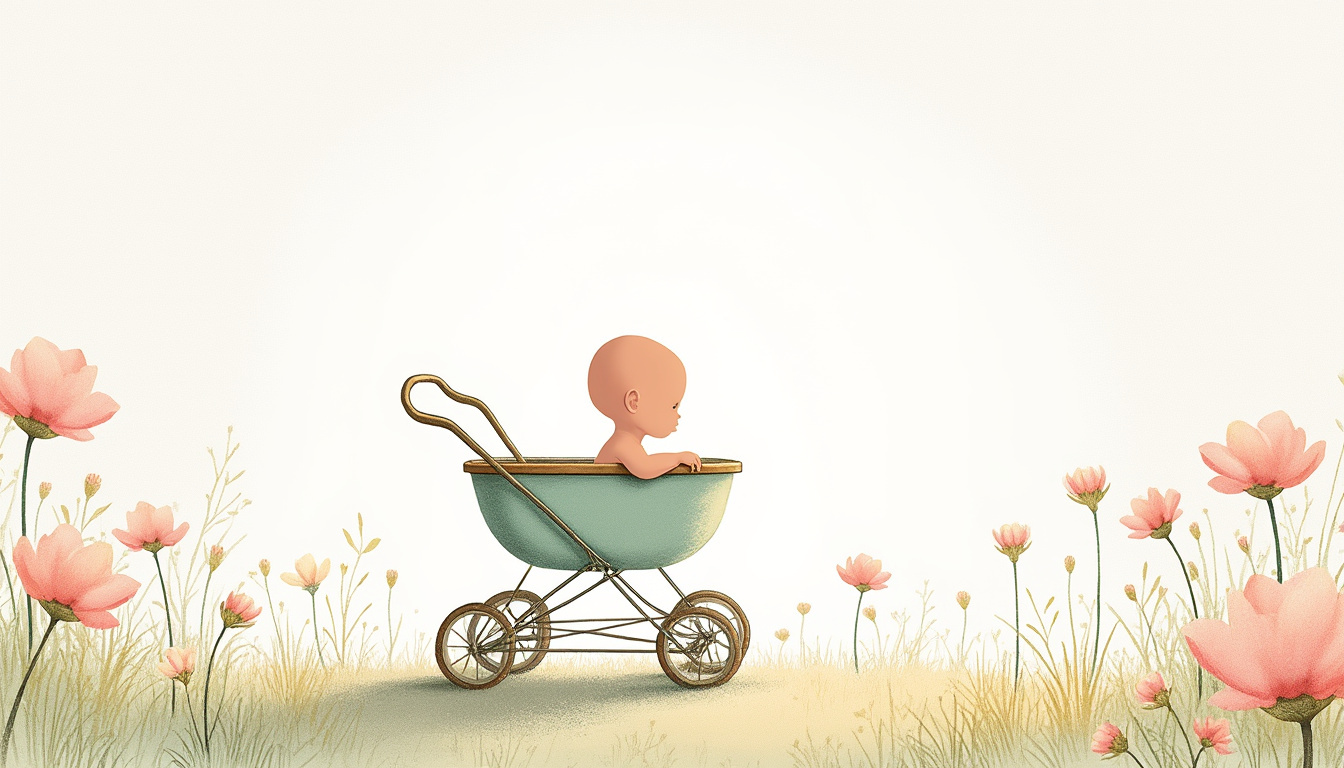
The youpala changes the dynamics of a home. It gives the baby a speed and range that they do not have on the floor. This acceleration surprises adults, even attentive ones, because a child can cover several meters in a few seconds. The risk does not come from “bad supervision,” it comes from an environment designed for a stationary or crawling baby, not a rolling and high-seated baby.
The most feared accidents occur around stairs and slopes. A step, a garage descent, a terrace threshold can become a tipping point. The walker does not “brake” like an adult. The baby’s weight, slope, speed, and surprise do the rest.
The areas of the house that suddenly become accessible
Another mechanism is less intuitive. The youpala raises the baby. Hands reach handles, tablecloths, cups, sometimes stove tops if the kitchen is open and the passage is smooth. A baby who could only grab a toy on the floor can suddenly pull a dish towel, grab a cable, or get closer to a hot source.
Prevention then plays on concrete adjustments, not on a promise of permanent vigilance. No one stays 100% focused for hours. It’s better to reduce accident opportunities than to rely on a reflex that would come “just in time.”
A necessary clarification on the ban in some countries
The fact that the youpala is banned from sale in some countries is often cited in the debate. Behind these decisions, there is mostly a history of domestic accidents and the observation that even with prevention messages, falls remained frequent. European standards have also evolved, with requirements on stability and anti-tip systems, but they do not render the item neutral in real contexts.
For a more detailed analysis of danger mechanisms and typical home situations, the file baby walker and risks: what parents really need to anticipate provides helpful insight, focused on prevention and environment.
Consultation box: when to seek professional opinion
A pediatrician, general practitioner or pediatric physiotherapist opinion is justified if a baby frequently stays on tiptoes on the floor beyond 9 to 10 months, seems stiff in the legs, collapses as soon as trying to straighten up without support, or if overall mobility regresses. A consultation is also relevant after a fall, even without immediate signs, if the baby vomits, seems unusually drowsy, or cries inconsolably.
After immediate safety, the subject naturally extends to the question many parents phrase differently. Does the youpala “delay” walking, or is it a myth? The next section goes into detail on motor development.
A demonstration video can help visualize posture in a walker and floor adjustments, provided you maintain a critical view. The images show positions, not a “verdict” on your child.
Baby motor development: what the youpala changes in supports, balance, and walking
Motor development does not follow a straight line. It is built through trials, controlled falls, micro-adjustments, and varied repetitions. Between 6 and 12 months, the baby explores transitions. They move from stomach to back, from back to stomach, pivot, crawl, get on all fours, sit, and straighten up by holding on. Walking often occurs between 10 and 18 months, with a wide variability that remains normal.
The youpala intervenes precisely during this transition period. It offers a “ready-to-use” solution to straightening and moving while the child is learning to organize their body. This does not mean that time in a youpala harms development. It means the accessory can influence the motor repetitions available during the day.
What the brain learns on the floor, and what the walker bypasses
On the floor, the baby must manage lateral balance, trunk rotation, dissociation of belts (shoulders and pelvis), and especially modulation of muscle tone. Tone is not “strength,” it is a baseline muscle tension, continuously adjusted by the nervous system. The child learns to relax then recruit at the right moment.
In a youpala, some of these adjustments are simplified. The pelvis is supported. Falls are rare, so postural recovery learning is less solicited. The baby can move without having found their standing stability on the floor. This discrepancy explains why some professionals recommend promoting exploration spaces on mats rather than a rolling device.
Comparative table: youpala vs alternatives to support mobility
| Option | What the baby experiences | Points of caution | When it is relevant |
|---|---|---|---|
| Youpala (walker) | Assisted movement, often tiptoe supports, extended access to environment | Risk of falling down stairs, access to hot areas, less varied motor repetitions | Very occasional use, fully secured space, baby already stable sitting |
| Floor mat + toys at a distance | Pivoting, crawling, all fours, hand-eye coordination | Stable surface, avoid small objects, monitor animals and cords | Daily, especially between 4 and 10 months, with frequent but short times |
| Secure playpen (limited time) | Independent play, fine manipulation, sensory breaks | Do not “park” for hours, vary positions, take out regularly | When the adult must cook or care for another child |
| Stable push walker | Weight transfer, standing progression with hand support | Walker stability, speed, non-slippery floor | When the baby stands alone and takes some lateral steps along furniture |
A concrete marker to decide by age and temperament
A baby who doesn’t yet move on the floor mainly needs floor space, not an accelerator. A child already on all fours, who straightens and “cruises” along furniture, is in a different situation. Temperament also matters. A very cautious baby often benefits from an environment rich in low supports on the floor. An impulsive baby challenges home safety more if gaining a rolling base.
The next section leaves the simplistic “for or against” analysis. It proposes a realistic way to arbitrate, without judgment, with safety rules applicable on a Tuesday evening, not just on paper.
To see simple exercises in free movement and space arrangement, a pediatric physiotherapy video resource may inspire everyday actions.
Analysis and debate: choosing with nuance between parental need, safety, and development
The debate around the Youpala quickly becomes emotional. Some parents say it “saved” their end of the day. Others recount a big scare, sometimes in a second. Professionals see the reality of emergencies but also the reality of parental exhaustion. A useful position denies neither.
The underlying question resembles this, asked without judgment. Is the youpala used as one object among others, or as a pillar of the organization? Is the space really compatible with a rolling baby, or is it a house with a step, open kitchen, stairs, visible cables? The answer changes everything.
A simple grid to decide without locking in
Some families choose not to introduce a youpala. Others have one but rarely take it out. Others use it daily. To move away from the “black or white” debate, three practical questions structure a decision consistent with your reality.
- Is the living space 100% securable in the use area? This implies no access at all to stairs or a step, and a perimeter where nothing hot, sharp, hanging, or breakable is reachable.
- Does the baby already spend a lot of time in containers? Baby chair, seat, car seat, bouncer. The more the day is “in imposed position,” the more floor time becomes precious for development.
- Is use serving a short, planned break, or a long occupation by default? A short and structured use does not produce the same repetition as prolonged use.
Concrete precautions if the youpala remains in your daily life
When the choice is to use it despite reservations, prevention benefits from being concrete. A timer can help, not to “control” the baby, but to avoid a quarter-hour turning into an hour. The space must be closed as one would close a stair gate, with a logic of double safety. Slippery mats, computer wires, and long tablecloths become priority points of attention.
A practical marker is variety. The youpala should never replace floor sequences where the baby can roll, crawl, and support low. A realistic routine often looks like short alternations, adapted to the baby’s energy and the parents’ fatigue level.
An additional insight on risk prevention
When family discussions become tense, relying on a clear resource helps get out of “your opinion versus mine.” The page analysis of risks related to the baby walker helps reframing the subject on observable situations rather than opinions.
The subject naturally extends to one last dimension, often forgotten. What is at stake is not only motor or safety, but also the quality of interactions during these wakeful moments. The following section addresses how to support mobility without losing connection, especially on long days.
Alternatives to the youpala to support mobility without increasing risk
When a baby demands “more,” it is not always “more movement.” Sometimes, they seek more sensory diversity. Touching, looking, listening, manipulating, climbing on a firm cushion, straightening on a low couch, playing with a safe everyday object. Adults can respond to this quest without adding a rolling device.
The floor remains an incomparable learning ground. A firm mat, a few spaced toys, an unbreakable mirror at floor level, and stable supports at chest height when the baby is ready already offer natural progression. The baby’s brain loves calibrated challenges. It likes when it’s just a little difficult, not impossible.
Arrange the space realistically, even in an apartment
Free movement doesn’t require a gym. It requires a stable, clear corner, repeated each day. A baby also calms through predictability. Finding “their” mat helps them get moving. A plush blanket on a couch doesn’t replace firm flooring because the push from hands and knees is not the same there.
To stimulate mobility without exhausting you, objects can be chosen for their action potential. An empty tissue box with scarves, an easy-to-grip teething ring, a soft ball that rolls slowly, a cardboard book. The baby moves because the object “resists” a bit or because it is at a motivating distance.
Carrying, push walker, and well-timed “vertical time”
Verticality has a place but must align with the baby’s ability. A child who stands up holding on may appreciate a stable, heavy push walker that doesn’t take off like a scooter. The feet must be able to rest flat, and the floor must grip. If the walker slides, the child leans back and compensates, which is not the goal.
Physiological carrying does not “make them walk,” but nurtures something else. It regulates the nervous system, especially when the baby is in evening irritability phase. A carried baby often calms because the vestibular system is stimulated, the adult’s breathing gives rhythm, and contact reduces internal alertness.
A phrase that helps decide when fatigue speaks too loudly
When the day is long, the goal is not to “make a baby walk” faster, but to offer simple opportunities to explore while keeping the home predictable and safe.
When alternatives are in place, the youpala often loses its status as indispensable object. It becomes what it always was, a possible accessory, to be handled with care. The final part answers the most frequent consultation questions, the ones that arise at 10 PM when looking for a clear rule.
From what age can a baby go in a youpala?
Most babies are placed in a youpala around 6 to 9 months, when they sit well with good trunk control. Maturity counts more than exact age. If the baby slumps in the seat, mainly pushes on tiptoes, or seems “hung,” the use is not suitable and it’s better to return to the floor mat and low supports.
Does the youpala necessarily delay walking?
There is no inevitability. The risk mainly arises when use is frequent or prolonged and replaces floor time. Walking is built through transitions and balance adjustments that the walker partly bypasses. Rare, very supervised use in a safe environment does not have the same impact as daily use.
What are the main safety risks at home?
The most concerning risks are falls on stairs or slopes, then accelerated access to dangerous areas like the kitchen, hot surfaces, electric wires, and pullable objects (tablecloth, dish towel). The youpala increases speed and hand height. Prevention relies on a strictly closed area, without steps, and an environment cleared of all accessible dangers.
Which alternatives really help mobility without increasing risk?
The floor mat with toys placed at a distance motivates crawling and all fours, which prepare walking very well. A stable push walker can be offered when the baby stands alone and moves laterally along furniture. A playpen can help for short times for safety, provided it is not used as prolonged parking.