

In brief:
- Pregnancy unfolds in a series of precise phases where each month reveals essential physical and psychological transformations, for both the mother and the baby.
- Prenatal consultations are fundamental anchors: they pace the monitoring of maternal health and allow observation of fetal development.
- Knowledge of the key stages, essential examinations, and administrative procedures ensures serene and conscious parenting, avoiding anxiety and surprises.
- An attentive approach to complementary care, such as childbirth preparation and choice of maternity hospital, enriches the pregnancy experience.
- The month-by-month pregnancy calendar, with its appointments, ultrasounds, and milestones, becomes a precious ally to fully experience every moment of this unique adventure.
Organize your prenatal follow-up month by month for a harmonious pregnancy
The first aspect to understand in this adventure called pregnancy is the notion of rigorous and human follow-up. The prenatal calendar acts like a true compass, guiding the expectant mother through a journey sometimes filled with questions. Each key stage corresponds to a meeting with health professionals — midwives or gynecologists — who ensure personalized care.
From the confirmation of pregnancy, the first prenatal consultation is mandatory before the end of the third month. It confirms the pregnancy, specifies the expected delivery date by calculating, notably from the date of the last menstrual period, and initiates the declaration with Social Security. This declaration is essential to benefit from covered follow-up and to calmly prepare the path ahead. This step initiates the natural sequence of visits which then space out monthly after the 4th month of pregnancy.
Monthly follow-up includes targeted assessments: blood pressure monitoring, weight measurement, urine tests to detect possible gestational diabetes. Uterine height is regularly measured to monitor uterine growth in relation to the fetus. A careful examination of the cervix is added to monitor its potential opening. These appointments perfectly suit the overall health of the mother and offer tailor-made support, while leaving room for questions and psychological needs.
It is also possible to complement this classic medical framework with personalized supports like haptonomy, which encourages early emotional communication with the baby, or sophrology to better manage stress. These practices are valuable resources to experience a more balanced pregnancy, in harmony with one’s body and emotions, strengthening the mother-child bond.
To fully grasp the benefits of this follow-up, future parents are invited to equip themselves with a detailed pregnancy calendar. This precious document or digital app allows a clear visualization of the progression of pregnancy week by week, anticipate medical appointments, but also record personal impressions and feelings. It thus provides a reassuring and orderly frame to this period of great transformation, soft and intense.
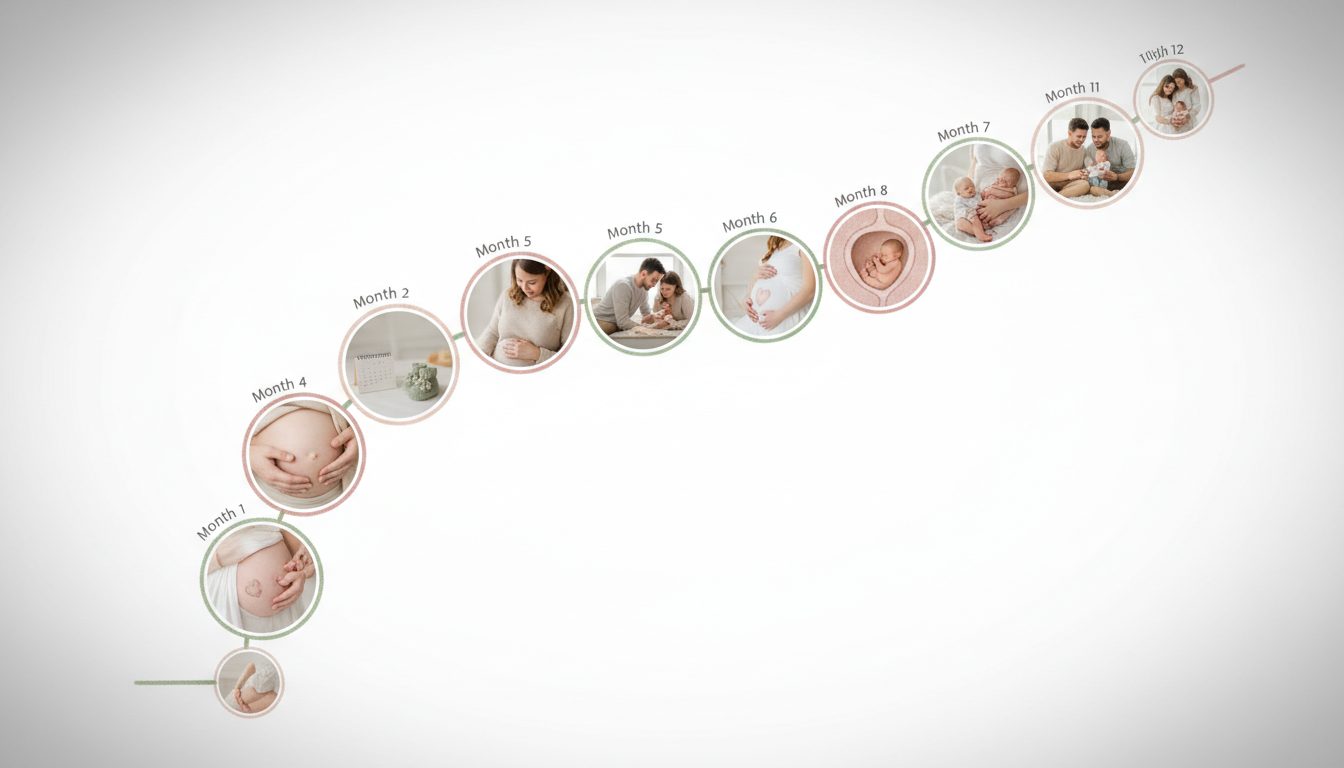
Follow fetal development month by month: an emotional moment at each stage
Each passing month, the baby’s development brings its share of surprises and invisible progress, which only ultrasounds can reveal with medical precision and striking beauty. These examinations, strategically placed during pregnancy, allow appreciation of the fetus’s health while reassuring the parents.
The first ultrasound, around the twelfth week of amenorrhea, is an intense emotional moment. It is the first visual encounter with this little being in the making. Beyond verifying proper implantation in the uterus, it measures nuchal translucency, an important indicator of potential risks, notably that of trisomy 21. This stage is key to calmly envision what follows, as it opens a field of crucial medical information for suitable support of the future baby.
The second ultrasound, carried out at the twenty-second week, is rich in detail. It scrutinizes carefully the fetus’s morphology, allowing observation of each organ with precision. It is also at this time that parents can often know the sex of their child — a discovery that adds to the enchantment of pregnancy. For the impatient, ancestral methods such as the Chinese calendar still circulate, but it is indeed the ultrasound that remains the indispensable scientific reveal.
The third visual encounter, around the thirty-second week, allows monitoring of the baby’s good growth and position in preparation for delivery. Depending on the situation, other ultrasounds may be prescribed, especially if anomalies or particularities are detected. These successive examinations weave a thread that unites parents, health professionals, and the baby in a delicate dialogue, full of vigilance and tenderness.
Fetal development also of course contains its mysteries, sometimes delicate to understand as they depend on factors unique to each pregnancy. It should be recalled that even with very rigorous monitoring, nature remains sovereign. This reminder invites cultivating trust without pressure, respecting the intimate rhythm of life.
It should be noted that overall follow-up of pregnancy week by week provides a clear understanding of this metamorphosis. It is important to have a clear vision of these phases to fully appreciate the discreet wonders unfolding inside the maternal belly.
Key stages of medical examinations and their role in maternal health
Beyond ultrasounds, prenatal care relies on a set of essential medical examinations to ensure maternal health and prevent any complication. Pregnancy, although natural, requires sustained attention, as the female body undergoes profound and sustained changes over time.
Blood and urine analyses occur from the first consultation. They check immunity against certain infections, notably toxoplasmosis, a major issue for baby’s safety. In case of non-immunization, monitoring will be adapted to avoid any risk. Other assessments detect possible deficiencies or latent infections.
Monthly consultations also allow blood pressure monitoring. Gestational hypertension, when unmanaged, can cause serious consequences. Proteinuria measurement is systematic to detect possible preeclampsia, a severe condition requiring increased vigilance.
Another important examination is for gestational diabetes, searched for using a urine dipstick and then confirmed by a glucose tolerance test if necessary. This monitoring may require dietary or therapeutic adjustments essential to the good health of the mother and child.
These appointments, often seen as mere formalities, are in reality acts of protection and love. They provide a secure framework where the expectant mother’s psychological balance is also taken into account. Careful listening to painful symptoms, persistent nausea, or excessive fatigue prevents avoidable complications.
In short, the prenatal examination, while a scientific discipline, naturally couples with a benevolent human approach indispensable for each expectant mother to feel heard and supported.
Administrative procedures and logistical organization to support each month of pregnancy
Good administrative organization contributes to a calm pregnancy, as it removes part of the anxiety linked to the unknown. The pregnancy declaration to Social Security must be carried out imperatively before the end of the third month. This formality activates rights for medical follow-up and maternity leave.
Booking a place in a maternity hospital is another step often neglected until it becomes urgent. It is advisable to plan this registration from the 9th week of amenorrhea, because in the Île-de-France region, for example, the availability of places in hospital structures is particularly tight. Waiting exposes the risk of not obtaining the maternity hospital of choice.
Childbirth preparation usually starts around the sixth or seventh month. However, it is essential to choose beforehand the desired type of preparation (classic courses, prenatal yoga, prenatal singing, haptonomy). This selection commonly takes place during the prenatal interview of the 4th month, a stage not to be underestimated. This diversity allows adapting bodily and emotional maternity to the specific needs of each woman.
Some parents also consider booking a place in a nursery well before birth, as here too, demand often exceeds supply. This anticipation helps ease postnatal concerns, offering more serenity to the expectant mother.
Here is a list of the main procedures to plan during pregnancy:
- Declaration of pregnancy to Social Security before 12 weeks.
- Registration in maternity from the 9th week, earlier in high-demand areas.
- Choice and registration for childbirth preparation sessions in the 4th month.
- Anticipation of postnatal organization, such as booking a place in nursery.
- Communication with relatives to build an emotional support network.
Such a planning elaborated in advance considerably lightens the burden of procedures at the end of pregnancy, thus allowing full focus on the essential: welcoming the newborn, their well-being, and that of the parents.
| Stage | Recommended timing | Main objective |
|---|---|---|
| First prenatal consultation | Before end of 3rd month | Confirm pregnancy, calculate due date, declare pregnancy |
| Declaration to Social Security | Before end of 3rd month | Activate medical coverage and maternity leave rights |
| Maternity registration | From 9th week | Secure place and define delivery location |
| Individual prenatal interview | Around 4th month | Choose type of childbirth preparation |
| Start of childbirth preparation | 6th-7th month | Prepare physically and psychologically |
Understanding and anticipating maternity leave: an essential transition period
Finally, maternity leave management is part of the overall pregnancy planning. This dedicated time allows expectant mothers to prepare for delivery and then adapt to the first moments of life with their baby, in the softness and calm essential to regained family balance.
In France, the statutory duration of leave varies depending on the situation. For a simple pregnancy, whether first or second, leave totals sixteen weeks, split into six weeks before the expected delivery date and ten weeks after. For a third pregnancy, this period increases to twenty-six weeks, including eight prenatal and eighteen postnatal weeks.
Multiple pregnancies require longer time to support maternal health and calmly welcome newborns. Thus, for twins, the total duration stretches to thirty-four weeks (twelve before and twenty-two after delivery), while triplets benefit from forty-six weeks in total, with twenty-four weeks before birth and twenty-two after.
These durations are indicative and can be adapted according to medical circumstances. This flexibility reflects a deep understanding of maternal and fetal needs, embedded in a respectful and benevolent approach.
This leave is not only physical rest time but also a precious period to weave the emerging bond, to pause, and consciously support each evolution. It opens to new family rituals, to shared moments that durably establish the baby’s well-being and parents’ serenity.
To naturally extend this transition, specialized literature on safe sleep and co-sleeping offers enlightening insights. It reminds how softness and affective presence facilitate restorative sleep, so essential during this time.
When to start prenatal follow-up?
Prenatal follow-up begins from the first consultation, generally before the end of the third month, to confirm pregnancy, declare the upcoming birth, and plan necessary examinations.
What are the mandatory medical examinations during pregnancy?
At least seven prenatal visits, three key ultrasounds, blood and urine analyses, blood pressure measurements, and gestational diabetes screening constitute the reference examinations for a healthy pregnancy.
How to calculate the expected delivery date?
The date is calculated from the first day of the last menstrual period, or from the presumed fertilization date, with an average of 41 weeks of amenorrhea, although birth always depends on nature.
When to register at the maternity hospital?
It is preferable to register from the 9th week of pregnancy, or even earlier in regions where demand is high, to guarantee availability and quality of care.
What is the duration of maternity leave depending on pregnancy?
Maternity leave varies: 16 weeks for a simple pregnancy, 26 weeks from the third child onward, and up to 46 weeks for multiple pregnancies, with specific splits before and after delivery.