In brief:
- The zodiac is a millenary creation born from the careful observation of stars, deeply linked to the earliest calendar systems and the mythology of ancient civilizations.
- Each astrological sign derives from a specific constellation and carries a rich symbolism, reflecting character traits as well as elemental forces (fire, earth, air, water).
- Astrology, although not scientific, plays an important role in the collective imagination, offering a symbolic language to explore personality and human relationships.
- The twelve signs, spread over a celestial band, follow a precise organization inherited from Antiquity, showing a harmony between cosmos and individual destiny.
- Detailed knowledge of the origins, characteristics, and myths associated with the zodiac allows approaching this millenary tradition with an enlightened and sensitive perspective.
The ancient origins of the zodiac: between astronomy and mythology
The history of the zodiac plunges its roots into ancient civilizations that carefully observed the starry sky, marking the first steps of a human quest to understand existence through the stars. The Sumerians, Babylonians, and Egyptians were pioneers in this discipline, blending astronomical adventures and mythological tales.
The Babylonians, in particular, played a decisive role in formalizing the astrological signs. By dividing the year into twelve months corresponding to twelve constellations, they established a celestial map that served both as a calendar and a divinatory tool. This rigorous division met a fundamental need: to predict natural cycles and organize social life according to the solar and lunar rhythms.
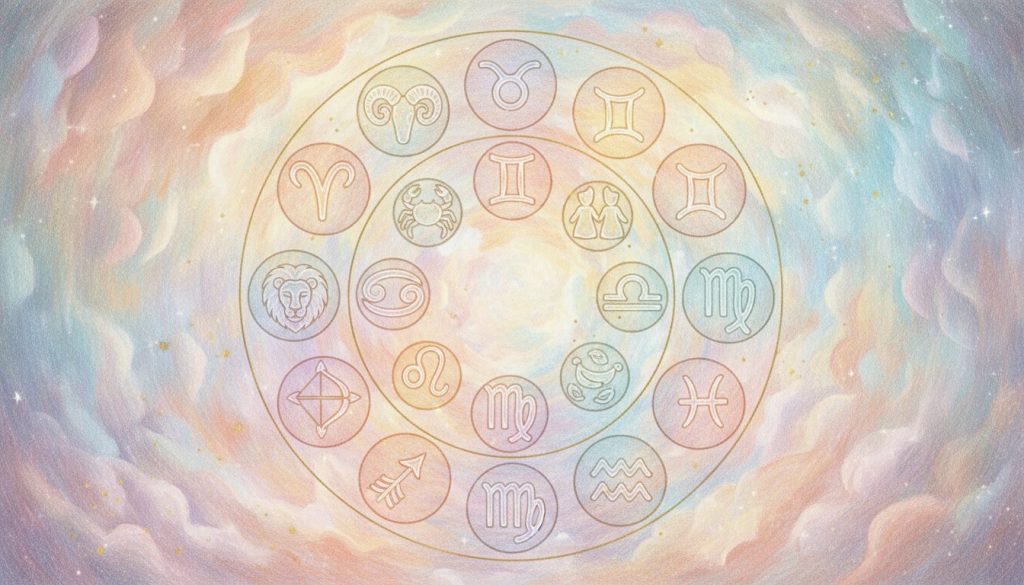
The zodiac, an imaginary band along which the sun seems to move, thus corresponds to these twelve celestial sectors. Each is represented by a constellation whose shape evokes an animal or a mythological figure, carrying a powerful symbolism accessible to the collective imagination of the time. From naive observation to the beginnings of a science, this transition testifies to an alliance between reason and belief.
This astrological system was enriched after the Greek conquests, which infused a new philosophical dimension by linking these constellations to human archetypes. Greek astrology, with its symbolic approach, imposed order and rigor in the understanding of signs, which still prevails today. Thus, the symbolism of astrological signs draws as much from the precision of astronomical observations as from the richness of myths, conferring on the zodiac a dual heritage, scientific and poetic.
This imprint of the stars in the ancient cultural fabric highlights how much the zodiac, beyond being a predictive tool, has always been a mirror of the human condition, a way to inscribe individual destiny in the vast cosmic sky. Through this intimate relationship between stars and man, it becomes clear that astrology is a bridge between small hands and infinite cosmos, an invitation to meditate on the rhythm of lives and seasons.
The astrological signs: symbolism and essential characteristics
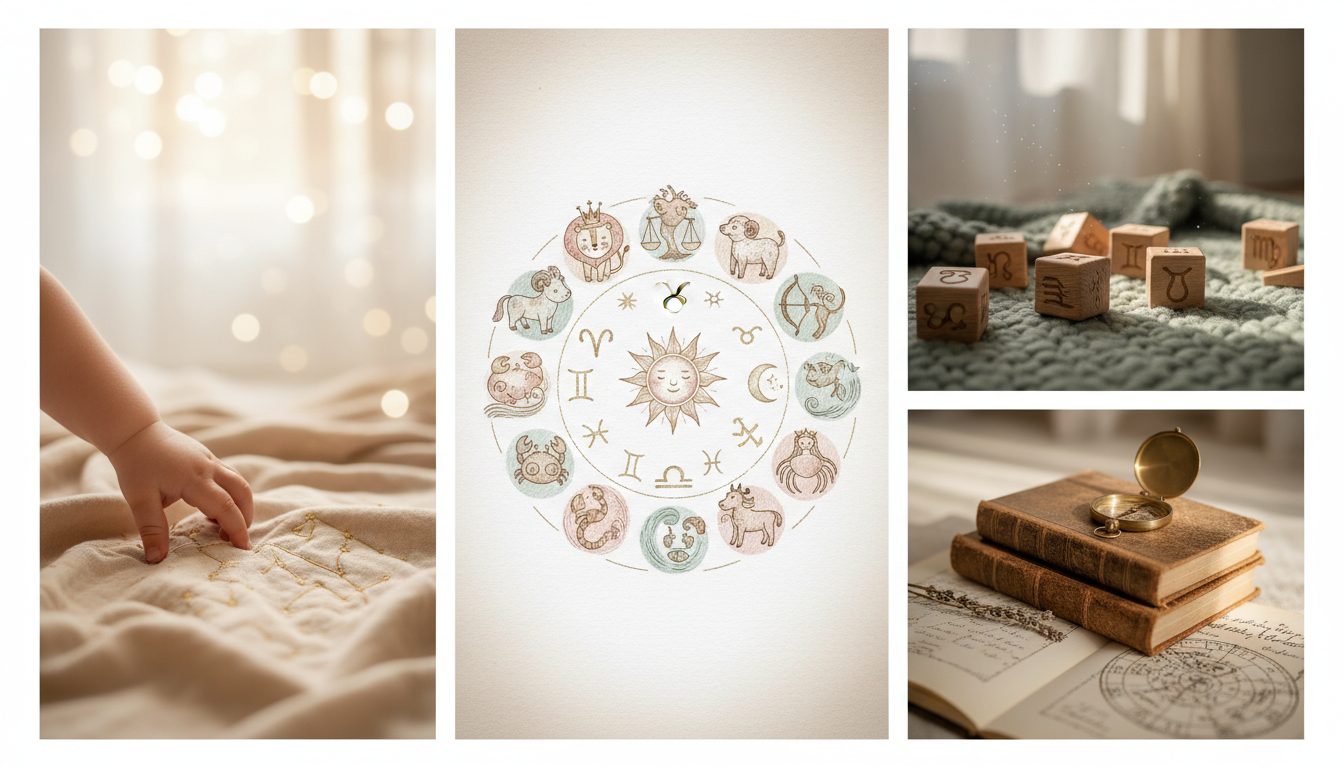
Each astrological sign is much more than a simple temporal marker. It conveys a deep symbolism that illuminates aspects of personality, emotions, and relational dynamics. The zodiac, divided into twelve equal parts, assigns each month a constellation and a set of distinctive traits, influenced by the natural element to which it is attached: fire, earth, air, or water.
For example, the fire signs – such as Aries, Leo, and Sagittarius – embody energy, passion, and impulse. They often evoke courage, creativity, and a certain need for adventure that can manifest intensely in the nature of those who belong to them. Conversely, the water signs – Cancer, Scorpio, and Pisces – express heightened sensitivity, deep empathy, and a tendency toward emotional protection.
The earth signs, including Taurus, Virgo, and Capricorn, provide stability, rigor, and endurance. They foster a connection to tangible realities and sustainable practices, often associated with a pragmatic approach to life. As for the air signs – Gemini, Libra, and Aquarius – they reflect communication, intellectual curiosity, and a permanent capacity to adapt to changes.
This arrangement offers a framework to understand how cosmic energies might help each person better situate themselves in their experiences, by valuing innate qualities and potential growth avenues. Astrology does not deliver an irrevocable verdict but invites attentive listening to one’s personal vibrations.
Below, a table summarizes the astrological signs with their dates, associated elements, and main characteristics for immediate reading:
| Sign | Period | Element | Main Traits |
|---|---|---|---|
| Aries | March 21 – April 19 | Fire | Brave, dynamic, audacious |
| Taurus | April 20 – May 20 | Earth | Stable, loyal, persevering |
| Gemini | May 21 – June 20 | Air | Curious, communicative, adaptable |
| Cancer | June 21 – July 22 | Water | Sensitive, protective, caring |
| Leo | July 23 – August 22 | Fire | Proud, brave, creative |
| Virgo | August 23 – September 22 | Earth | Practical, organized, meticulous |
| Libra | September 23 – October 22 | Air | Balanced, sociable, diplomatic |
| Scorpio | October 23 – November 21 | Water | Passionate, mysterious, intense |
| Sagittarius | November 22 – December 21 | Fire | Optimistic, adventurous, independent |
| Capricorn | December 22 – January 19 | Earth | Ambitious, determined, responsible |
| Aquarius | January 20 – February 18 | Air | Original, independent, humanitarian |
| Pisces | February 19 – March 20 | Water | Empathetic, imaginative, sensitive |
This clear reading offers everyone a benevolent framework within which to situate themselves, a tool for exploration that complements understanding of emotions and behaviors in a family or personal context.
The zodiac as a reflection of life cycles and emotional development
Just as the body follows defined rhythms from birth, the observation of astrological signs can be seen as a powerful metaphor for the different emotional phases each person goes through. Appreciating the zodiac from this perspective opens a window on the inner dynamic and major transitions in life.
The signs, paced by the seasons, correspond to the fluctuating stages of emotional development. The arrival of spring under the sign of Aries symbolizes awakening and momentum, an invitation to welcome each child with the same eagerness and openness to newness. The summer signs, such as Cancer and Leo, are associated with the blossoming of feelings, this ability to establish a protective bond, essential from the first days of life.
In autumn, the signs Virgo and Libra evoke maturation, attention to detail, and fairness in relationships. These moments invite strengthening the balance between giving and receiving, taking care of one’s family environment attentively and in an organized manner, an indispensable quality in supporting the infant.
Finally, winter, with signs like Capricorn and Aquarius, invites a return to self, reflection on meaning and responsibility. It is a phase where parents and child connect deeply, through silent trust and gestures imbued with security.
This cyclical reading aligns both biological rhythms and the intuitive wisdom necessary to support each stage of childhood and parenting. It proposes a path of harmony, where embracing the traits of the zodiac helps cultivate an emotional environment that is rich, balanced, and serene.
The constellations and their role in horoscope elaboration
The zodiac constellations are both mythological figures drawn by stars and celestial landmarks that serve as the foundation of astrology. Their observation makes it possible to locate the sun’s position at the moment of birth, established as a central point to create a horoscope.
This practice is nourished by a long tradition of sky observation, today strengthened by modern tools, but which retains an ancient essence. Each stellar signature tells a story, a legend, that crosses cultures and underpins contemporary astrological interpretations.
The symbolism of the constellations brings metaphorical dimensions that enrich the language of the horoscope, making the connection between cosmos and existence lively. This link appears in detailed descriptions of love compatibilities, personal inclinations, or challenges that may arise, subtle reminders that existence is inscribed in a vast grand universal cycle.
This alliance between stars, mythology, and symbolic language invites parents to gently observe their child’s behaviors, sometimes discerning a resonance with the traits of each sign. More than a simple interpretative key, the zodiac thus acts as a sensitive mirror that accompanies family experiences, offering kindness and perspectives to welcome what is unique in each person.
Thus, the ritual of consulting the horoscope can transform into a moment of introspection, discovered in a spirit of openness and not fatalism, offering ways to refine the understanding of oneself and others, especially within the intimacy of a parent-child relationship.
Landmarks to better live daily life: how the zodiac illuminates human relationships
The popularity of astrology in the contemporary world does not lie in its predictive value in the strict sense but in the symbolic richness of its landmarks. Understanding the characteristics of one’s own sign, and those of close ones, helps develop nuanced empathy and a peaceful inner dialogue.
For example, recognizing that certain traits like sensitivity in Cancer or independence in Aquarius fit into a broader framework of human nature encourages patience and tolerance. This fine knowledge brings a breath of harmony into daily life, essential for family well-being, especially during periods when emotions can be intense and changeable.
Astrological signs then become instruments to better live the complexity of relationships by providing a subtle and respectful reading grid. It is by no means about cataloging or restricting a being to their sign, but about opening possibilities, gently accompanying the singularity of temperaments.
Simple gestures, inspired by the symbolism of the zodiac, can foster this precious bond. For example, particular attention paid to the dominant element of a sign in the family setting (air, fire, earth, or water) makes it possible to choose environments, games, or listening times adapted, offering a cocoon both reassuring and stimulating.
Here is a list of practical advice to integrate this approach into daily life:
- Observe the young child’s emotional reactions linked to their sign to better respond to their needs.
- Value the natural strengths of the sign to encourage self-confidence and fulfillment.
- Use calm rituals, like reading or sharing related to the sign’s symbols, to strengthen the parent-child bond.
- Respect moments of withdrawal or need for independence, particularly marked in some signs such as Capricorn or Aquarius.
- Promote activities that reflect associated elemental qualities: water for gentleness and sensitivity, fire for creativity and expression.
These paths nourish a holistic approach, where attention to each person’s inner constellation invites a more peaceful, solid, and inspiring relationship.
What are the origins of the zodiac?
The zodiac has its roots in Antiquity, notably among the Babylonians and Greeks, who observed the stars, divided the year into twelve months, and associated each period with a symbolic constellation.
Why are astrological signs divided into four elements?
The four elements (fire, earth, air, water) represent different modes of energy and character traits that help understand the forces and dynamics specific to each sign.
Is astrology a science?
Astrology is not a science in the strict sense, but rather a symbolic system derived from ancient traditions that supports the understanding of personality and human relationships.
How to use zodiac symbolism in parenting?
It can guide better listening to the child’s emotional needs and encourage benevolent practices adapted to their character traits.
What is the difference between solar sign and constellation?
The solar sign corresponds to the sun’s position at the moment of birth within an astrological constellation; it represents the fundamental personality characteristics according to astrology.