
In brief:
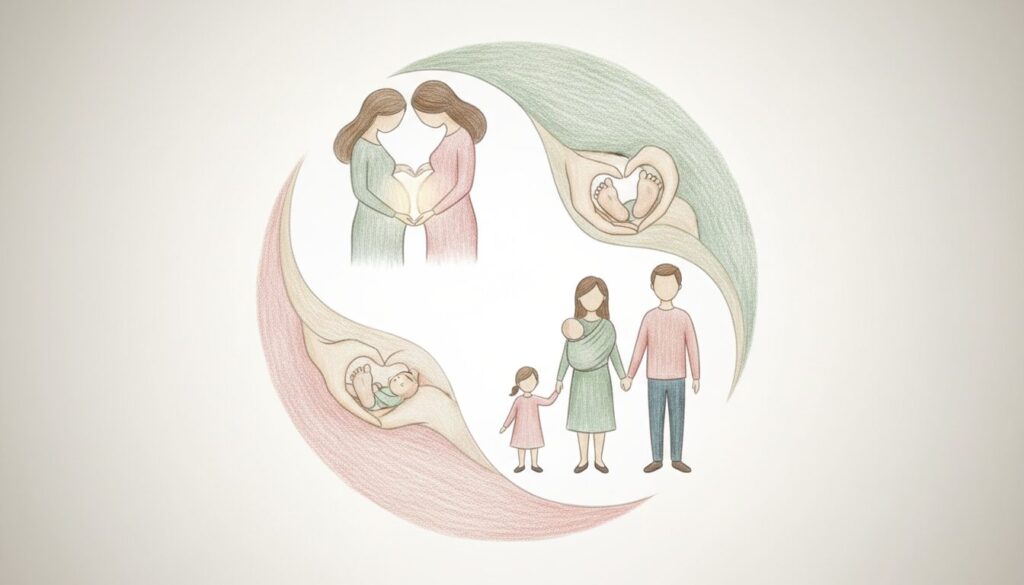
- Supportive parental guidance accompanies families at every stage, from pregnancy to child-rearing.
- Preparation for parenthood promotes a better understanding of pregnancy, birth, and child development.
- The role of family support is crucial in preserving the emotional balance of parents and nurturing that of the baby.
- Practices such as breastfeeding and co-sleeping help strengthen emotional bonds and ensure the newborn’s security.
- Particular attention to gentle and progressive education supports the overall well-being of the family.
Experience pregnancy serenely through personalized support
Pregnancy marks a sensitive and unique turning point in a couple’s life, blending physical upheavals, intense emotions, and many questions. Parental support at this stage proves essential to enable future parents to approach this period with confidence and calm.
It all begins with preparation for parenthood that includes regular consultations, well-guided medical exams, and personalized advice on lifestyle. In 2026, consultations increasingly integrate the psychic dimension: midwives and health professionals carefully assess the emotional experience of the pregnant woman, offering attentive listening to avoid unnecessary anxieties often linked to a lack of information.
For example, future moms can understand in detail the various mandatory exams, such as ultrasounds, including the endovaginal pelvic ultrasound which plays a key role during the first trimester. Each medical session becomes a moment of exchange, where explaining procedures enhances the perceived benevolence and helps to de-dramatize potential worries.
Healthy, adapted nutrition also begins very early, with recommendations based on recent studies, ensuring that nutritional intake supports both mother and baby. The teachings go beyond a simple list of what to eat: they encourage fully connecting to it, so that every bite becomes a breath of life nourishing and strengthening the bond with the unborn child.
The role of the father is also emphasized during this phase. He is invited to actively participate in appointments, preparation workshops, and to support his partner through the emotional changes. This complicity woven before birth prepares the ground for harmonious parenthood centered on everyone’s kindness.
A table summarizes the key stages of pregnancy and their respective supports:
| Pregnancy stage | Key support | Benefits for parents |
|---|---|---|
| First trimester | Detailed medical consultations, targeted ultrasounds, psychological preparation | Soothing initial uncertainties, personalized follow-up |
| Second trimester | Nutrition workshops and birth preparation, couple support | Strengthening the parental bond, better understanding of needs |
| Third trimester | Preparation for baby’s arrival, stress management, practical organization | Enhanced serenity, thoughtful anticipation |
Each stage invites a respectful pace, avoiding rush, allowing this preparatory time before birth to be fully lived.
Creating a deep bond from birth: the importance of family support
Birth disrupts landmarks: a fragile baby arrives and daily life is transformed. It is precisely the reassuring presence of supportive parental guidance that allows passing this stage gently.
The first meeting after birth is a foundational moment. Skin-to-skin contact, a gesture of absolute simplicity but immense emotional richness, plays an essential role. This direct contact, accompanied by the soothing voice of the parents and shared warmth, triggers vital neural connections for the child’s development.
The father’s role takes on even greater importance: he can also invest in this ritual, becoming an additional source of calm and fully sharing the emotional responsibility. This extended family support often includes grandparents or other relatives, whose kindness helps lighten the emotional load of the parents.
During this time, the support includes attentive monitoring of the baby’s health, including the establishment of breastfeeding respectful of the child and mother’s rhythm. Breastfeeding, far from being a mere nutritional act, is a real time of sensory exchange, a source of mutual soothing. Midwives and health professionals encourage the practice while respecting each family’s wishes, without judgment or pressure.
It also involves protecting the newborn’s sleep by privileging safe conditions, which may include the thoughtful use of co-sleeping. This approach reassures the baby while respecting recommended safety guidelines, a difficult but achievable balance with good follow-up.
Support also covers managing parental emotions, a significant aspect. Welcoming a child is a leap into the unknown, often accompanied by fatigue, sometimes worries related to the new role. Having access to a familial and professional support network, expert in child developmental psychology, then proves an essential resource.
Supporting the child’s development: understanding their needs and stages
Over the months, the baby transforms into a curious little being, expressing emotions and desires through gestures, sounds, and expressions. Becoming parents also means immersing oneself in this wordless language, decoding these cues to respond appropriately.
A recent study reveals that even before their first words, babies tell real “stories” through their facial expressions, gestures, and vocalizations. This observation encourages parents to support this awakening early on, valuing exchanges, tenderness, and non-verbal dialogue.
The child’s harmonious development relies on surprising and gentle stimulations: offering suitable games, encouraging story reading, promoting free movement. These practices, supported by expert guidance, optimize every potential without pressure or excessive expectations.
Advice also includes regular attention to the child’s overall health, monitoring for example body mass index, with reliable resources such as this comprehensive guide on infant BMI, to adjust diet and activities. This follow-up helps provide clear and reassuring landmarks to parents.
Moreover, the transition to complementary feeding, usually around 4 months, is a major moment to introduce the baby to new flavors within an adapted dietary framework. Gradually, they learn to appreciate a variety of foods essential for their future nutritional balance.
A table describes the major development stages and associated needs:
| Approximate age | Emerging abilities | Recommended support |
|---|---|---|
| 0-3 months | Reactiveness to sounds, first smiles, face recognition | Encourage eye contact, speak softly, practice skin-to-skin |
| 4-6 months | Start of complementary feeding, lifting head, social smiles | Gently introduce new foods, encourage motor gestures |
| 6-12 months | Sitting without assistance, first movements, babbling | Provide a safe environment, stimulate language through story reading |
The child’s development and gentle education thus go hand in hand, helping to build the foundations of a flourishing future life.
Gentle parenting: a guide for harmonious relationships
Gentle parenting has become a fundamental paradigm for accompanying children with respect and consideration. It revolves around active listening, empathic communication, and trust granted to each child’s own pace.
This approach encourages observing the child’s real needs without presuppositions or excessive demands. For example, facing a difficult first milestone, it is preferable to adopt patience and understanding rather than authoritarianism. Play, gentle speech, and physical closeness then become powerful tools to soothe and support.
Concretely, gentle parenting guides daily actions such as establishing reassuring routines, respecting rest times, and valuing even modest achievements. These small attentions enhance the child’s sense of internal security and nurture self-esteem.
It also encourages parents to maintain emotional balance, which conditions that of the child. Family support plays a crucial role here, offering listening and relief during moments of exhaustion or doubt. This prevents the feeling of isolation, sometimes a source of unnecessary anxiety.
Finally, this trend includes ongoing reflection on children’s education, their gradual autonomy, and identity building. It thus seems natural to enrich one’s knowledge through reading or exchanges with specialists to better adjust one’s support.
- Listen without judging or rushing
- Respect individual rhythms
- Encourage positive and warm exchanges
- Establish clear rules with gentleness
- Take care of oneself to better care for others
Ongoing support to grow together: toward fulfilling parenthood
Beyond the first months, becoming parents is part of an extended adventure requiring sustained support. Challenges evolve, moving from managing daily care to dealing with first crises, learning, and socialization.
Recourse to specialized structures, parent groups, or consultations in child developmental psychology then offers valuable resources. These spaces for listening and sharing make it easier to face mental load and enrich educational skills.
Gentle parenting combines with the willingness to be present while setting gentle limits. This balance helps preserve a harmonious family equilibrium.
Some practical tips to maintain this balance:
- Establish open dialogue within the couple to share feelings
- Gently involve grandparents or close friends in the support network
- Favor quality moments with each child to nurture their individuality
- Adopt a gentle observing posture, avoiding overprotection
- Seek a balance between work, rest, and family time
These paths of fulfillment remain unique to each family, but the quest for attentive and fair support is a reliable landmark.
How to prepare for pregnancy for a calm journey?
It is essential to consult regularly, adopt an adapted diet, and surround yourself with professional and family support. Psychological preparation enriched with reliable information helps soothe worries.
What are the benefits of skin-to-skin contact after birth?
Skin-to-skin contact promotes the emotional bond, regulates the newborn’s temperature and heart rate, and helps establish breastfeeding. It is a key moment for the well-being of baby and parents.
How to support baby’s development without pressure?
Respecting the child’s rhythm, stimulating abilities through suitable games, and encouraging affectionate communication without impatience are keys for harmonious development.
Why is gentle parenting important?
It enables a relationship based on mutual respect, trust, and listening, helping build solid self-esteem and balanced family relationships.
How to balance couple life and new parenthood?
Maintaining an open dialogue, sharing responsibilities, and setting aside time for the couple help preserve intimacy and better manage challenges linked to a child’s arrival.
Discover a complete month-by-month guide also proves valuable for a clear and structured reading of the pregnancy journey, offering reassuring support to parents.