In short:
- The walker, also called youpala, fascinates by the freedom of movement it seems to offer babies, but it presents many risks related to falls and domestic accidents.
- Prolonged use can hinder natural motor development, slow down the acquisition of walking, and unnecessarily tire the child.
- European regulations impose strict safety standards to limit dangers; however, the use of the walker must always be accompanied by attentive supervision and environmental precautions.
- Safer alternatives, such as the walking cart or play mat, allow motor exploration support without compromising safety.
- The role of parents is fundamental to accompany the baby with awareness and patience, without rushing the stages of motor development.
The crucial risks of the walker or youpala: an in-depth analysis of child safety
For centuries, the baby walker, or youpala, has existed in various forms, offering the child the possibility to explore their environment even before spontaneous walking is established. While this idea appeals with its promise of freedom, successive warnings from health professionals demonstrate that this mobile toy is not free of major dangers. European and American emergency services regularly report thousands of yearly accidents attributable to this wheeled object.
The main risk factor remains falls down stairs, an accident with serious, sometimes dramatic consequences, often involving head trauma. These disasters occur when the child, freed in an unsecured space, moves at high speed without control. The youpala, by allowing uncontrolled mobility, can turn the home into a hazardous terrain.
Besides falls, accidents related to burns or uncontrolled access to dangerous areas such as the kitchen are also recorded. A baby in a walker, absorbed by play or the novelty of movement, can reach objects that were previously inaccessible by other means.
In response, several countries, like Canada, have taken the initiative to outright ban the marketing of walkers due to these proven risks. In Europe, while sales remain legal, increased vigilance and strict regulation of safety standards are required. The European standard NF EN 1273:2005 thus defines precise requirements, notably a wide flared base to limit access to stairs.
Baby’s safety can therefore never be delegated to an object, however playful it may be. Constant attention and clear understanding of potential dangers enable parents to prevent accidents. The presence of an adult and securing the surrounding space are non-negotiable imperatives when baby explores the world in a walker.
Motor development: why the walker can hinder the baby’s independent walking
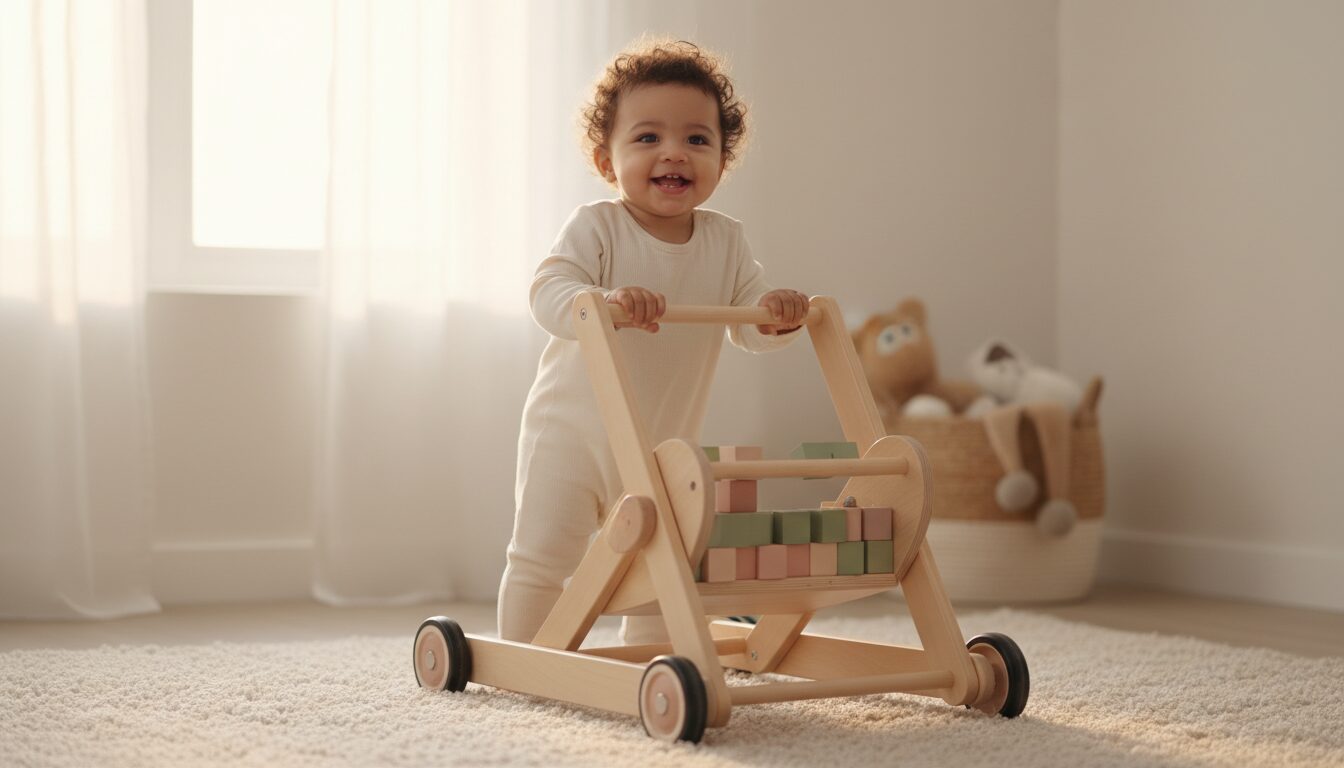
At the heart of the reservations expressed by many psychomotor therapists is the fear that the youpala disrupts the natural maturation of motor skills. By offering mechanical assistance for standing and locomotion, this equipment induces passive learning in the child. Rather than conquering balance by experimenting with different postures, the baby is constrained in a static posture, often on tiptoes, impairing the overall coordination of movements.
This partial immobility also disrupts muscular development since the child does not engage muscles in a balanced and adaptive manner. The absence of free and spontaneous movements suspends the consolidation of sensory markers essential for precise motor control. A prolonged routine in the walker can thus lead to early fatigue, reinforcing poor posture and slowing general motor awakening.
In terms of development, it should be emphasized that each child has their own pace. There is no universal “right” time to learn to walk, and rushing this stage by intensive walker use sometimes goes against the baby’s physiological and emotional needs. This gadget, if used more than 20 minutes per day, may become an obstacle to progressive and natural autonomy.
For example, an 8-month-old baby who is beginning to find balance in a sitting position should be encouraged to explore freely, to crawl, to try to stand up while holding onto stable objects rather than being prematurely placed in a walker. This motor freedom stimulates confidence, proprioception, and coordination – essential pillars for harmonious motor development.
Reasonable and occasional use, always under attentive supervision, limits negative repercussions. The walker can only be considered a developmental toy and not a tool for forced walking learning, thus avoiding disruption of natural sensorimotor maturation mechanisms.
Vital precautions for enlightened use of the walker
Choosing a walker in 2026 means primarily being sensitive to regulation and the strict protection of child safety. Any model must imperatively comply with European standard NF EN 1273:2005. This regulation requires rigorous tests to guarantee maximum stability and a sufficiently wide base to prevent tipping and access to stairs.
The child’s age is a fundamental criterion: no baby should be placed in a walker before having acquired stable sitting ability. This generally corresponds to an age around 8 months, but each child does not follow the same timeline. Identifying this motor stage is essential to avoid rushing crucial steps.
A perfectly secure domestic environment is an unavoidable prerequisite. This notably involves:
- Blocking access to stairs with appropriate barriers, as over 80% of walker-related accidents occur in these areas.
- Removing dangerous objects such as medication, small items, cleaning products, or household appliances easily reachable due to the height of the walker.
- Locking doors and windows to prevent any unsupervised exit.
- Never using the walker in risky rooms, especially the kitchen, where burns pose a serious threat.
- Limiting daily use to 20 to 30 minutes to preserve the baby’s muscular and sensory balance.
- Ensuring constant supervision and avoiding taking your eyes off or considering the walker as a “babysitting system”.
For example, a family who installed a walker in their living room ensures defining a clearly secured area, placing protections on electrical outlets and putting fragile objects out of reach. Parents stay close, encouraging baby to verbalize and spontaneously leave the walker to strengthen motor confidence.
Finally, it is crucial to stop using it as soon as the child begins to walk independently. Continuing beyond this stage can cause motor confusion or emotional delay in autonomy. The walker is an interesting tool in itself but should be used as an occasional game, under the caring supervision of adults.
Gentle and stimulating alternatives to support baby’s walking
To encourage motor development without exposing baby to the risks of the walker, several more respectful and safe options are now preferred. The play mat and playpen represent closed and secure spaces where the child can comfortably experiment with different postures, roll, crawl, and try to straighten naturally.
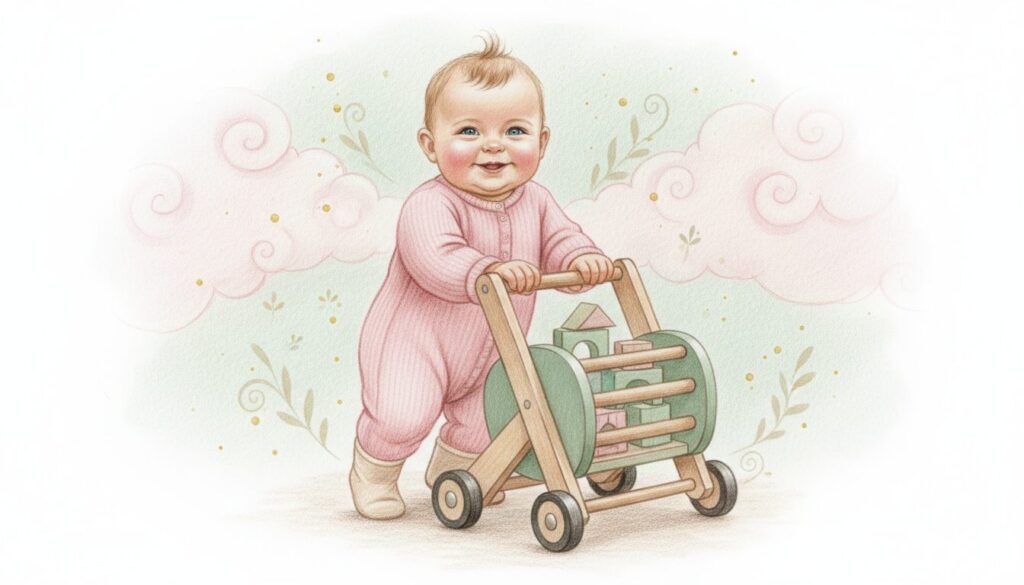
Moreover, walking carts or push toys constitute another interesting alternative. These toys, often equipped with a center of playful activities, offer solid support in discovering standing then walking. They do not suspend baby in a seat but allow moving forward while maintaining complete control of movements.
This motor freedom promotes arm-leg coordination, fine motor skills, and allows progressive and autonomous learning of moving. However, vigilance remains necessary because, even with these solutions, attentive parental supervision is needed to prevent any domestic incident.
Here is a comparative table of main characteristics between walker and alternatives:
| Criterion | Walker / Youpala | Walking cart / Push toy | Play mat / Playpen |
|---|---|---|---|
| Motor support | Suspended support, sometimes constraining posture | Stable support, encouragement of autonomous walking | No external support, total freedom of movement |
| Major risks | Falls, access to dangerous objects, burns | Fewer mobility-related risks, vigilance always necessary | Rare accidents, but attention to supervision |
| Impact on motor development | May hinder sensorimotor maturation | Stimulates coordination and overall motor skills | Promotes free exploration and natural development |
| Recommended age of use | From acquiring a stable sitting posture (around 8 months) | From standing position with support | From birth, according to space and parental vigilance |
It is essential to recall that each baby follows a unique pace of evolution. Maintaining attentive listening to the child’s needs and respecting their natural rhythm remains the best strategy for harmonious development, in a calm climate of trust.
Understanding the emotional and relational issues linked to the use of the youpala
Beyond strictly motor and safety considerations, the use of the walker also affects family bonds and the child’s emotional balance. Placing a baby in a youpala can evoke in some parents a feeling of relief or excitement at the idea of seeing their child develop faster, but this choice raises questions more about the quality of the parent-child relationship at this crucial stage.
A baby focused on assisted movement may become more autonomous in their movements, but at the cost of a form of sensory and emotional isolation. Eye contact, verbal exchanges, and affective rhythms are all elements that promote healthy and harmonious psychomotor learning.
From a holistic viewpoint, accompanying baby toward walking also means offering times of free experimentation, without rush, encouraging curiosity and secure exploration. Every progress becomes a shared victory, strengthening mutual trust.
Finally, it should not be forgotten that the parent is also in a dynamic where emotional balance plays a crucial role. The easy use of the walker as a “babysitting” tool can hide a form of understandable parental fatigue but requires time devoted to quality presence rather than quantity.
Thus, a secure framework, privileged moments of interaction, and attentive patience stand as a gentle recipe to accompany the baby in the exceptional crossing of their first steps.
At what age can you place a baby in a walker?
It is recommended to wait until the baby can sit up well alone, generally around 8 months. This stage guarantees the necessary balance for safe use of the walker.
What are the main dangers related to the walker?
The major risks are falls down stairs, burns due to access to the kitchen or dangerous objects, as well as injuries resulting from lack of supervision.
Does the walker promote learning to walk?
No, on the contrary, prolonged use can hinder the natural development of coordination and balance acquisition, thus delaying independent walking.
What alternatives to the walker can be proposed to support the baby?
The play mat, the playpen, or walking carts are safer options that encourage motor exploration without compromising safety.
How to ensure safety when baby uses a youpala?
Comply with European standards, secure the environment (barriers, moving dangerous objects away) and always supervise the child during use. Also limit use to 20 to 30 minutes per day.