

In brief
- Oleocalcareous liniment is a fatty emulsion designed to support skin protection of the diaper area between changes.
- It does not replace a cleansing product when the diaper contains stool, as it does not actually dissolve the soiling.
- A short formula, without fragrance and essential oils, limits the risk of irritation on the infant’s delicate skin.
- Its lipid film can reduce diaper friction and aggression related to moisture, urine, and stool.
- Redness that spreads, pimples, blisters, or marked pain require medical advice rather than multiplying baby products.
Liniment in baby care protects the delicate skin of the diaper area
During diaper changes, the skin of the diaper area is exposed several times a day to moisture, friction, and enzymes contained in stool. In a newborn, the skin barrier remains thinner and more permeable than in an adult. It therefore loses water more easily and tolerates less well products that are too stripping, fragranced, or applied in excessive amounts.
Liniment, also called oleocalcareous liniment, is an emulsion traditionally combining a fatty phase and lime water. The most well-known recipe contains about half vegetable oil, often olive oil, and half lime water. The two phases separate at rest. The bottle must therefore be shaken before each use so that the application is homogeneous.
The primary role of liniment is to leave a thin lipid layer on the epidermis, and not to clean the diaper area on its own. This layer limits direct contact between the skin and what remains in the diaper. The protective effect is particularly interesting when the baby has frequent stools, which is common in the first weeks, especially in breastfed infants.
Lime water gives the mixture an alkaline pH. This characteristic can help compensate for the acidity created by urine and certain stools. The goal is not to permanently modify the skin’s pH, but to reduce a temporary assault on a confined, warm, and moist area. The oil provides suppleness and a sensation of hydration, without exempting from monitoring the actual condition of the skin.
A diaper changed quickly after a stool remains the most effective measure against diaper dermatitis. Liniment complements this action. It can be very comfortable for a baby whose bottom is intact but easily red after liquid stools, teething, or a gastroenteritis episode. During these periods, the frequency of the change matters more than the amount of product applied.
Some bottles are enriched with beeswax, glycerin, or calendula extracts. These additions can improve texture or emollient effect, but they do not make a product suitable for all babies. Reactive skin sometimes tolerates a very short ingredient list better. The term natural cosmetic does not guarantee the absence of skin reaction. A plant substance can also cause irritation or allergy.
Baby care benefits from remaining simple. A product chosen for its readable formula, used on clean and gently dried skin without rubbing, usually better meets the needs of the diaper area than an accumulation of lotions, scented wipes, and layered creams. If redness starts after introducing a new bottle, stopping this product for a few days often allows clearer observation of what the skin tolerates.
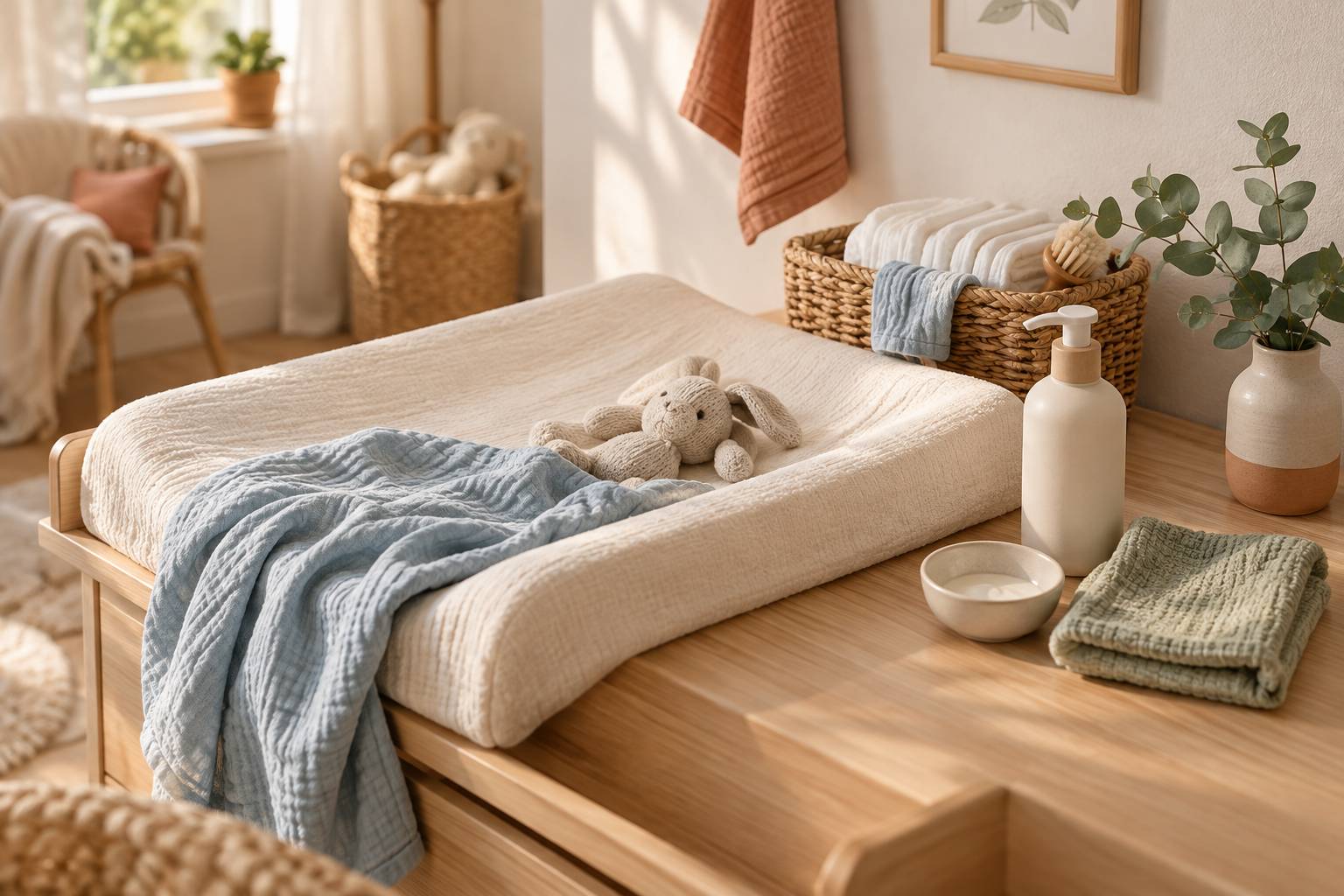
Properly using liniment during diaper change without confusing protection and cleaning
Liniment can lift some residues thanks to its oily texture, which explains why it is often used as the only cleansing product. However, a fatty emulsion does not contain a cleansing agent in the strict sense. When the diaper contains stool, especially if it is abundant, it is preferable to clean with warm water and a soft cloth or with a very gentle cleansing product thoroughly rinsed.
The distinction has a practical consequence. Stool traces left in skin folds maintain irritation, even if the skin appears shiny after passing a moistened cotton. Stools contain digestive enzymes that quickly weaken the epidermis. Infants receiving antibiotics or experiencing diarrhea can have more acidic and irritating stools for a few days.
After complete cleaning, the diaper area must be gently patted until dry before applying a small amount of non-rinsed liniment. This sequence protects better than repeated rubbing. Moisture trapped under a diaper and under an oily layer can promote maceration. The gentle gesture consists of lifting the groin folds without pulling on the legs, then drying with a clean cloth or a cotton square.
A simple routine for daily baby hygiene
- Open the diaper and remove stool with a damp cloth or warm water, without rubbing the already fragile skin.
- Rinse if a cleansing product has been used, as surfactant residues can dry out the diaper area when left in prolonged contact.
- Pat each fold with a clean cloth until the skin is no longer damp to the touch.
- Place a few drops of liniment on a washable cotton pad or directly on the cloth, then spread a very thin layer on the exposed areas.
For a change only wet with urine, clear water followed by liniment often works very well. Some parents choose to wash with water only part of the time, when the skin is healthy and no odor or soiling is present. This adaptation can be discussed according to the child’s age, frequency of diaper changes, and sensitivity. The baby’s comfort remains the best guide, with supple skin, no red patches, and no shiny appearance of maceration.
Wipes can be convenient outside the home, but they multiply contact with preservatives and texture agents. At home, water, cloth, and liniment constitute a less loaded routine. A well-chosen cloth diaper for daily cleaning also helps dry without irritating and replaces disposable cotton.
A pump bottle limits contamination by hands, especially when used near the changing table. Close the container after use and avoid transferring the mixture into an unwashed container. The presence of water makes preservation conditions more delicate than for pure oil. An unusual odor, strongly changed texture, or a bottle stored too long justify no longer using it.
Choosing a liniment for baby with a clear and suitable composition
Faced with the baby products aisle, the mention “dermatologically tested” is not enough to guide a choice. It indicates that the product has been evaluated according to a protocol but does not by itself provide information on your child’s particular sensitivity. Reading the INCI list offers a more useful guide. Ingredients generally appear there in descending order of quantity.
A short liniment formula usually contains a vegetable oil, lime water, and an agent that stabilizes the emulsion. Without this agent, the oil and water separate very quickly. This separation is not dangerous if the bottle is shaken, but a stable texture makes use more regular. Commercial products may also contain wax, glycerin, or vitamin E to limit oil oxidation.
For daily use on the diaper area, the absence of fragrance and essential oils is a cautious choice in infants. Essential oils are not suitable for babies, even when their smell evokes relaxation or cleanliness. They can irritate, trigger allergic reactions, and pose a risk in case of incorrect dosage. A fragrance, even from plant extracts, adds exposure the diaper area does not need.
| Item observed on the label | What it can provide | Useful guide for diaper changes |
|---|---|---|
| Vegetable oil at the top of the list | Emollient texture and protective film | Verify that the baby does not show a reaction after several changes. |
| Lime water | Alkaline component of the oleocalcareous emulsion | Use the product as formulated, without domestic additions. |
| Fragrance or perfume | Provides a scent, no benefit for the diaper area | Prefer an unscented version on delicate skin. |
| Essential oils | Aromatic addition or plant claim | Avoid this type of formula in infants. |
| Multiple extracts and actives | Texture or additional cosmetic promise | Choose simpler if the skin reddens easily. |
The organic label may correspond to a coherent preference for the origin of ingredients, but it does not replace skin observation. A baby may tolerate a pharmacy liniment without a special label very well and react to a certified organic product. Caution is built with real use, not with packaging alone.
A progressive test is possible on a small intact area of the diaper during two or three changes. Persistent redness, small pimples, or drier skin after application suggest stopping the product. In most cases, temporarily returning to water and gentle drying helps identify whether liniment was the cause.
Parents wishing to compare textures, ingredients, and uses can consult these guidelines for choosing a suitable liniment for baby. The goal is not to find a perfect bottle, but a stable, simple, and well-tolerated care product over the weeks.
Prevent diaper rash with coherent skin protection
Diaper rash refers to inflammation of the area covered by the diaper. It often appears as a diffuse redness on the buttocks, around the anus, or in the folds. The baby may wriggle during cleaning, cry when the cloth touches the skin, or seem more uncomfortable in the diaper. These signs deserve a quick response, but they do not all indicate the same cause.
Redness limited to raised areas where the diaper rubs often suggests irritation due to moisture and friction. Very red involvement in the folds, accompanied by small pimples around the patch, may indicate yeast proliferation. In this case, repeated application of fatty products is not always enough. A professional can confirm the cause and recommend appropriate care.
Liniment protects intact or slightly irritated skin but does not treat severe dermatitis, skin infection, or allergic reaction. A barrier care product has a specific place. It must not mask a worsening situation. Multiplying creams, powders, and lotions often complicates reading the skin and increases the risk of maceration.
The frequency of diaper changes varies with age and diet. During the first weeks, some newborns have six to ten stools per day, sometimes more. Stools of breastfed babies can be very liquid while remaining normal. During this period, changing after each stool and offering a few minutes without a diaper on a clean towel reduces contact time with moisture.
An older baby may have less frequent stools but more irritating ones during dietary diversification. Tomato, citrus fruits, certain acidic fruits, or temporary diarrhea are not dangerous in themselves. However, they can temporarily change stools and awaken diaper sensitivity. A protective layer applied after cleaning then becomes useful, associated with closer monitoring for forty-eight hours.
Talc powders should be avoided. They do not create an effective barrier against urine and can be inhaled if dispersed. Antiseptics used without indication are not part of a baby hygiene routine. They sometimes alter the surface barrier while the skin mainly needs to dry, breathe, and be protected against friction.
When to seek advice for your baby’s diaper area
Contact a doctor, midwife, or pediatric nurse if the redness spreads despite frequent changes for two to three days, if accompanied by blisters, wounds, oozing, yellow crusts, or numerous small pimples. Prompt advice is also justified if the baby has fever, seems painful at each change, or if the rash spreads to other parts of the body. Guidelines on different baby pimples can help describe the skin’s appearance before consultation.
Use liniment on the body and cradle cap with caution
Liniment is not reserved for the diaper area, but its uses outside the diaper require more discernment. Its rich texture can soften a dry area of the body and facilitate a short massage after bath. The skin of the face and scalp does not however have the same needs as the buttocks. It is more exposed to air, temperature variations, and contact with hands or textiles.
For a massage, a small amount warmed between the palms is sufficient. Hands must be clean, without rings or bracelets that could catch the skin. The gesture can begin with the legs, then move up to the arms and back, avoiding the hands if the baby immediately brings them to their mouth. At this age, massage is not intended to “relax” a baby as for an adult. It mainly offers a predictable, slow, and containing sensory experience.
On the body, a minimal amount avoids leaving a slippery film that could trap heat or macerate in folds. It is preferable to wait until the skin is perfectly dry after the bath. If the baby has eczema, very dry patches, cracks, or itchy skin, an emollient specifically advised by a professional may be more suitable than liniment.
Cradle cap is common during the first months. It appears on the scalp, eyebrows, upper forehead, and sometimes behind the ears. It is linked to still high sebum production and does not mean hygiene is insufficient. A very thin application of liniment a few hours before the bath can help soften the scales. They then detach with a gentle shampoo and a soft brush, without scratching with nails.
Liniment must not run into the eyes or be applied on mucous membranes. On the face, its richness can sometimes favor small pimples in babies with very oily skin or prone to infant acne. Spot use on a small area, followed by observation over twenty-four hours, remains safer than widespread application.
Thick, very yellow, oozing, foul-smelling crusts or those associated with a very red scalp must be shown to a doctor. The same applies if the baby scratches intensely or if patches spread to the face and body. Detailed steps to care for baby’s cradle cap help respect this skin without pulling off scales.
In the evening, a two- or three-minute massage can be part of the routine if the baby tolerates it. Stop if their body stiffens, turns their head away, becomes restless, or cries. These signals do not mean they refuse contact. They often indicate they have received enough stimulation for that moment.
Can liniment replace water and soap at every change?
It can complement cleaning but does not actually wash the diaper area when there is stool. First clean with warm water using a soft cloth or a rinsed cleansing product, pat dry, then apply a thin layer of liniment.
Should liniment be rinsed after application?
No, its purpose is to leave a protective oily film between the skin and diaper moisture. It is applied in small amounts on clean, dry skin.
Is homemade liniment suitable for an infant?
Homemade preparation risks incorrect dosing of lime water, which can irritate or even burn the skin if too concentrated. A commercial formula adapted to infants offers better consistency in composition and preservation.
Can liniment be used for cradle cap?
A very thin layer can soften crusts a few hours before bath. Avoid eyes, do not scratch scales, and consult if the scalp is red, oozing, painful, or very extensive.