Clear steps to prepare pizza dough with children
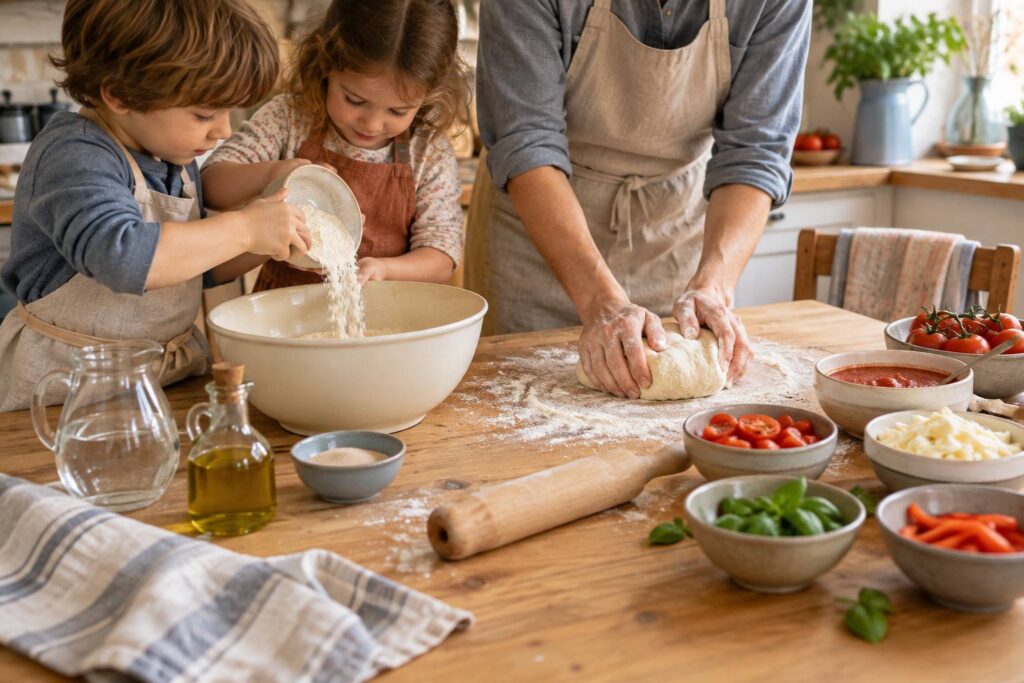
Making a homemade pizza always starts with preparing the dough. This step may seem technical, but with a few simple markers, it becomes accessible and fun for children. The dough is made with quality flour, lukewarm water, active baker’s yeast, a pinch of salt, and a bit of olive oil. These ingredients are few in number, which makes the task easier and avoids overwhelming them with unnecessary information or handling. When yeast is diluted in water between 30 and 40°C, it activates a natural fermentative process that allows the dough to rise and become soft. This aspect is often misunderstood, but it is important to understand that the dough must be handled gently so as not to crush the gas bubbles created by the yeast; otherwise, the result will be dense and less pleasant.
To involve the child, it is advisable to start by mixing the flour and salt in a large bowl, letting them make a well in the center. Then, pour the diluted yeast and lukewarm water into this hollow while stirring with a spoon. Olive oil can be added before moving on to manual kneading. This kneading moment, which usually lasts between 8 and 10 minutes, develops fine motor skills and allows observing the dough’s transformation: it gradually becomes elastic and homogeneous, sign that the gluten has formed well. During this step, the parent can explain to the child what is happening, mentioning the gas bubbles from the yeast and the evolving texture.
After kneading, place the dough ball in a clean bowl and cover it with a cloth to isolate it from drafts. This rest of minimum 60 minutes is essential. During this time, the dough will double in volume thanks to fermentation, a visible and fascinating phenomenon for the youngest. Leaving a resting space in a warm place, but not directly near a heat source, is ideal. Patience is a skill to be discovered here, especially since the waiting time is often accompanied by the preparation of toppings, a phase during which the child can start discovering vegetables and ingredients.
Discovering the diversity of toppings to awaken tastes
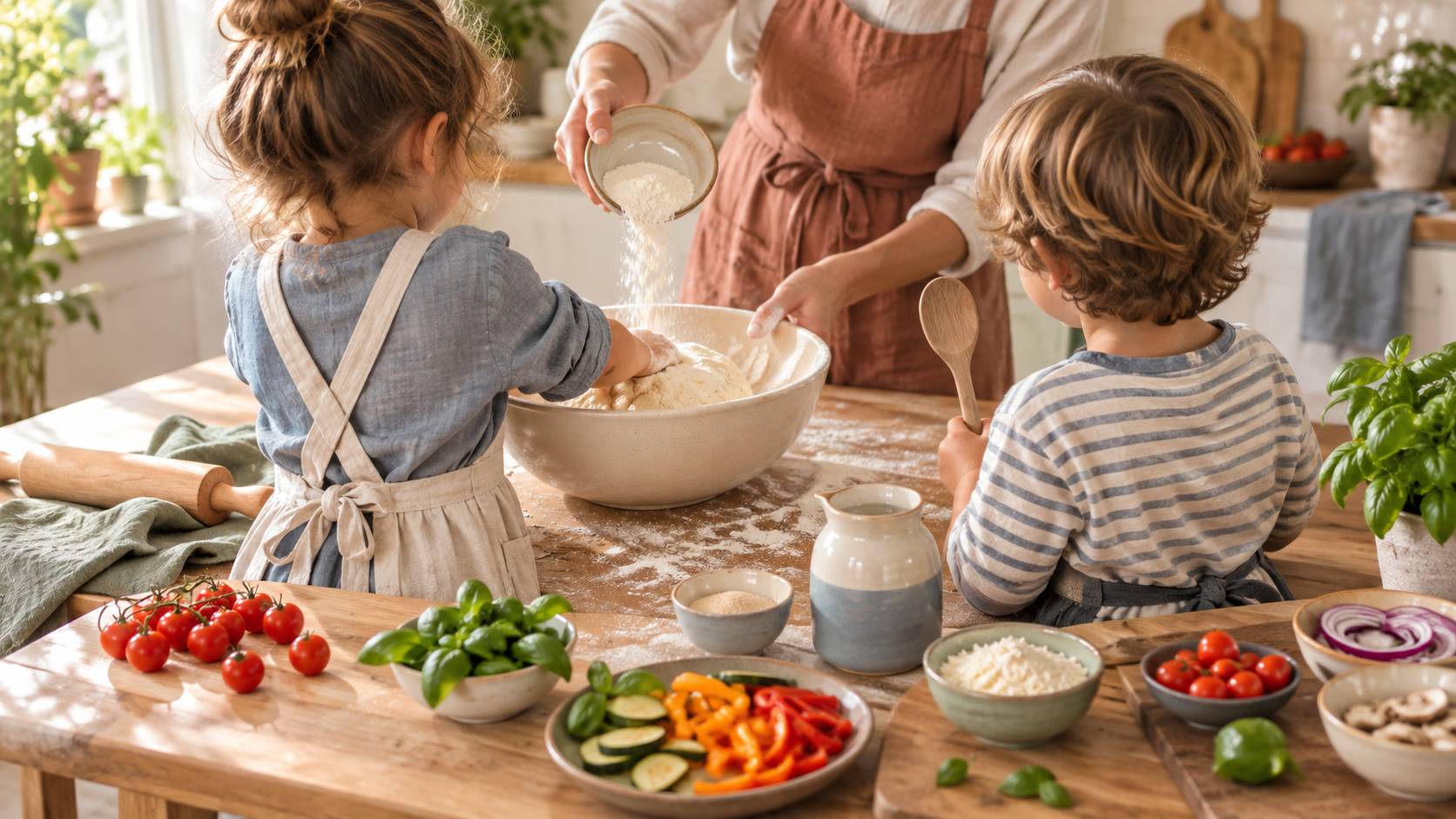
The composition of the toppings is another crucial moment, which allows associating the pleasure of taste with sensory discovery. Contrary to a common misconception, offering vegetables on pizza does not mean imposing an unappetizing dish but rather an opportunity to experiment with confidence. It is essential, from the start, to invite the child to choose their ingredients from a varied selection. Homemade tomato sauce or canned without added sugar is the classic base to familiarize the palate with the light umami of tomato. Using fresh mozzarella, cut or torn into small pieces, ensures a pleasant melting during cooking. These dairy products provide calcium and proteins, necessary for growth, thus adding real nutritional value.
Vegetables such as sliced button mushrooms, zucchini cut into thin strips, or sliced bell peppers can be offered in small amounts, which encourages curiosity without overload. Depending on the child’s temperament and appetite, some will choose only mild or sweet-tasting vegetables. The possibility of also adding a bit of fresh arugula after cooking offers a green touch rich in vitamins. From a sensory point of view, varying textures and colors stimulates appetite and energizes the table for the whole family.
Including meat toppings should not be excluded either. Cooked ham, for example, which does not contain complex additives, can be offered in small pieces easily handled by children’s fingers. Similarly, a few thin slices of chorizo, only for those who enjoy the spicy flavor, promote gustatory diversity without excess. The goal here is to value the child’s role in choosing what they eat, which helps gradually establish dietary autonomy. The presence of a reassuring adult who is explicit about nutritional choices encourages children to taste new flavors with confidence.
Techniques to share and encourage autonomy during pizza making
Allowing the child to actively participate in making their pizza promotes not only their autonomy but also their confidence. Individual pizzas are a format to prioritize. They facilitate control of the quantity of chosen ingredients and make each child responsible for their preparation. This type of organization calms debates around the choice of toppings and avoids frustrations. Under supervision, the child can spread the dough on a small floured baking sheet, sometimes using a rolling pin adapted to their size. Several simple movements suffice to get a nice base, without needing to master the professional pizzaiolo technique.
Using cookie cutters, with playful shapes like stars, hearts, or animals, adds a creative dimension. This method cuts already rolled out dough and makes preparation a game of shapes and assemblies. With each cut, the child observes how the dough reacts, deforms, and retains its texture. This multimodal approach stimulates fine motor skills, hand-eye coordination, and encourages kitchen-related language around the vocabulary of geometric shapes and ingredients.
A topping workshop can be organized by placing all the already prepared ingredients on the table. The child chooses what appeals to them, places the pieces on their pizza, and discovers the combined influences of flavors. This culinary ceremony develops the ability to manage a simple multitask: select, place, observe. The child learns to modulate their tastes and to take responsibility while respecting their own preferences. These mechanisms contribute to brain development, regulating inhibitory control and the formation of food preferences.
Adapting toppings to meet children’s preferences and encourage vegetables
Some children are hesitant about vegetables. To encourage their acceptance, it is relevant to choose mild and well-cut vegetables, thus avoiding unpleasant sensations caused by large fibers or strong bitterness. Early integration of varied vegetables on homemade pizzas allows them to discover their tastes through a positive experience. For example, the sweetness of grilled zucchini or lightly cooked bell peppers makes vegetables attractive. This direct contact with ingredients encourages familiarization through handling.
Sauces made only from well-ripened tomatoes, lightly seasoned with oregano, basil, or a drizzle of olive oil, avoid the excess salt and sugar often present in industrial sauces. This taste learning helps establish more accurate sensory markers in the child.
Mild or grated cheeses, like emmental or mozzarella, also provide a source of protein and calcium while delivering a texture contrast that makes the pizza more appealing. Offering a small touch of arugula or fresh herbs just before tasting introduces aromas that refine the palate without being overwhelming. This subtle light addition brings vitality and can, depending on the child’s temperament, support the development of their appetite for more complex flavors.
The following table illustrates some topping options, reminding that adapting pizza to your children’s tastes remains the best way to ensure their pleasure and a balanced diet.
| Type of topping | Ingredients adapted to children | Nutritional benefit |
|---|---|---|
| Sauces | Homemade tomato sauce made from ripe tomatoes, oregano | Sources of vitamins A, C, antioxidants |
| Cheeses | Mozzarella, grated emmental | Calcium, proteins necessary for growth |
| Vegetables | Grilled zucchini, sliced mushrooms, mild peppers | Fibers, vitamins, essential minerals |
| Meats and alternatives | Diced cooked ham, chicken breast, chorizo in small quantity | Lean proteins, iron, and zinc |
Precautions and tips for a successful culinary moment with children
Preparing pizza with children is not just about following a recipe; it’s also a matter of managing the environment and safety. The oven should be preheated to 220°C well in advance to ensure even and optimal cooking. This high temperature allows the dough to cook quickly without becoming dry, ensuring a crispy crust with a soft interior. Adults must handle putting the pizzas in the oven, as this requires vigilance.
Children can, however, get involved in assembling the pizzas, a moment when their hands touch the ingredients with confidence. A clean workspace, utensils adapted to their size, and constant supervision minimize risks. Cutting vegetables into small pieces avoids accidents related to large pieces difficult to chew for children, while facilitating their integration into the dough.
It is also relevant to prepare the dough in advance if time is short, as it can be stored in the refrigerator overnight, provided it is well wrapped. This offers more flexibility, especially for parents with limited availability. In 2026, many platforms like pizzagourmande.fr offer tips and adapted recipes that facilitate this family organization.
The playful aspect of preparation can be enhanced by educational games: for example, sorting ingredients by color or shape before placing them, or explaining the origins of food. This connects cooking to cognitive development and language. For parents looking to make this moment even more entertaining, pan cooking offers an interesting alternative without a traditional oven, while preserving the expected flavor and texture.
Some basic rules also ensure the pleasure of tasting and respecting everyone’s tastes: do not force the child to taste an unwanted topping, but encourage curiosity in the long term, and respect their eating rhythm. The gradual diversity of ingredients gradually offers a palette of flavors adapted to the peculiarities of their developing sensory system.