In brief
- Coronavirus-related lockdown has changed children’s lives on three closely linked levels: body, brain, and social bonds.
- The consequences are not the same depending on age, temperament, living space, and family resources, with more marked gaps in vulnerable households.
- Isolation has hit socialization hard, especially in nursery and primary school, where learning happens through imitation, play, and group interaction.
- Home schooling supported educational continuity but also exposed some children to disengagement, attention fatigue, and family tensions.
- Mental health has sometimes faltered, with an increase in sleep disorders, fears, and irritability, often mirroring parental stress.
- When physical activity decreases, mood and sleep are more easily disrupted, especially in anxious or very high-energy children.
- Simple, repeated gestures and age-appropriate honest communication promote adaptation without putting pressure on daily “success.”
Coronavirus-related lockdown: understanding the consequences according to age and development
When a lockdown occurs, the change is not just logistical. For the child, it affects a system under construction, made of routines, sensory cues, and relationships. The immature brain relies on predictability to regulate emotion. When school, daycare, parks, and family visits disappear, regulation shifts to the home, with all that implies for children and adults.
Infants are often described as “less affected.” This is true in a specific respect. Their social universe is already largely limited to attachment figures. Their well-being mainly depends on emotional availability, being carried, feeding, and sleep. A 2-month-old baby does not “miss” their peers. Conversely, an infant finely senses ambient stress. Heart rate, voice, tension in the arms, micro-expressions on the face are all signals. When the adult is worried, the baby may cry more, sleep in fragments, and demand more often. This is not manipulation. It is an organism seeking co-regulation.
In toddlers, between 18 months and 4 years, the situation becomes more sensitive. Language progresses but does not explain everything. Understanding of time remains very limited. Four weeks of lockdown can feel like an endless duration because the child cannot project themselves. A toddler may start refusing to get dressed, cling tightly, or have outbursts at bedtime. The need behind these behaviors is often the same: to check that the framework holds, that the adult remains stable, and that separation is not dangerous.
From ages 5-6 years, the child better grasps social rules and health reasons. They understand words like “virus,” “contagious,” “protect.” They also understand what they lose. School is not just a place of learning. It is a relational training ground where the child negotiates, compares, argues, and repairs. During lockdown, horizons narrow. This can cause physical restlessness, somatic complaints, sharper tantrums, or, conversely, withdrawal.
In adolescents, the impact is often more direct. The social brain is undergoing major remodeling. Peers serve as mirrors for identity. When isolation is prolonged, some teenagers withdraw, invert their sleep-wake rhythm, take refuge in screens or, on the contrary, become irritable and “on edge.” This is not a moral weakness. It is a conflict between a neurodevelopmental need for autonomy and an external constraint limiting exploration.
Material reality also weighs. A garden, a balcony, a personal room, or a shared room change daily life. Inequalities observed during the health crisis have shown that families with less space, fewer digital tools, or increased financial pressure carry an added burden. This context does not explain everything, but it colors the child’s reactions. Understanding this framework helps avoid guilt and move toward realistic adjustments.
The guiding thread for what follows is simple. The younger the child, the more lockdown acts through the body and relationships. The older they get, the more it acts through loss of social experiences and autonomy, which raises the question of socialization.
Socialization being one of the first affected levers, looking at what happens when children’s connections become rare helps understand many daily behaviors.
Isolation and socialization: what group deprivation changes in children
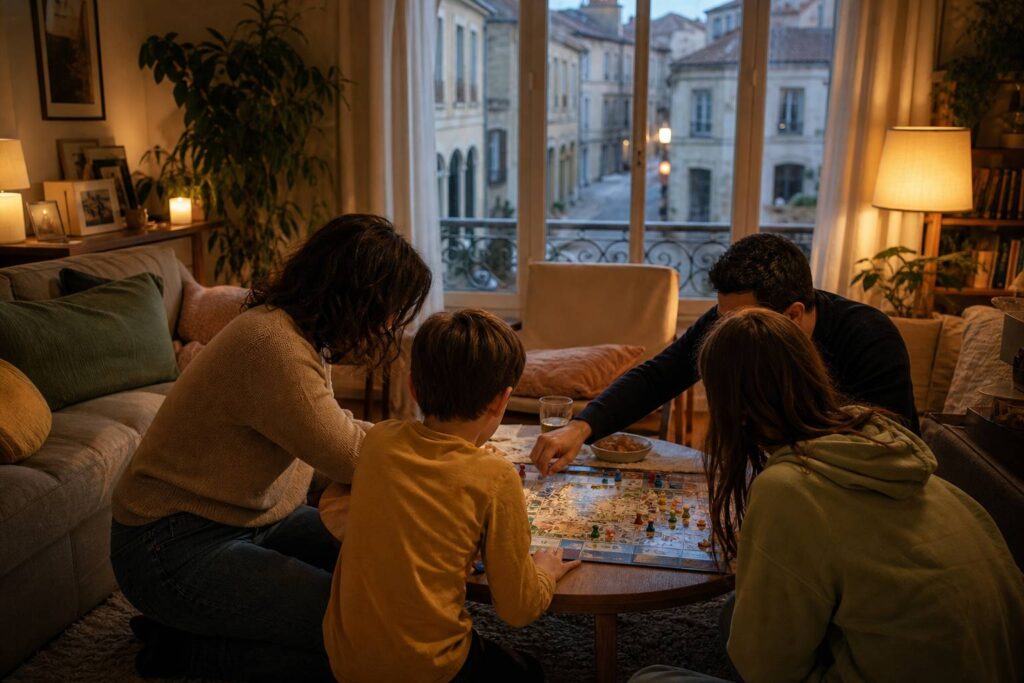
Isolation is not just “not seeing friends.” For the child, it also means no longer experiencing those micro-events that shape development: waiting their turn, accepting a game rule, managing frustration when another takes a toy, repairing after a quarrel. At home, even with lots of love, these learnings become impoverished because situations are less varied and roles remain more fixed.
In daycare and preschool, the group provides access to a form of implicit emotional education. The child observes others, imitates, synchronizes. When this stimulation disappears, some children become more “clinging” to the adult, others resist more. Both profiles can reflect the same insecurity. The child seeks a stable reference to reassure themselves about the continuity of the world.
In school-aged children, the playground is a social laboratory. Lockdown has sometimes created a gap upon return. Teachers have described students as more brusque, less trained in cooperation, or, conversely, more anxious in groups. These manifestations are not a failure of education. They reflect a skill maintained through practice. A child who has not practiced “relational exercise” for several months may regain awkwardness, like after immobilization.
Digital tools helped. Video calls, voice messages, cooperative online games for older children maintained a thread. A 10-to-15-minute call can be enough for a preschooler, especially if the adult prepares a simple framework: show a drawing, sing a nursery rhyme, tell a little story from the day. Beyond that, attention drops and frustration can rise. For older children, scheduling a regular appointment, twice a week for example, protects against the impression that “everything is blurry.”
Siblings play an ambivalent role. They can offer presence and play but also amplify tensions. The child no longer has an external outlet. They unload on the brother, sister, or parent. This does not mean that the family “functions poorly.” It means recovery spaces are reduced. When the home is small, establishing micro-zones helps: a reading corner, a building corner, a quiet corner. Even symbolic, these boundaries give the brain a sense of order.
Some signals deserve closer attention. A child who begins avoiding all contact, refuses to talk to friends even via video, or shows an intense fear of going out that persists after restrictions lift may benefit from professional advice. Transient anxiety is common. A settled phobia, with panic attacks, repeated abdominal pain, or very disturbed sleep, should not be “waited out.” Psychological teleconsultation, more accessible since the Covid period, can be a useful first step.
Staying socially connected is not limited to “seeing friends.” It also prepares the child to learn. The next focus is therefore on home schooling, not as an ideal but as a reality that has disrupted many households.
When the group disappears, learning shifts to the home. This creates school challenges but also issues with attention, self-esteem, and physiological rhythm.
Home schooling: learning, attention, and inequalities during lockdown
Home schooling, imposed or partial during lockdown periods, revealed a sometimes uncomfortable truth. School does not just teach content. It structures time, distributes roles, and protects some children from an unstable or overly burdened family environment. When teaching moves to the home, the family becomes simultaneously a home, classroom, cafeteria, playground, and telework desk. This overlap demands organizational capacity that varies greatly depending on resources.
The child’s brain is not designed to maintain sustained attention on a screen for hours. In primary school, voluntary attention works in short bursts, often 10 to 20 minutes for a 6-7-year-old child, a bit more around 9-10 years, with great variability depending on temperament and sleep quality. When days fill with worksheets and videoclasses without physical breaks, the child exhausts. Fatigue rarely translates as “I am tired.” It shows as oppositions, slowdowns, tears, sometimes agitation.
The issue of inequalities is central. Socio-economic surveys conducted since the health crisis have highlighted a more frequent deterioration of the financial situation in already fragile households, particularly those with children. This reality impacts the conditions of home schooling. A computer shared by several, unstable connection, a parent who must work onsite, or cramped housing make educational continuity harder. In these contexts, asking “the same thing” of all children creates invisible injustice. A child may feel “stupid” when the obstacle is material.
A simple organization is better than a rigid schedule. Three landmarks often suffice. A short work time in the morning when energy is better. A movement time in mid-day. A reading or quiet activity time late afternoon. For teenagers, autonomy can be supported by clear negotiation, two deep work periods of 45 to 60 minutes, separated by a 10-minute screen-free break. This respects attention physiology, which works in cycles.
A chart can help choose realistic goals, distinguishing what is a general marker and what should alert.
| Age | Common during lockdown | What helps concretely | Signals that justify professional advice |
|---|---|---|---|
| 2-4 years | Regressions, oppositions, difficulty separating for sleep | Fixed bedtime ritual, short motor games, simple explanations | Persistent intense fear, daily nightmares over several weeks, marked loss of appetite |
| 5-10 years | Attention fatigue, irritability, somatic complaints | Work in small sequences, active breaks, regular contact with the class | Massive school refusal on return, lasting sadness, complete social isolation |
| 11-17 years | Sleep delay, withdrawal, overuse of screens | Two deep work periods, daily sport or walk, scheduled social appointments | Dark thoughts, self-harm, substance use, panic attacks |
The parent-child relationship becomes exposed. The parent becomes teacher, referee, and sometimes office colleague. The risk is role confusion. A concrete reference often helps. The parent can accompany, set up, verify an instruction. They do not replace the entire pedagogical dynamic. When tension rises, stopping before breaking protects learning more than “holding on” at all costs.
This school reality mingles with another often underestimated aspect. The body needs movement to regulate emotion. The next topic is physical activity, with its direct links to sleep, mood, and mental health.
When outings decrease, daily movement falls. This lever is modifiable, even in an apartment, and it can sometimes change the family atmosphere within days.
Physical activity and mental health: the body as a regulator during lockdown
A child moves to grow but also to regulate themselves. Movement increases energy expenditure, supports motor maturation, and influences mood through simple neurobiological mechanisms. When physical activity collapses, the body retains unspent energy. This energy comes out as agitation, impulsivity, or difficulty falling asleep. In lockdown, this is not a problem of “bad will.” It is an imbalance between available energy and space for expression.
Sleep is often the first indicator. When the child no longer expends energy, falling asleep takes longer. Bedtime becomes a struggle, then next-day fatigue worsens everything. The loop closes. A daily walk, a dance session, an improvised motor circuit in the living room can break this cycle. The benefit is not only physical. Movement brings sensory predictability. The brain receives proprioceptive information that soothes: foot pressure on the ground, body weight, breathing rhythm.
A 20 to 40-minute window of moderate physical activity late afternoon often improves mood and bedtime in school-aged children, with variability depending on dinner time and sensitivity to excitement. In toddlers, shorter, repeated sequences are more suitable: five minutes of jumping, then a calm game, then five minutes of crawling or balance.
In homes without outdoor space, ingenuity matters more than equipment. A psychomotor circuit with cushions, tape on the floor for walking in a line, passing under a chair, throwing rolled socks into a box works very well. For an anxious child, the circuit must be predictable. For a very energetic child, a timed challenge can be added, without competition, just to channel energy.
Mental health is central. Lockdown has sometimes increased anxiety symptoms, irritability, sadness, and sleep disorders. The body is a direct ally. Physical activity stimulates production of neurotransmitters involved in stress regulation. It also offers a sense of competence. Completing a circuit, balancing, progressing in a yoga pose gives a “I can,” precious when the outside world seems uncertain.
Parental stress interferes. A tense adult speaks faster, tolerates slowness less, becomes tense over homework. The child absorbs this climate. A realistic strategy is to isolate a short daily sequence where the adult is physiologically available. Three minutes of slow breathing before entering homework time, or ten minutes of floor play without phone, improve the quality of presence. This is not parental perfectionism. It is a mutual regulation measure.
One point deserves to be said clearly. If a child shows a generalized loss of interest, prolonged withdrawal, repeated self-deprecating remarks, or suicidal ideas in adolescence, support must be prompt. A pediatrician, a general practitioner, a child psychiatrist or a psychologist can be mobilized, sometimes via teleconsultation. Waiting for “it to pass with resumption” exposes to unnecessary suffering.
The last focus brings together concrete levers. Speaking truthfully to children, containing without lying, establishing flexible routines, and knowing when to ask for help. This is often where adaptation plays out daily.
When the body regains movement, speech and routines become easier to establish. Lockdown is then experienced with a more bearable frame, even when days remain imperfect.
Family stress and adaptation: words, routines, and concrete landmarks to get through lockdown
Quality of adaptation rarely depends on a “method.” It depends on a climate. Children scrutinize adults to see if the situation is dangerous or manageable. This does not mean a parent must be calm all the time. It means the child needs to hear a stable, coherent explanation adapted to their age. Coronavirus periods have shown that children tolerate reality better when it is simply named rather than left vague.
From 2-3 years old, the child can understand a short message. The virus makes some people sick. We stay home to limit transmission. Adults take care of safety. Children mainly need a repetitive framework. Saying the same thing with the same words, without anxiety-provoking details, reduces imaginary scenarios. Nightmares often appear when the child senses danger but cannot represent it.
Routine is a help, not a prison. It offers fixed points when everything else is moving. The brain anticipates. Anticipation soothes. A very concrete landmark is to keep relatively stable schedules for waking, meals, and bedtime, with a tolerance of 30 to 60 minutes depending on age. For a preschool child, a bedtime drifting by two hours over several weeks often increases irritability. For a teenager, the shift can be larger, but the goal is to preserve exposure to daylight in the morning, even if brief, to support the biological clock.
Screens have been both allies and traps. They maintained social ties and school. They have also sometimes intensified excitement, especially in the evening. A simple rule that helps without dramatizing is to avoid fast and stimulating content in the hour before bedtime. This is especially true for children who already have light sleep. Calm activities — reading, drawing, puzzles — reduce sensory load.
Activity ideas exist, but they work best when presented as achievable gestures, not as an endless list. Here is a short suggestion, adaptable to space and daily energy.
- Create a “home circuit” with cushions and tape on the floor, 10 minutes, then a calm-down with a story.
- Set a fixed social appointment twice a week, short video call for little ones, longer for older children.
- Alternate effort and rest in home schooling, 15-20 minutes of work, then 5 minutes of movement.
- Give a real mission to the child: set the table, sort laundry, water a plant, to reinforce a sense of usefulness.
“Positive attitude” is not just about smiling. It corresponds to an internal posture. The adult can acknowledge it is difficult, then show there is a plan for the day. This combination is very reassuring. A parent who says “It’s a complicated day, we will do little by little” offers a stronger framework than one who denies the difficulty then explodes in the evening.
When asking for help becomes relevant. A child who almost no longer sleeps, who has panic attacks, new phobias, lasting sadness, or loss of acquired skills such as toilet training with great distress deserves evaluation. For parents, chronic stress, intensifying arguments, intrusive thoughts, or a permanent feeling of being overwhelmed are also indicators. Psychological teleconsultation, advice from a childcare nurse, midwife, or pediatrician can early defuse emerging difficulties.
A confined child does not “mean to” be more irritable. Most often, they express emotional and sensory overload. A flexible routine, daily movement, and honest age-appropriate speech already transform many things.
Lockdown has shaken families very unevenly. The same health rule can produce very different consequences depending on space, job, and family support. This observation opens the door to practical questions, those that often come up in consultations and for which clear answers bring relief.
How to explain coronavirus to a 3-year-old child without worrying them?
With a short and stable sentence, repeated identically. The virus can make some people sick. We stay at home to protect others. Adults take care of safety. If the child asks a question, the answer should remain concrete, without details about deaths or anxiety-provoking images, and end with what is under control today: hand washing, hugs at home, the next call to relatives.
My child is more aggressive since the lockdown, is it a sign of mental health problems?
Increased irritability may reflect overload, less physical activity, fewer social contacts, more fatigue, and greater family stress. It becomes a consultation reason if aggression is daily, unpredictable, accompanied by very disturbed sleep, lasting sadness, self-deprecating remarks, or if the child endangers themselves. A pediatrician or psychologist can help distinguish difficult adaptation from anxiety or depressive disorder.
How much physical activity should be targeted during an apartment lockdown?
For a school-age child, aiming for 20 to 40 minutes of moderate activity per day often helps, divisible into two sessions. For a toddler, several sequences of 5 to 10 minutes spread throughout the day are better. The useful benchmark is observable. If falling asleep lengthens, if the child climbs everywhere at day’s end or explodes over small frustrations, increasing movement and reducing screen stimulation in the evening often produces results within days.
Should home schooling during lockdown replicate school identically?
No. Replicating the full school day is rarely realistic. The most effective is to preserve minimal continuity, daily reading, a few short exercises, and especially a start and end framework. For the child, quality of attention matters more than quantity. If work conflicts become constant, it is better to reduce the amount, break into small segments, and contact the teacher to adjust expectations rather than start a tug-of-war.
What signs should prompt rapid help-seeking during isolation?
For the child, significant loss of appetite, very disturbed sleep over several weeks, total social withdrawal, panic attacks, worsening fear of going out, or repeated self-deprecating remarks. For the adolescent, any suicidal ideation, self-harm, substance use, or massive disengagement must be taken seriously. Initial contact can be through the general practitioner, pediatrician, psychologist via teleconsultation, or local mental health service.