
In brief:
- Swelling and local pain are the most immediate signs of a wasp sting, requiring a measured and rapid response.
- Early recognition of an allergic reaction is crucial to prevent any severe complications.
- Immediate treatment combines disinfection, careful removal of the stinger, then application of cold and appropriate products for pain relief and anti-inflammation.
- Parents are encouraged to cultivate gentle vigilance, to preserve the child’s well-being while avoiding excessive fear in this common situation.
- Prevention is a valuable ally: avoiding strong perfumes, bright clothes, and sudden movements in front of a wasp significantly reduces the risk of stings.
Wasp stings: understanding the symptoms and properly identifying the pain
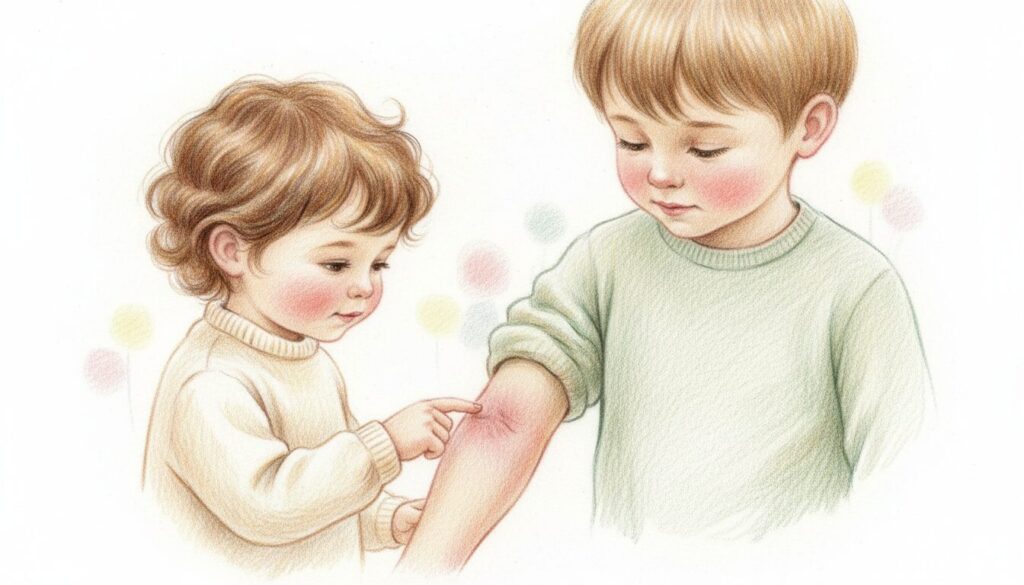
A wasp sting immediately manifests as sharp pain and localized swelling on the skin. This pain, often sudden and intense, occurs immediately after contact with the insect. Most often, it subsides within a few tens of minutes, but the swelling can last several days, reflecting the inflammatory reaction caused by the injected venom. Although the pain is often bearable, itching then sets in, worsening the discomfort.
A particular point of vigilance concerns stings located on sensitive areas such as the face, head, or throat. In these cases, the swelling can become more significant, potentially hindering breathing or mobility. It is then imperative to remain attentive to worrying signs like difficulty swallowing or breathing and to immediately head to an emergency service. The risk of suffocation, although rare, requires heightened vigilance.
Besides pain and swelling, several other symptoms may accompany a wasp sting, especially in cases of multiple stings. These include nausea, headaches, or even loss of consciousness, signaling a more severe venom intoxication. In such cases, immediate medical consultation is essential.
It is not always easy to distinguish a wasp sting from a bee or hornet sting. The presence or absence of the stinger in the skin is a valuable clue: the bee often leaves it embedded, while the wasp can sting without leaving its stinger. The hornet, for its part, has a larger stinger, and its stings tend to be more painful. This distinction is of practical importance, as a quick intervention to remove this foreign body may be necessary to limit venom injection.

First aid gestures to control pain and swelling after a wasp sting
The urgent response to a wasp sting first involves calming the pain and preventing the swelling from spreading. The first action is to carefully disinfect the stung area. This gesture prevents an infection often favored by the presence of the stinger or microbes on the skin or insect.
If the stinger is visible, it is essential to remove it immediately. However, the use of tweezers must be avoided. This choice is based on a medical principle: squeezing the stinger can inject more venom under the skin, worsening the local reaction. On the other hand, it is advisable to use a flat object, such as a knife blade or a rigid card, sliding it gently under the stinger to remove it against the grain. Pharmacies also offer devices called venom suckers, which can be useful.
Once the stinger is removed, applying cold to the stung area provides an anesthetic effect, reducing pain sensations and limiting vasodilation responsible for swelling. Applying cold compresses or ice wrapped in a cloth is recommended in short intervals to avoid frostbite.
Furthermore, it is possible to apply a low-dose cortisone ointment, prescribed or recommended by a healthcare professional, to alleviate skin inflammation. Anti-histamine creams can also relieve itching. In a more comprehensive approach, adding a local treatment based on Aspivenin – a pharmacological remedy that helps extract part of the venom – can be part of the emergency kit every concerned parent should have during summer outings.
It is important to patiently observe the evolution of the sting. If the swelling persists without improving or worsens, or if the pain is accompanied by other worrying symptoms, medical consultation is required without delay. The priority is always to ensure immediate safety while providing respectful relief to the child’s fragile skin.
Recognizing and acting against a severe allergic reaction following a wasp sting
The majority of wasp stings, while uncomfortable, do not lead to serious complications. However, the risk posed by allergic reactions must never be underestimated. In France, about 3 to 4% of the population is affected by this type of allergy, which can cause much more severe manifestations, requiring immediate medical intervention.
Warning signs of an allergic reaction go beyond simple local swelling at the sting site. A generalized edema, widespread erythema with red patches, and intense itching all over the body indicate hypersensitivity of the immune system. The appearance of diffuse hives, accompanied by breathing difficulties or impaired consciousness, foretells a potentially dramatic evolution.
Anaphylactic shock, an absolute emergency, is identified by a sequence of signs: Quincke’s edema (swelling of the face and neck), breathlessness, rapid drop in blood pressure, and loss of consciousness. In such a situation, one must act immediately by dialing emergency services and positioning the affected person in the recovery position to prevent any risk of suffocation. The administration of injectable adrenaline is the main treatment and must be performed within minutes of the symptom onset.
Families who have already encountered this allergic context are encouraged to consult an allergist who can propose a personalized management protocol, often including gradual desensitization. This process, although demanding, provides the security and peace of mind essential to fully enjoy the summer seasons without fear.
Natural remedies and tips to soothe wasp stings: precautions and good practices
In addition to drug treatments, many natural remedies can also help soothe the pain and reduce swelling related to a wasp sting. These alternatives use gentle ingredients often found in households.
Apple cider vinegar, applied with a cotton pad on the stung area, acts through its slightly acidic action, intended to neutralize the alkaline venom injected. This simple measure helps limit swelling and offers immediate relief.
Lavender essential oil is also traditionally known for its soothing and anti-inflammatory virtues. However, it must be used with caution, especially in children and pregnant women, due to its potent properties. Pharmacy advice is therefore recommended before any application.
Another ally is baking soda. Mixed with water to form a paste, it serves to neutralize swollen skin and calm itching. This popular practice finds favorable echo in current use, especially in the absence of individual contraindications.
These simple gestures, although beneficial, in no way replace medical consultation if the situation worsens, particularly in case of allergic reaction or persistent symptoms.
- Apply apple cider vinegar on cotton to neutralize venom
- Use lavender essential oil with caution and professional advice
- Prepare a baking soda paste to calm itching
- Keep the area clean and avoid scratching to prevent infection
Preventing wasp stings: gentle strategies to protect young and old in summer
The best way to deal with the presence of wasps is to avoid conflict situations with these insects. This gentle prevention is all the more recommended when it involves protecting children, whose delicate skin requires particular attention.
Here are some essential tips to reduce exposure to risks:
- Favor neutral-toned clothing, avoiding bright or contrasting colors that attract wasps.
- Avoid strong perfumes and lotions, whose scents can lure these insects unintentionally closer.
- Never walk barefoot in grassy or wooded areas where wasps may be hidden.
- Ensure trash bins are well closed and avoid leaving food scraps exposed during outdoor meals.
- Set up specific traps around picnic areas to limit wasp visits.
- When an insect is present, adopt a calm attitude, avoiding sudden gestures and rapid movements that could excite it or cause it to sting.
These recommendations, imbued with gentleness and vigilance, invite a harmonious coexistence with seasonal nature. They help establish a serene climate, favorable to both parents and children, without excessive fear but with enlightened and respectful awareness.
| Practical advice | Objective | Why it is important |
|---|---|---|
| Disinfect skin after sting | Prevent infection | The area may be contaminated by microbes present on the wasp or on the skin |
| Remove stinger against the grain | Limit venom injection | Avoid squeezing the stinger which would release additional venom |
| Apply cold locally | Reduce pain and swelling | Cold contracts blood vessels and eases pain |
| Monitor allergy symptoms | Act quickly in case of severe reaction | Early detection to call emergency services and avoid complications |
| Consult a professional if in doubt | Ensure proper follow-up | Prevent complications and benefit from a desensitization protocol if necessary |
What to do if the wasp stinger remains embedded in the skin?
It is advised to remove the stinger with a flat object by gently sliding it out against the grain, never with tweezers, to avoid injecting more venom.
How to recognize a severe allergic reaction to a wasp sting?
Signs include significant swelling, difficulty breathing, widespread erythema, generalized hives, or loss of consciousness. If these symptoms are present, immediately call emergency services.
What natural remedies are recommended to relieve a wasp sting?
Apple cider vinegar, baking soda paste, and, with caution, lavender essential oil are natural options that can reduce pain and swelling. However, certain essential oils should be avoided in children and pregnant women.
How long does a local reaction usually last after a sting?
Initial pain lasts about half an hour, while swelling can persist for several days before gradually disappearing.
How to effectively prevent wasp stings during outdoor activities?
Choose clothing in soft colors, avoid strong perfumes, do not walk barefoot, and keep food areas clean and protected to limit interactions with wasps.