

In brief
- Honey Grog combines hot water, honey, and lemon in a family recipe designed to bring warmth when the throat is irritated.
- Honey may reduce nighttime coughing in children over one year old, but it does not treat bacterial infections or respiratory illnesses.
- The alcohol-free version is the only one suitable for children, teenagers, pregnancy, and breastfeeding.
- Simply hot water, not boiling, preserves drinking comfort and limits the risk of burns.
- High fever, respiratory discomfort, unusual drowsiness, or refusal to drink require medical advice rather than a homemade drink.
Honey Grog, a comforting drink born of a long history
Honey Grog belongs to those warm preparations that cross generations. When the nose runs, the throat stings, or fatigue makes bedtime harder, its warmth provides an immediate feeling of comfort. This comforting drink does not replace medical treatment but can accompany minor seasonal ailments simply.
The word “grog” comes from the British maritime world. Around 1740, Admiral Edward Vernon requested that sailors’ rum rations be diluted with water. His nickname, “Old Grog,” referred to the coarse-grain cloak he frequently wore. The measure aimed to limit drunkenness on board, accidents, and conflicts, without abruptly removing a ration already integrated into the crews’ lives.
Sailors later added lemon or lime to their drinks. These citrus fruits provided vitamin C and helped prevent scurvy, a disease linked to severe and prolonged deficiency. Sugar was mainly used to make the mixture more palatable. The historical grog was therefore a naval organizational drink before becoming a preparation associated with winter comfort.
On land, the recipe evolved. Rum gradually gave way to more honey, lemon, and spices. This transformation is particularly significant in a family context. A grog intended for a child, a pregnant or breastfeeding person must be completely alcohol-free. Heating rum does not make it acceptable for a child, as some alcohol remains, and exposure has no place in a pediatric preparation.
The medicinal reputation of this drink deserves to be put into its proper perspective. The hot liquid moistens the mouth and pharynx, which may temporarily reduce the feeling of dryness. Honey creates a soothing texture on the irritated mucous membrane. Lemon provides a pleasant acidity for some palates but can also worsen burns in someone prone to reflux or with a very inflamed throat.
The term Natural is often used to present this mixture as harmless. However, a product from the family kitchen remains subject to precise safety rules. Honey is contraindicated before 12 months due to the risk of infant botulism. Spores of Clostridium botulinum, sometimes present in honey, usually do not cause problems in adults or older children, but the infant’s gut does not yet have a sufficiently mature flora to reliably neutralize them.
In babies under one year who cough or seem congested, the right reflex is therefore not to offer grog even very diluted. Breast milk or infant formula remains the suitable drink. Nasal washing with saline solution, especially before meals and sleep, is much more helpful in clearing the upper airways. Infants preferentially breathe through their nose during the first months, which explains why a common cold can disrupt feedings so much.
Honey Grog can retain its place as a warming gesture for adults and children over one year. It offers a calm setting at the end of the day, sometimes useful when an irritated throat triggers night awakenings. Its interest lies less in a promise of healing than in a concrete sensory response, warm, sweet, and hydrating.
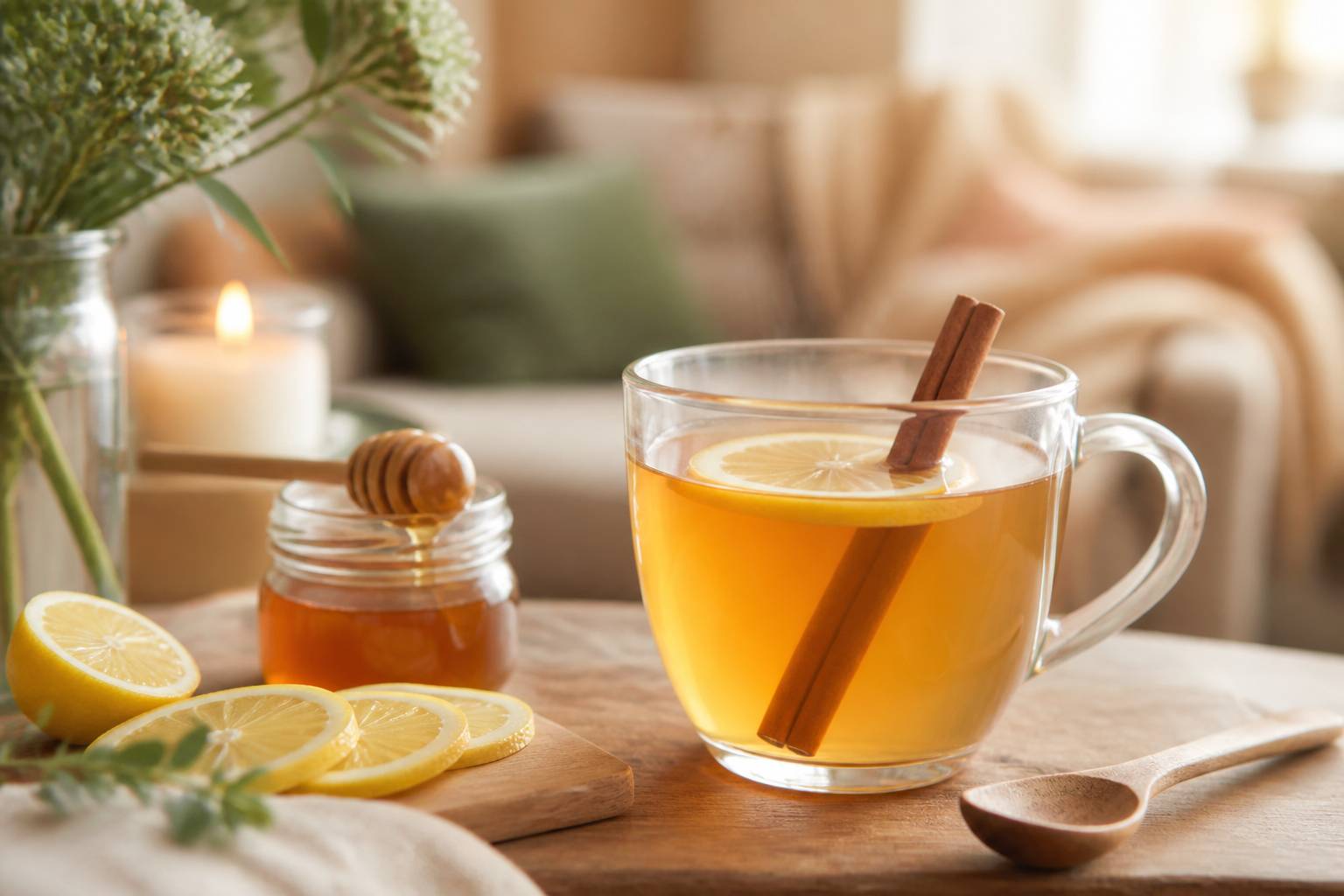
The beneficial virtues of honey and warmth on the throat
Honey is the ingredient that gives grog its smooth texture and soothing power. Several clinical studies indicate that it can reduce the frequency and intensity of nighttime coughing in children over one year old with uncomplicated upper respiratory infections. The effect is not that of an antibiotic. It mainly acts as a temporary protective film and can lessen the cough reflex triggered by a dry throat.
Coughing is a defense reflex. It expels mucus, particles, or secretions that irritate the airways. Trying to suppress it completely is not always desirable. When the cough becomes dry, repetitive, and prevents sleep, moistening the immediate environment of the throat can provide temporary relief. A small amount of honey taken by spoon or diluted in a warm drink often suffices more than a very sweet beverage.
After one year, half a teaspoon to a teaspoon of honey, depending on the child’s age and habits, can be offered in the evening without making it a systematic treatment. Tooth brushing remains necessary after intake, especially when the preparation is consumed before bedtime. Honey is rich in free sugars, and repeated intake at night increases the risk of cavities from the eruption of the first teeth.
Warmth plays a distinct role. A hot liquid stimulates thermal receptors in the mouth and pharynx, promotes salivation, and reduces the perception of irritation in many people. Drinking too hot has the opposite effect. A comfortable temperature, which an adult can drink without blowing for long or feeling a sting, is preferable. For a child, the drink should be lukewarm and tested before giving it to them.
Lemon does not instantly “boost” immune defenses. Immune health depends on a wide range of factors including sleep, diet, vaccination status, exposure to infectious agents, and age. Lemon contains vitamin C, useful for many body functions, but a glass of grog alone does not alter the course of a cold. Its main interest here is gustatory and salivary, provided its acidity is well tolerated.
Fresh ginger, cinnamon, or clove can flavor an adult drink. Their scent gives an impression of warmth, but these spices should not be presented as antivirals capable of stopping an infection. For a child, the simplest recipes are often the best tolerated. Ginger can irritate the stomach, clove is potent, and essential oils should not be added to a family drink without medical advice.
| Ingredient | Intended effect | Safety note |
|---|---|---|
| Hot water or mild herbal tea | Hydration and throat comfort | Serve lukewarm to the child to avoid any burns. |
| Honey | Soothing texture, possible support against nighttime cough | Never before 12 months. Limit repeated intake for teeth. |
| Lemon | Fresh taste and vitamin C supply | Reduce or remove in case of reflux, mouth ulcers, or very sore throat. |
| Ginger or cinnamon | Flavor and warming sensation | Reserved for adults or very moderate use depending on age and tolerance. |
| Rum | Historical use in adults | Avoid during pregnancy, breastfeeding, driving, illness, and in minors. |
A common cough related to a cold often lasts 7 to 10 days and can extend to two or three weeks. Improvement is not always linear. A more congested nose at night, increased coughing upon waking, and a hoarse voice in the morning can correspond to drainage of secretions toward the throat during sleep. The hot drink then improves comfort without altering the viral cause.
Closer monitoring is required when breathing becomes rapid or causes the ribs to pull in, when the lips take on a bluish color, when the child drinks significantly less or urinates little, or when fever is accompanied by an unusually lethargic state. These signs do not fall under mere discomfort to be covered with honey. They justify contact with a doctor, a midwife depending on the postpartum context, or 911 in case of respiratory distress.
Preparing alcohol-free honey grog with safe steps
The recipe most suitable for family life requires few ingredients. It avoids excessive dosages and respects children’s sensitivity. A cup of water, a spoonful of honey, and a few drops of lemon already produce a pleasant drink. A light tea without theine can replace water, but a simple herbal infusion, without stimulating blends, is better suited for evening.
The often overlooked point concerns temperature. Water can be boiled to guarantee cleanliness, then left a few minutes in the cup before adding honey and lemon. This resting time prevents serving a scalding liquid. It also makes tasting more comfortable for an irritated throat. For a child, the adult checks the temperature on the inside of the wrist or takes a small sip before offering the cup.
- Heat about 200 milliliters of water to just below boiling, then let it cool for a few minutes.
- Add a teaspoon of honey for an adult or a smaller amount for a child over one year old.
- Pour a few drops of lemon juice, then taste to keep a mild acidity.
- Stir until completely dissolved and serve in a stable cup, out of reach of a young child who is not seated.
The choice of honey mainly depends on taste. Acacia honey has a discreet flavor. Thyme or chestnut honey is more marked and may displease a child discovering this preparation. No variety cures a cold faster than another. The appeal of local honey can make sense for traceability or gustatory pleasure but does not protect against seasonal allergies and should never be used as allergy prevention.
Lemon should be dosed sparingly. A quarter of a lemon squeezed into a large cup is more than enough for an adult. For a child, a few drops may be preferable. The irritated throat mucosa sometimes poorly tolerates acidity, especially when there is gastroesophageal reflux, recent vomiting, or small mouth lesions. In this situation, lukewarm water with honey, without lemon, is often gentler.
The relaxation associated with this preparation should also be understood. A hot cup does not trigger sleep like medication. It rather contributes to slowing down at the end of the day. Swallowing, warmth in the hands, and less bright light can help the body gradually leave an alert state. In a child, the ritual should remain brief and simple, without turning the drink into a mandatory condition for sleeping.
A child who coughs a lot at night can drink a few sips of lukewarm water after nasal washing and before bedtime. If over one year old, a small amount of honey can be added. Honey should not be placed in a bottle. A bottle given in bed leaves sugars in contact with the teeth and increases the risk of early cavities. A sippy cup or a small cup under supervision is more suitable depending on the child’s development.
For adults, alcohol presence remains optional and does not improve the effect on the throat. Alcohol can disrupt sleep, dehydrate, and interact with certain medications, notably sleeping pills, anxiolytics, opioid analgesics, and allergy treatments. During pregnancy and breastfeeding, the safest option remains total absence of alcohol. The sought comfort does not depend on rum.
This recipe fits better into a simple care routine. Blowing or washing the nose, drinking enough during the day, airing the room for a few minutes, and resting when possible support recovery more than multiplying ingredients. A short and well-tolerated preparation allows room for observing real symptoms.
Adapting honey grog for children, pregnancy, and postpartum
Within a family, the same drink does not suit everyone in the same way. Age, health history, breastfeeding, and ongoing treatments change precautions. This adaptation prevents trivializing a symptom or, conversely, unnecessarily depriving an adult or child of a comforting gesture.
Before 12 months, honey is excluded, even in very small amounts, even in cooking, and even if organic. Early signs of infant botulism can include unusual constipation, muscle weakness, less efficient sucking, weak crying, or difficulty holding up the head. This situation is rare but requires urgent medical evaluation. The risk is simply prevented by excluding honey throughout the first year.
Between 1 and 3 years, a lukewarm and slightly sweetened drink can be offered occasionally if the child can drink sitting up and under supervision. Quantities remain small. The goal is not to make them drink at all costs but to soothe a dry throat and maintain comfortable hydration. Children of this age sometimes express a sore throat through refusal to eat, irritability, or unusual awakenings rather than clear complaints.
After 3 years, alcohol-free grog can become an occasional ritual during a common cold. It keeps a short composition. Highly spiced, strongly lemoned, or essential oil-enriched preparations are not necessary. A sick child often has increased digestive sensitivity. A complicated recipe is more likely to irritate or disgust than to help.
During pregnancy, a cup of lukewarm water with honey and lemon is generally compatible when honey is properly stored and lemon is well washed. Nausea, reflux, and heartburn are common, especially from the second trimester under the effect of progesterone relaxing digestive muscles. In this case, lemon and highly concentrated ginger can worsen discomfort. A slightly honeyed lukewarm water, drunk slowly, will be better tolerated.
After childbirth, fatigue can make a cold much harder to get through. A hot drink does not fix lack of sleep, but it offers a hydrating break accessible between care sessions. In breastfeeding, there is no reason to add alcohol to grog. Breast milk is produced according to the supply and demand principle, and good daily hydration supports the mother’s comfort without needing any special drink.
A sore throat associated with fever can also occur postpartum for reasons other than a simple virus. Strong chills, a localized painful breast with redness, a hard and tender area, or a fever of 38.5 °C or more requires prompt advice from a midwife or a doctor. Mastitis is treated better when taken care of early. Grog can accompany comfort, never mask the need for care.
In children, not all rashes and fevers are the same. A rash on the hands, feet, and mouth with pain on swallowing can suggest a common infection in group settings. Precise cues on hand-foot-and-mouth symptoms help distinguish this from a simple cold. The child’s tolerance guides the response. An irritated throat sometimes appreciates warmth, sometimes coolness. Forcing a hot drink because it’s traditionally associated with colds does not make the child more comfortable. Room temperature water, cool applesauce, or milk according to the age can be enough to maintain fluid intake.
Recognizing the limits of honey grog against respiratory symptoms
Honey Grog has a reasonable place in mild symptoms. It can soothe a scratchy throat, make a dry cough less painful, and accompany a moment of rest. Its limit appears when signs suggest a more serious condition than a simple cold. Observing a child requires no complex equipment. Breathing, facial color, drinks taken, and usual alertness level already provide reliable indications.
Breathing should be observed before coughing. A child who breathes calmly may cough often without immediate danger. Conversely, a child who sucks in between the ribs, flares nostrils, groans on exhalation, or struggles to finish a sentence according to age should be examined quickly. In infants, a breathing pause, a grayish or bluish tint, or difficulty sucking are emergency signs.
Fever also requires age-appropriate interpretation. In a baby under 3 months, a rectal temperature of 38 °C or higher needs same-day medical evaluation. In older children, the height of the temperature matters less than their general state. A child who plays at times, drinks, urinates, and usually reacts can often be monitored with comfort measures. A child who is withdrawn, confused, difficult to wake, or refuses all drinks must be seen without delay.
A home remedy is suitable for comfort in mild symptoms, never for managing respiratory distress, dehydration, or poorly tolerated fever. This distinction often reassures parents, as it replaces the vague question “is it serious?” with concrete observations. Symptoms can evolve quickly in very young children, especially at night.
Dehydration is especially detected by a dry mouth, absence of tears when crying, much less frequent urination, noticeably fewer wet diapers in infants, or an unusually floppy child. Hot drinks should not become the sole goal. Small frequent intakes of water, milk, or rehydration solution as advised by a doctor are more useful when a child vomits or refuses to drink large amounts.
Certain infectious conditions require immediate attention, even if the throat seems only painful at first. A stiff neck, purplish spots that do not fade under pressure, repeated vomiting, sensitivity to light, or sudden behavioral changes require urgent care. Parents can find detailed signs on meningitis B and its warning signs. In this context, offering honey or waiting for an herbal tea effect would waste precious time.
In adults, very intense throat pain on one side, inability to swallow saliva, muffled voice, respiratory discomfort, or persistent fever also require examination. Bacterial tonsillitis, a local complication, or another cause may require evaluation and sometimes targeted treatment. Antibiotics are not useful against viruses, but a consultation helps distinguish when it is necessary.
Prevention relies on simple and repeated actions. Hand washing, airing rooms, relative rest, and recommended vaccinations reduce the spread of many infections or their severe forms. For a child with a runny nose, temporary exclusion from group settings depends on their general state, ability to participate in activities, and the institution’s rules rather than the mere presence of a runny nose.
A carefully prepared cup can therefore remain a gentle landmark during cold days. The most appropriate preparation is one that accompanies rest without overshadowing careful observation of the body, breathing, and hydration.
At what age can a child drink honey grog?
Honey is forbidden before 12 months due to the risk of infant botulism. After one year, a lukewarm, alcohol-free, and slightly sweetened version can be offered occasionally, under supervision.
Does honey grog cure a cold?
It does not cure the viral infection. It can provide temporary relief for a dry throat or an irritating cough thanks to the lukewarm liquid and the texture of honey.
Can rum be added to a child’s grog if the drink is heated?
No. Rum is completely excluded for children and teenagers. Heating does not reliably remove the alcohol contained in the preparation.
What temperature should be chosen for honey grog?
Water can be heated then allowed to cool before adding honey and lemon. The drink should be hot but easy to drink for an adult, and lukewarm for a child.
When does a child’s cough require a consultation?
Immediate advice is necessary if the child has difficulty breathing, sucks in ribs, drinks very little, urinates little, becomes unusually drowsy, or shows blue discoloration of the lips.