
In brief
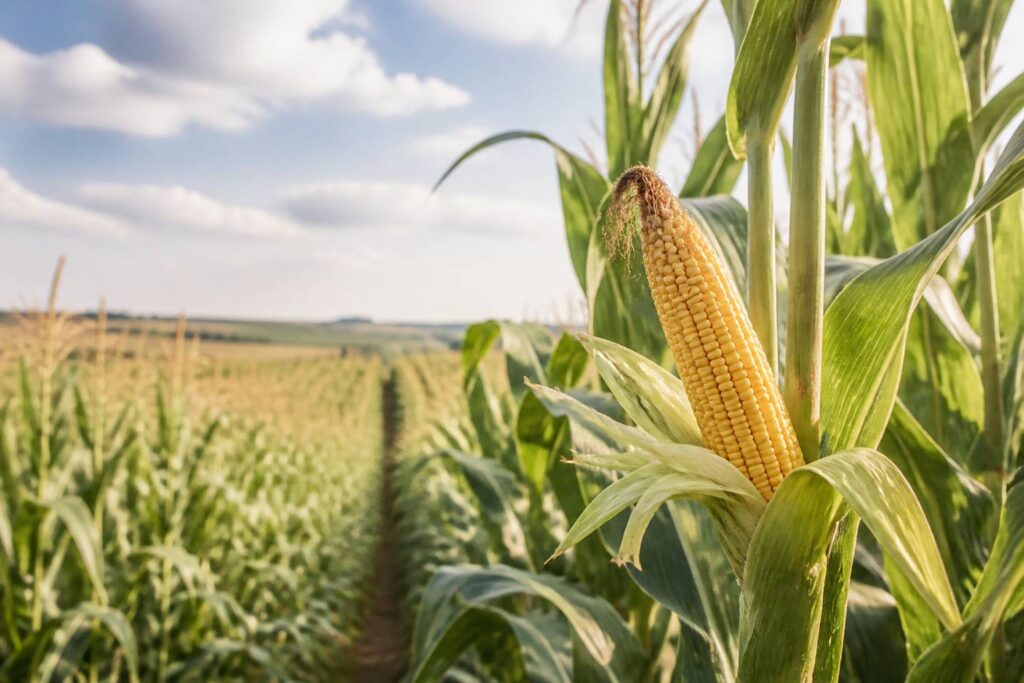
- Corn (Zea mays) is an annual plant from the Poaceae family, domesticated from teosinte in the lowlands of Mexico about 9,000 years ago.
- Its roots form a fasciculate system combining primary roots and later adventitious roots that build a “root ball” crucial for anchorage and water access.
- The cultivation of corn spread in the 16th century to Europe and then established itself on all five continents, driven by agriculture and a strong varietal diversity.
- The grain is not a vegetable in the nutritional sense but a starchy cereal, like rice or pasta, with domestic and industrial uses.
- Popcorn is not a recent invention, with archaeological evidence of popped corn around 5,000 BC, followed by a popularization in the 19th century.
Corn roots and Mexican origins: from teosinte to Zea mays
In the first months of a baby’s life, parents learn to distinguish what truly nourishes and what only reassures. Plants tell a similar story, in their own way. Corn, for example, carries within its origins a gradual, patient transformation guided by repeated human actions over millennia.
Botanically speaking, corn corresponds to Zea mays, an annual grass. In Canada, it is often called Indian wheat, a name that sometimes surprises, like family words passed down through generations even when they seem out of place. What matters is what the name signals: a travelling cereal, adopted and reinterpreted.
Data accumulated from molecular biology, archaeology, and paleobotany converge on a solid idea. Cultivated corn descends from the domestication of teosinte in the lowlands of Mexico, particularly a subspecies close to Zea mays subsp. parviglumis. This is not a simple “improvement” of a plant. It is a reconfiguration where the ear’s shape, grain size, and ease of harvesting fundamentally change.
Archaeological sites, especially in the Tehuacan valley, indicate that around 9,000 years ago, populations already consumed corn whose ears were about 3 to 4 cm long. This size seems tiny compared to a modern ear. Yet, it is a valuable marker. It reminds us that current diversity did not appear all at once but in stages, with trials, losses, and successes.
Teosinte itself carries few grains per ear. The transition to the corn we know involves genetic modifications targeting the plant’s architecture, stem strength, and grain arrangement. Humans selected what preserved better, what was easier to shell, what provided more nourishment. A very concrete logic of survival, comparable to what parents experience when organizing daily schedules to manage long-term.
The underground part has long been less told than the ear. Yet, talking about the roots of corn also means talking about its roots in the historical sense. An organism never advances only by what it shows. It advances by what anchors it, what captures water, and what resists wind. This perspective helps understand why domestication concerns not only the grain but the entire balance of the plant and its adaptation to the ecosystem.
The next chapter is played in dissemination. When a food crop becomes central, it exports, transforms, hybridizes. Corn, initially a staple of Native American peoples before Columbus’s arrival, reached Europe in the 16th century via Spanish routes, then spread to Africa and beyond. The next leverage point is its very concrete biological needs that determine where and how it is established.
When shifting from history to the living, a question often arises. How can a tropical cereal establish itself in temperate regions without losing coherence? The answer lies in physiology, specifically how the plant roots and organizes season after season.
Corn root system: understanding primary and adventitious roots
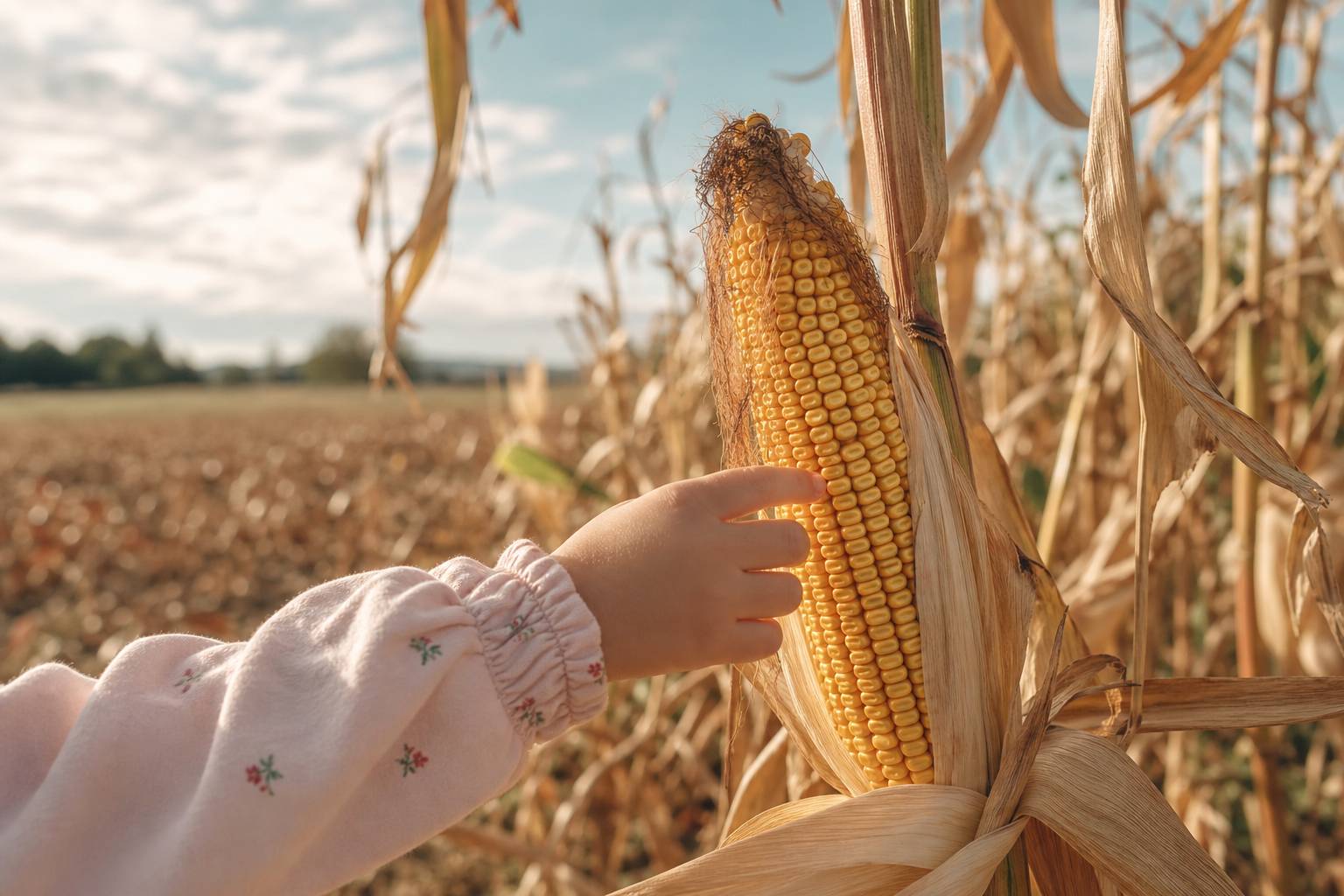
The corn root system is described as fasciculate. This means it does not rely on a single taproot but on a network of roots of relatively similar caliber that multiply and branch. This detail matters in agriculture, as it influences drought resistance, nutrient uptake, and mechanical stability.
The first roots are called primary, emerging from the embryo. They establish early after germination. Then, roots called adventitious appear at the stem base and gradually take over. Ontogeny studies show that in the embryo, 2 or 3 adventitious roots may already be preformed at the first internode level. This biological anticipation gives the plant an integrated “backup plan.”
Practically, the importance of adventitious roots is understood through two simple images. First, they increase the exchange surface with the soil, enhancing the capacity to absorb water and minerals. Second, they structure a volume around the underground stem base, often described as a root ball. When this ball is dense and well distributed, the plant better withstands wind episodes and limits lodging risk, the tipping that bends stems and complicates harvesting.
The relationship between root density and plant stability is not a slogan. In compacted soil, roots explore depth less well, spread, and anchorage becomes more vulnerable. In deep soil rich in organic matter, exploration is more effective. This relates to a reality many parents know differently. When the environment is challenging, the organism compensates as best it can but within limits.
Temperature, water, nutrients: what roots “read” in the soil
Corn germination requires a thermal threshold. Below 10 °C, emergence slows and becomes irregular. Flowering develops better around 18 °C and above. These figures are not meant to impress but explain why corn mainly develops during the three summer months in many temperate regions.
Roots also act as a pump but not only that. They can serve as a transient water reserve depending on soil structure and climatic episodes. When water is accessible at depth, roots extend exploration. When lacking, they sometimes densify exploration of superficial horizons where short rain can provide relief. This root plasticity partly explains why corn adapted to varied environments while remaining a demanding crop.
When to monitor rather than worry: practical markers in the garden and field
For parents gardening, observing a seedling can be a gentle way to relearn rhythm. A stem yellowing too early, stopped growth, wilting despite proper watering often point to a soil or temperature problem rather than a lack of “effort.” Soil too cold, a hardened crust after rain, or root asphyxia from water excess are common causes.
When growth stagnates for more than 10 to 14 days in warm periods, with pale leaves and an easily uprooted plant, local agronomic advice or soil analysis can prevent random corrections. Root observation, if a seedling is sacrificed, provides simple clues. Brown and soft roots suggest asphyxia or fungal attack; very short and thick roots may indicate compaction.
A plant never expresses a single cause. Like a baby crying more when hungry and tired, corn often reacts to cumulative factors. The next section opens to the other side of the subject. Worldwide dissemination and varietal selection shaped modern corn as much as its roots shaped its resistance.
Corn is more than a stem and an ear. It fits into a history of circulation, agricultural choices, culinary tastes, and industrial transformations. This trajectory helps explain why there are so many types of grains and uses, sometimes far from the simple image of a grilled ear.
Corn cultivation worldwide: agriculture, dissemination, and ecosystem adaptation
Corn is today cultivated in temperate regions of many countries, often said to be present in about 150 countries across five continents. This dissemination is not only geographic but also cultural. A cereal truly becomes global when it finds its place in kitchens, animal feed, and industrial supply chains that stabilize demand.
In France, annual volumes can be around 15 million tonnes depending on the year and climatic conditions. A raw figure says nothing. It reminds us that production depends on very sensitive factors, notably water availability, summer temperatures, and choices of technical routes. In recent years, heat waves and water tensions have led more producers to adjust sowing dates, varietal selections, cover crops, or irrigation methods when possible.
Corn cultivation is often associated with harvesting in autumn. This seasonality is a simple marker. It means water and nutrient investment happens mainly during summer when other agricultural needs also concentrate. In an ecosystem, this creates trade-offs. How to protect soils, preserve pollinators, reduce erosion, while maintaining stable production?
Deep soil, living soil: the subtle background of yields
Corn grows better on deep, rich soils able to store water and allow roots to explore without obstacles. Practices like soil cover, maintaining sufficient organic matter, and limiting compaction by heavy machinery at the wrong time make a measurable difference. These choices may not show in a July field photo but read in soil structure, presence of worms, ability to absorb intense rain without runoff.
The water question often arises in family discussions, especially when children see sprinklers in summer. A reassuring explanation relies on facts. Corn has high needs around flowering and grain filling. If water is lacking then, yield drops more sharply than if drought occurs earlier. Farmers irrigating often do so in priority windows, not randomly, precisely because the plant’s sensitivity differs at each stage.
Hybrids and selection: what agriculture has changed in fields
Varietal selection transformed modern cultivation. A landmark step is the use of hybrids from pure lines, obtained through self-pollination, then crossed to produce a highly performant first generation. This strictly human technique yielded impressive yield gains in the 20th century, moving from modest levels to ranges reaching 80 to 130 q/ha in favorable contexts. Figures vary by region, inputs, and weather, but the historical trend is clear.
These gains come with responsibilities. Maintaining sufficient genetic diversity, protecting soils, and integrating crop rotations or associations help limit diseases and preserve fertility. Modern agriculture learns to balance both performance and environmental vulnerability.
For families, understanding this reality may help reduce background noise. The subject of corn is often polarized. Yet most useful questions are concrete. Where does this purchased corn come from? Is it for human, animal feed, or industrial use? How is it grown locally? When doubts persist, turning to short supply chains or traced networks provides more reliable answers than abstract debates.
The next angle returns to the table and body. Corn feeds, but not in the same way depending on its form. Understanding whether it is considered a vegetable, starch, flour, or popcorn changes how to include it in family meals.
Cooking is a place of very concrete transmission. A pot, a cutting board, a taste. Among young parents, it can also become a space to regain control when the baby’s rhythm disrupts everything. Corn’s advantage is its versatility, from crunchy grain to flour, including polenta and popcorn.
Corn at the table: cereal, popcorn, and varietal diversity
Corn is often perceived as a vegetable because it is eaten as kernels or on the cob, sometimes in salads. Nutritionally, it ranks rather as a starchy cereal. This places it near rice, pasta, wheat, barley, or oats. This marker helps when a meal balance must be quickly thought out, between on-demand breastfeeding or broken nights.
This cereal belongs to the Poaceae family. The plant is not a tree. We talk about a stem with sheathing leaves, a male inflorescence at the top, and female ears on the sides. This detail may seem technical but explains why corn reacts to wind and planting density and why pollination may be sensitive to heat episodes at critical moments.
Varieties: understanding diversity without getting lost
There are vitreous, corneous, sweet, floury, white types, and so-called “popcorn” types. This diversity is not a luxury. It corresponds to specific uses, textures, and behaviors during cooking. Sweet corn is often eaten as tender kernels. Popcorn has small hard grains capable of retaining steam pressure until explosion, producing popcorn.
Popcorn, precisely, has a long history. Traces of popped corn were found around 5,000 BC in northern Peru. Populations had understood that some heated grains became easier to eat. Much later, in 1893, an American confectioner, Charles Cretors, popularized a steam-powered cart capable of producing popcorn more regularly at fairs and on streets. Food culture is also written with field inventions, not just laboratories.
Practical markers for family feeding
When corn arrives at the table as kernels, it mainly provides complex carbohydrates. Combining it with a protein source and fibrous vegetables helps stabilize satiety. As popcorn, it can become an interesting snack if preparation remains simple. Hot air or pan cooking with a small amount of oil, then light seasoning, avoids turning a simple food into a salty or sweet bomb.
For parents, the issue is not nutritional perfection but possible regularity. A quick dinner can combine a starchy base, an accessible protein, and a ready vegetable. A simple idea is to draw inspiration from a structured sandwich preparation, provided the quality of ingredients is kept. A useful resource for thinking about practical meals, especially when time is lacking, is found here a club sandwich recipe.
Corn also slips into convivial moments. Popcorn can accompany a movie night, birthday party, or snack. When the air is dry and children have repeated colds, parents often look for simple gestures to soothe. A reminder about comfort measures, notably hydration and steam, can be consulted here guidelines on inhalation for cold symptoms. The link to corn is indirect, but the logic is the same. A concrete gesture, clear criteria, and a return to reality.
| Corn form | Grain type or variety | Common use | Practical marker |
|---|---|---|---|
| Ear / tender kernels | Sweet corn | Salads, side dishes, stir-fries | Think “starch” and combine with proteins + vegetables |
| Popcorn | Popcorn corn | Snacks, parties, cinema | Simple cooking, light seasoning to keep a reasonable portion |
| Flour / semolina | Floury, white, corneous | Polenta, pancakes, breads depending on recipes | Texture coarser or finer, suited to family preparations |
| Animal feed | By sector | Forages, rations | Direct link with agriculture systems and rotation choices |
The last angle returns beneath the surface. Corn roots do not just tell agricultural technique. They also reveal a relationship to the soil, therefore to nature and the ecosystem supporting crops. This is often where family questions take a broader dimension without losing their simplicity.
Roots, ecosystem and botany: what corn teaches us about nature
The roots of corn are a good guide to talk about the ecosystem because they make the invisible visible. They show that the plant constantly negotiates with its environment. Water, oxygen, minerals, microorganisms. Everything is interaction, adjustment, sometimes compromise.
In living soil, roots are not alone. They exchange with bacteria, fungi, organisms that transform organic matter and make some elements available. Contemporary botany emphasizes these underground dialogues. It is not poetry. It is a concrete explanation of fertility and thus food stability.
Exploring without depleting: balance sought by modern agriculture
Corn has a strong exploratory capacity but can also put soil under stress if rotation is too short or soil cover insufficient. Some practices aim to limit these risks. Cover crops, for example, protect the surface, improve infiltration, reduce erosion. They also nourish soil life, indirectly benefiting subsequent crops.
This approach is easier to understand with a simple image. A baby builds reserves and nervous balance through regular inputs. Soil builds resilience thanks to organic matter inputs, preserved structure, and cycles. In both cases, the logic is cumulative. One good day does not compensate for a month of imbalance. Conversely, a series of realistic actions improves the trajectory.
Concrete signs of soil closing up
Compacted soil is sometimes visible to the naked eye. Persistent puddles after rain, hard surface crust, roots circling instead of going downward. In corn, this may translate to plants lodging more easily, irregular growth, or increased sensitivity to drought stress. The key point is temporality. Correcting soil takes time, often several seasons.
In conversations with parents, the main need is not to add information but to know what to look for and when to seek help. For soil, the equivalent of a consultation is found with an agronomic advisor, an agricultural chamber, or an analysis laboratory. When losses repeat over multiple years, when a plot always reacts differently despite similar practices, structured analysis avoids costly and ineffective decisions.
Corn, a tropical plant turned global, reminds us that adaptation is not heroic effort. It is a series of fine adjustments, often invisible. This same logic can soothe the view on daily family life. When a phase seems unstable, a precise marker and a simple gesture matter more than wanting to control everything.
Is corn a vegetable or a cereal?
Nutritionally, corn is classified as a starchy cereal. Eating it as kernels or on the cob may give the impression of a vegetable, but it is closer to rice or pasta in its place in the meal. Combining it with a protein source and vegetables helps balance satiety.
Why do we talk about corn adventitious roots?
Adventitious roots appear at the base of the stem and gradually enhance water and nutrient absorption. They also contribute to mechanical stability by forming a dense root volume around the base, which limits lodging when soil and wind conditions become unfavorable.
What temperature conditions favor corn cultivation?
Germination becomes more regular when soil temperature exceeds about 10 °C. Flowering occurs better from about 18 °C, which explains predominantly summer growth in many temperate regions. Variations exist depending on varieties and local conditions.
Is popcorn a modern invention?
No. Archaeological traces of popped corn date back to about 5,000 BC in northern Peru. Industrial popularization was later facilitated in the 19th century, notably with steam-powered machines allowing regular production in public spaces.